Table of Contents
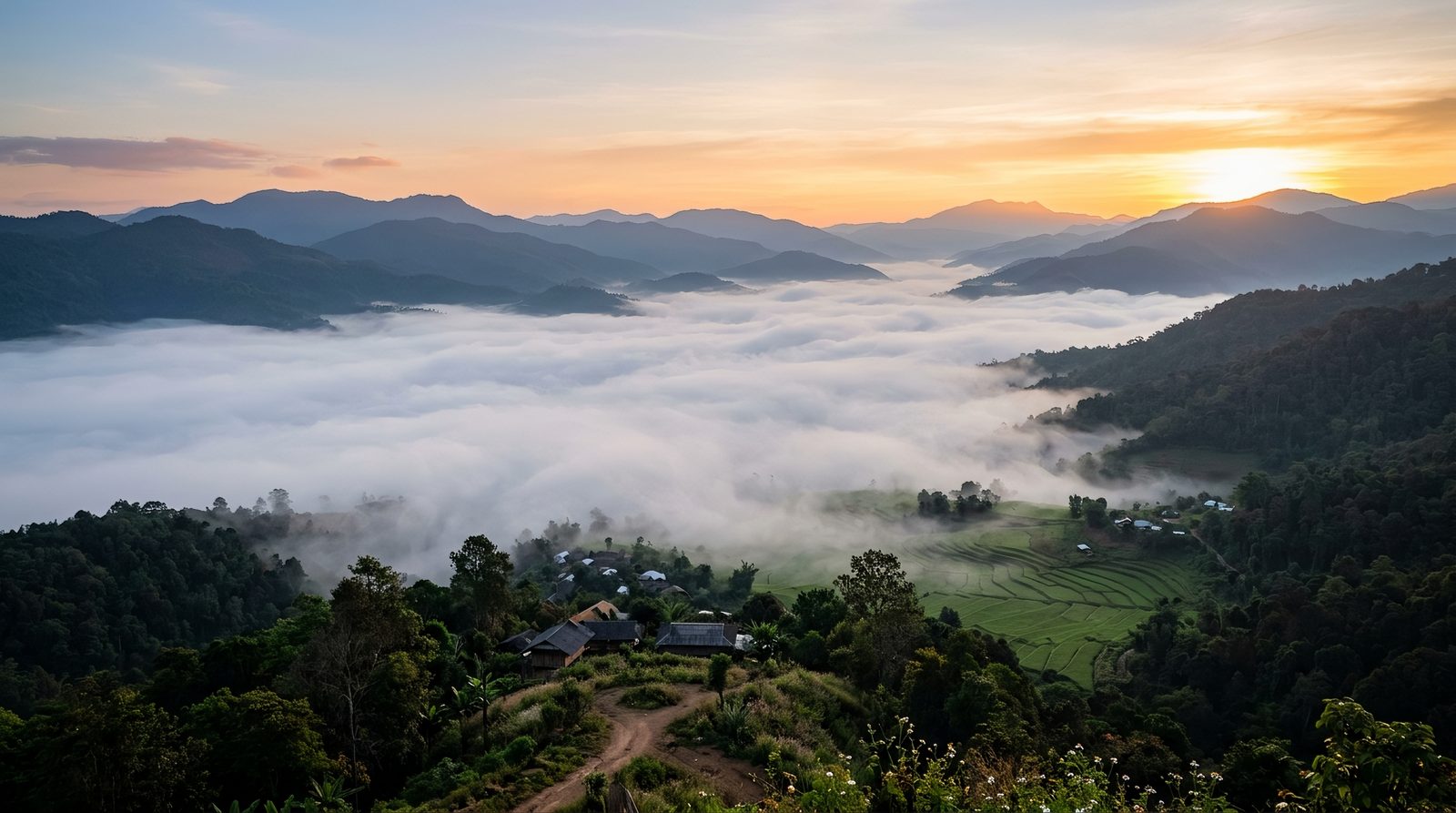
Pai is where northern Thailand slows all the way down. It is a small town in a green river valley in the mountains of Mae Hong Son province, about 130 km northwest of Chiang Mai, ringed by forested hills that fill with a "sea of mist" on cool-season mornings. Over the years it has grown from a quiet farming town into a laid-back cafe-and-hammock hub — but the valley, the waterfalls, the hot springs and the canyon are still the reason to come. This guide covers the famous winding road in, when to go (and the one season to avoid), where to base yourself, how to get around safely, and the sights worth your days.
Disclosure: This article may contain affiliate links. If you make a booking through one of these links, we may earn a commission at no additional cost to you.
Information last verified: 2026-07-25. Prices, minivan schedules, entry fees, and air-quality conditions change; confirm with operators and live sources before you travel.
Is Pai worth visiting?
Yes, if you match your expectations to the place. Pai is not a checklist of grand monuments — it is a mood: cool mountain air, coffee with a rice-field view, a lazy afternoon at a waterfall, a canyon at sunset, and a walking street after dark. Two to four days is the sweet spot. People who arrive expecting a packed sightseeing itinerary can find it slow; people who come to decompress rarely want to leave. The main things to get right before you go are the timing (because of air quality) and the road (because of motion sickness) — both are covered below.
It is also worth knowing what Pai is not. It is a mountain-valley town, not a beach or an island — the water here is waterfalls and hot springs, not sea. It is more backpacker and cafe culture than luxury resort, though a few genuinely upscale valley stays exist. And while it is famous, it is small: the "town" is a handful of walkable streets, and the appeal is the surrounding valley rather than the centre itself.
How to get to Pai from Chiang Mai
Almost everyone arrives overland from Chiang Mai, and the journey is part of the experience — for better and worse.
The minivan (the main way)
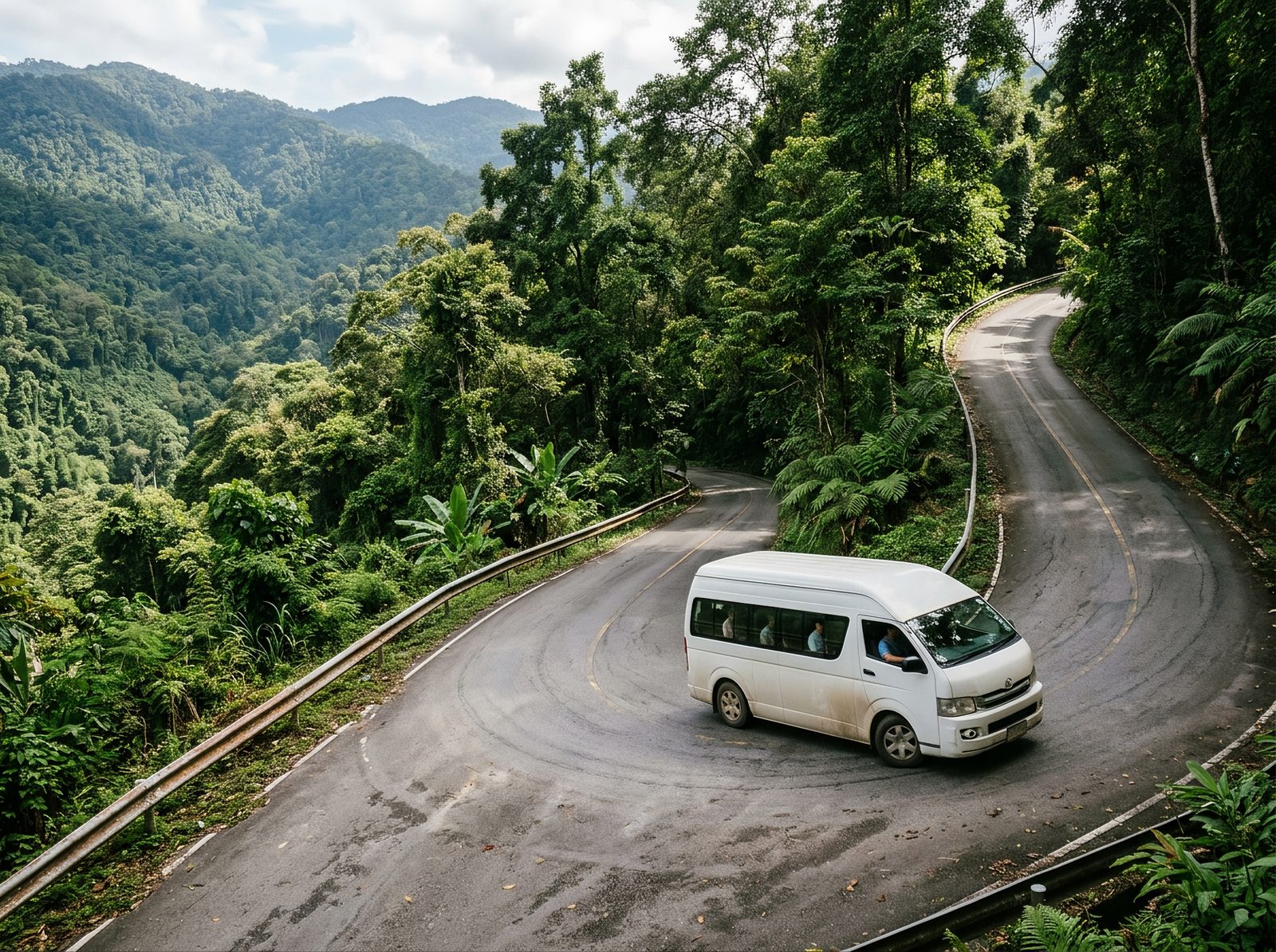
Minivans run the mountain Route 1095, famous for its 762 curves, and take roughly 3 to 3.5 hours. The best-known operator is Aya Service, running since 1999 with offices in both Chiang Mai and Pai; standard fares are around 250–350 THB depending on your Chiang Mai pickup point, and several operators run through the day. You can book a day or two ahead in high season.
Two honest warnings about the road:
- It is genuinely winding, and motion sickness is common. The 762 curves are not a marketing line. Even travelers who never normally feel carsick can struggle on this route.
- Travel by day. The curves and poor night lighting make daylight travel safer and more comfortable, and some drivers take the road fast.
Motion-sickness tips that actually help: take anti-nausea medication about 30 minutes before departure, ask for a front seat, keep your eyes on the road ahead or the horizon rather than a phone, travel on a light stomach, and carry water and a bag just in case. The worst-affected stretch is the middle of the route.
Private car or transfer
A private car covers the same road with flexible timing, the option to stop at viewpoints, and far more comfort if you or your children are prone to motion sickness. It costs a clear premium over the van but is the stress-free choice for families.
What about flying?
Pai has a small airport, but scheduled commercial passenger flights have been intermittent or suspended in recent years. Do not build your trip around flying in — treat the road as the route, and only consider a flight if you confirm a current, operating service.
When to go — read this before you book
Pai's timing matters more than most Thai destinations, because of air quality.
| Season | What to expect |
|---|---|
| Cool (November–February) | The best window: cool, clear air, and the famous morning sea of mist over the valley. Also the busiest and priciest. |
| Hot (March–May) | Hot, and the early part overlaps the air-quality problem below. |
| Green / rainy (June–October) | Lush rice fields, generally clean air, occasional showers and some road/landslide risk on the mountain. |
The season to avoid: burning season
Roughly from late February or March through April, farmers and forests across northern Thailand burn, and the air over Pai can turn hazardous — PM2.5 and AQI readings have reached hazardous levels (around 300 has been recorded), the mountain views vanish into haze, and it becomes a genuine health concern rather than just a scenic disappointment. If clean air and valley views are why you are coming, do not visit in March or early April. The good news is the change is fast: the first rains, usually mid-to-late May, clear the air within days.
Because Pai sits in a valley, the haze settles and lingers more than it does on open plains, and the exact timing and severity vary year to year. If your dates fall anywhere near this window, check a live air-quality reading for Pai in the days before you travel rather than trusting a fixed calendar — a bad burning season can start earlier or run later than average. Travelers with asthma or other respiratory conditions should treat the whole late-hot-season period with caution.
Where to stay
Pai splits into two broad choices, and this is an area-level guide — no individual property is named here, as none was verified against official sources for this update.
- Pai town / walking-street area. Walkable to the night market, cafes, bars and minivan office, with the widest range of budget guesthouses and hostels. Best if you want to arrive without a scooter and have everything on foot. Livelier — and a little noisier — at night.
- The valley and riverside (rice-field resorts). Bungalows and boutique resorts scattered among the paddies and along the river, often with mountain and mist views. Quieter, more scenic, more romantic — but you will want a scooter or transport to reach town and the sights.
A common approach is a night or two in town to find your feet, then a night at a valley place for the views — or the reverse.
One practical note on booking: Pai's accommodation ranges from very cheap bamboo huts to genuinely lovely boutique resorts, and the gap between them is wide. In cool season, the good-value places in both categories fill early, especially over Thai and Western holidays, so book ahead if your dates are fixed. In the green season you can usually travel more spontaneously and negotiate longer stays.
Getting around Pai
The sights are spread around the valley, so you need wheels of some kind.
- Scooter is how most people do it: roughly 150–200 THB a day for a 100–125cc bike from local shops, more (about 300–500 THB) from the bigger operators, usually with a deposit and a passport copy held. It is the freedom-and-mist-at-sunrise option.
- Motorbike taxis and songthaews cover trips for those who do not ride.
- Minivan day tours bundle the main sights in a loop — the low-stress way to see everything without riding.
- Bicycles work for the flat town centre and nearby spots.
Please read this before renting a scooter
Pai is beautiful on two wheels and genuinely dangerous on them for the unprepared. The mountain roads, gravel patches and a lot of first-time riders combine into a well-known local phenomenon: the "Pai tattoo," the road-graze injury that so many visitors leave with. Before you rent:
- Thai law requires a motorcycle licence from your home country plus an International Driving Permit — a car licence is not enough. Helmets are mandatory.
- Insurance, including travel medical cover, is typically void if you were not legally licensed. A minor spill on a mountain road can become a very expensive medical event.
- If you have never ridden, Pai's hills are not where to learn. Use tours, motorbike taxis and songthaews instead — you will see the same sights.
What to do
You can see Pai's headline sights in a day or two of easy loops. Here are the ones worth your time:
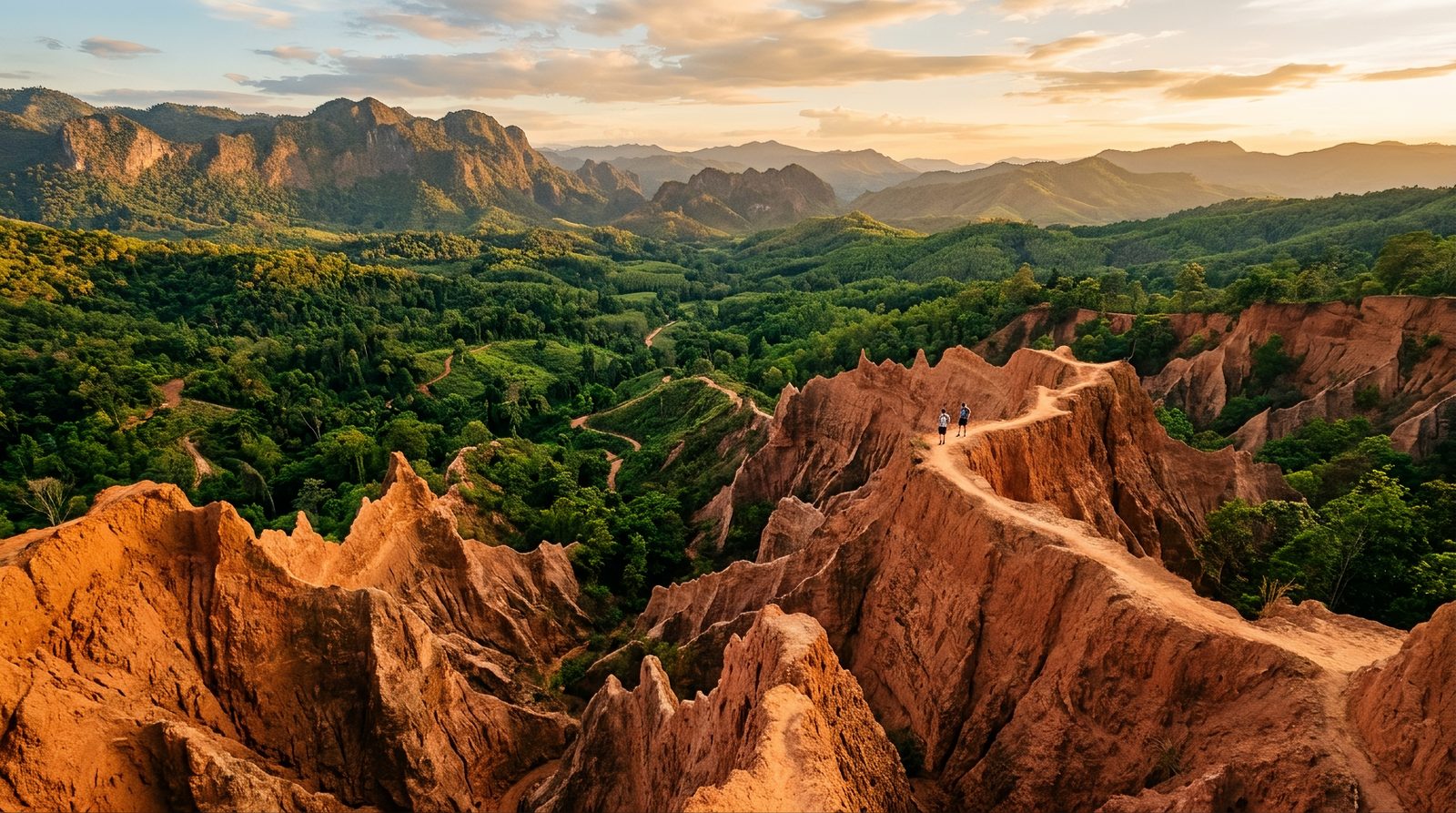
- Pai Canyon (Kong Lan). Narrow, eroded red-earth ridges with big valley views and the town's classic sunset spot. There are no railings and real drops — stay on firm, wide ground, wear proper shoes, and do not push along the thin spines for a photo.
- Tha Pai Hot Springs. A small national-park site southeast of town where natural pools run very hot at the top (hot enough to cook an egg) and cooler downstream. There is an entry fee. Sai Ngam, north of town, is a quieter, cooler forest hot spring you can actually soak in.
- Pam Bok and Mo Paeng waterfalls. Pam Bok is a shady, easy-to-reach waterfall in a narrow canyon; Mo Paeng has tiers and natural rock slides. Flow depends on the season — fullest after rain.
- Land Split. A small farm about 7 km southwest where an earthquake cracked the ground open; the family lays out home-grown produce and snacks for a donation. Oddly charming, and very Pai.
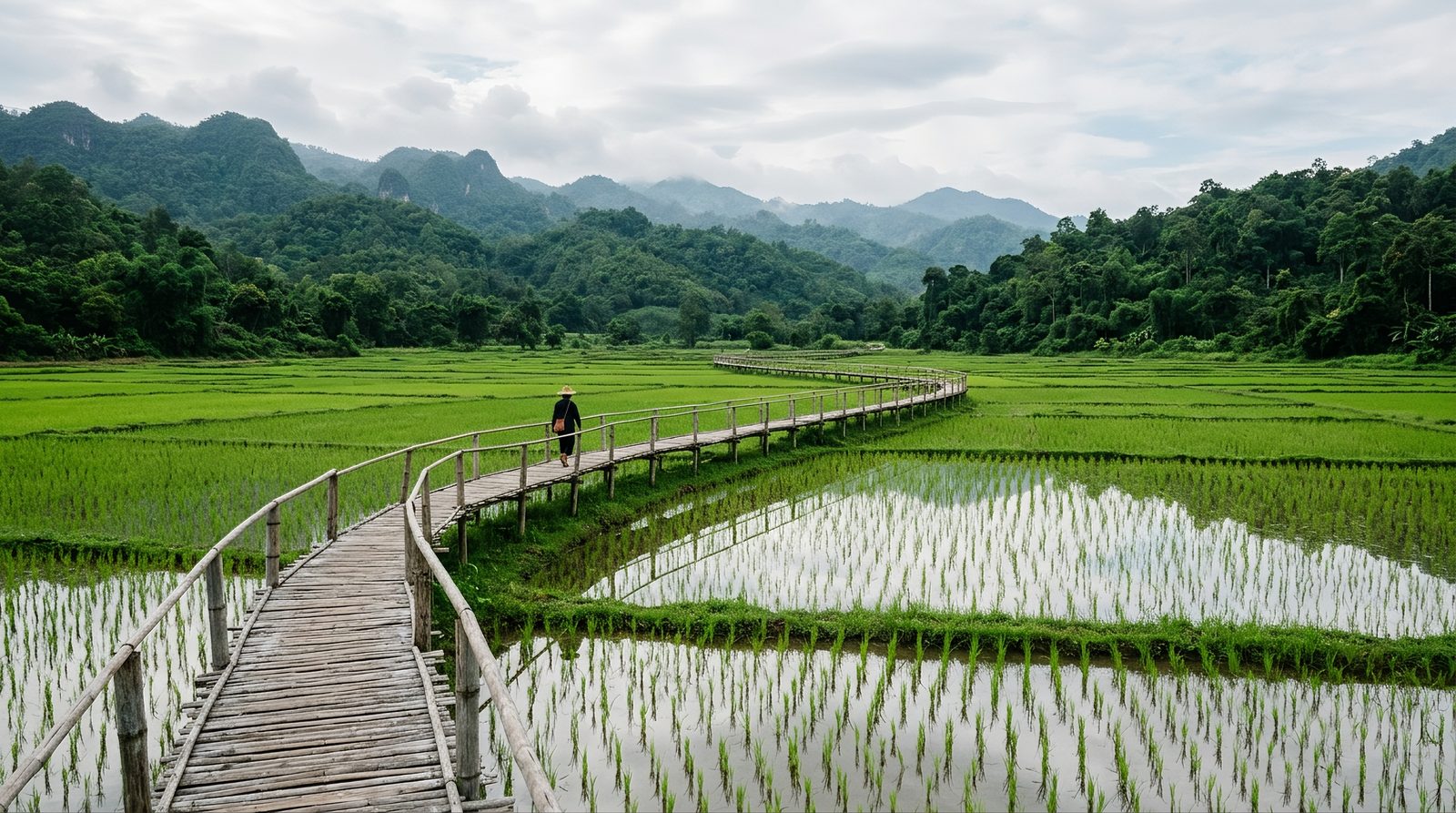
- Bamboo Bridge (Boon Ko Ku So). A long bamboo walkway across the rice fields toward a hillside temple — one of the prettiest short walks in the valley.
- Yun Lai Viewpoint. Above the Chinese (Santichon) village, best at sunrise when the mist pools in the valley below. Small entry fee.
- Pai Walking Street. The nightly evening street of food stalls, bars, live music and craft sellers — the social heart of town and the best-value dinner in Pai.
A word on the photo-spots: the WWII Memorial Bridge, roadside cafes with giant swings and props, and various "viewpoints" built around a coffee stand are heavily Instagram-oriented and can feel touristy. They are fine for a quick stop; just do not expect wonders.
The cafe scene and what to eat
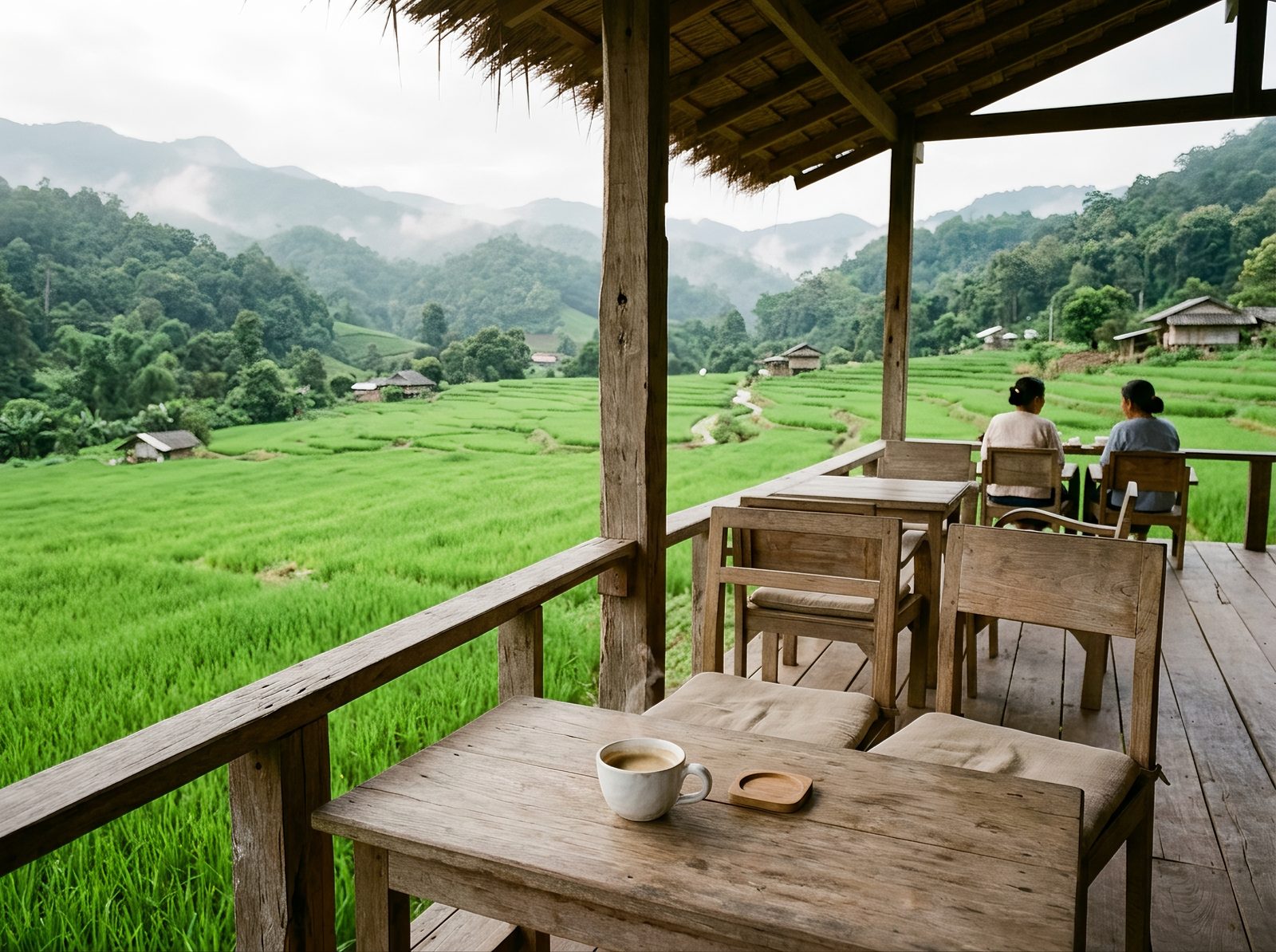
Pai's other signature is coffee. The valley is dotted with cafes built for the view — rice fields, mountains and mist — and a slow morning coffee is as much a Pai activity as any waterfall. After dark, the walking street is the food scene: northern Thai dishes like khao soi, grilled skewers, fresh smoothies, plenty of vegetarian and vegan options (Pai leans that way), and Western comfort food for the long-stay crowd.
As with our other guides, we are not naming specific cafes or restaurants here, since none were verified against a current official source for this update. On the walking street you can simply follow the crowds and the grills.
A suggested two-to-three-day plan
- Day 1: Arrive by midday minivan from Chiang Mai; check in; ease into town with a cafe and the walking street in the evening.
- Day 2: A southwest loop — Land Split, Pam Bok Waterfall and the Bamboo Bridge in the day, then Pai Canyon for sunset.
- Day 3: An early start for Yun Lai Viewpoint and the sea of mist, a soak at Tha Pai or Sai Ngam hot springs, and a slow afternoon before the road back.
Frequently asked questions
How many days do you need in Pai? Two to four. Two covers the canyon, a waterfall and the walking street; three or four lets you slow down, which is the whole point.
Is the road to Pai really that bad for motion sickness? The 762 curves are real, and many people feel carsick. Take medication beforehand, sit in front, travel by day, and you will be fine.
When should I not go to Pai? March and early April, during northern Thailand's burning season, when air quality can turn hazardous and the views disappear. Cool season (November–February) is best.
Do I need a scooter in Pai? The sights are spread out, so you need transport of some kind, but you do not have to ride yourself — day tours, motorbike taxis and songthaews all work. Only rent a scooter if you are licensed and experienced.
Can I do Pai as a day trip from Chiang Mai? It is possible but not worth it — six to seven hours on that road for a few hours in the valley. Stay at least one night.
Is Pai good for families or older travelers? Yes, with the right choices. Skip self-driven scooters, take a private car in over the minivan to manage motion sickness, base in a valley resort for space and quiet, and see the sights by day tour or hired transport. The hot springs and easy waterfalls suit most ages; Pai Canyon's unfenced edges call for care with children.
Is Pai still worth it now that it is popular? It is busier than its backpacker-legend days, and the walking street and photo-spots show it. But the valley, the mist, the hot springs and the slow pace still deliver — especially if you base outside the centre and travel outside peak cool-season weekends.
Final thoughts
Pai rewards a light plan and a slow clock: take the winding road in daylight, time your visit for clear air, base yourself where the mist rolls in, and give the valley a couple of days to work on you. Most people reach Pai through Chiang Mai, so pair this with our Chiang Mai first-timer guide to build the northern half of your trip.
Image note: Editorial images in this article are generated with AI for illustration; they do not depict specific properties, businesses, cafes, or exact named locations as documentary photographs.
Leave a Reply