Table of Contents
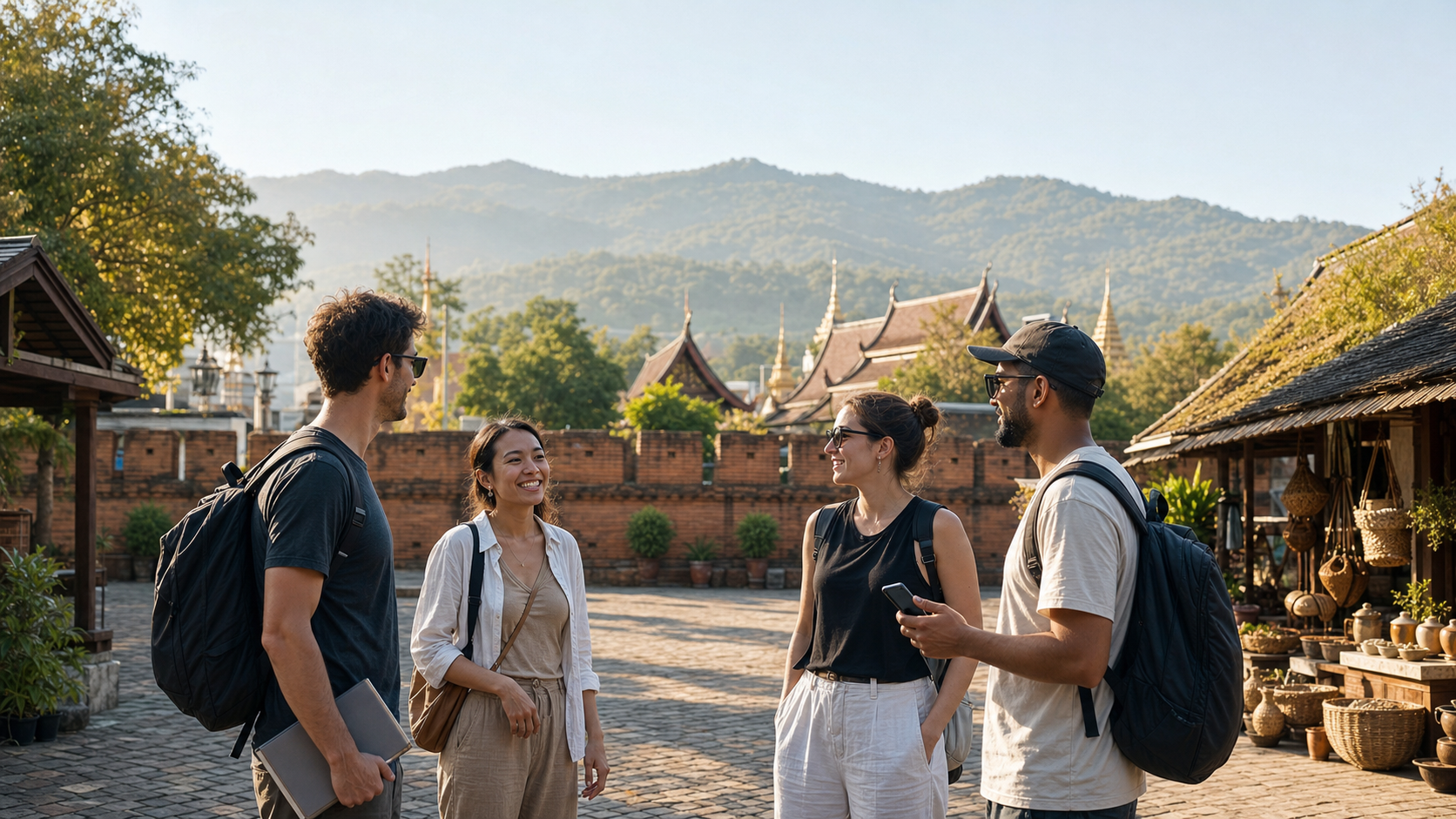
Chiang Mai rewards travelers who resist treating it as a checklist. The historic center suits slow walks, yet the province also stretches into forested mountains, farming communities and national parks. A good first visit combines the Old City, a market or contemporary neighborhood, and one planned excursion beyond town.
This guide to the best things to do in Chiang Mai for first-time visitors covers eleven experiences, eight Northern Thai food ideas, transport choices and realistic itineraries.
Information last verified: 22 July 2026. Opening hours, admission fees, trail access, market schedules, transport services, weather and air quality may change. Confirm details with the linked official source on the day of travel.
Disclosure: This article may contain affiliate links. If you make a booking through one of these links, we may earn a commission at no additional cost to you.
Image note: Editorial images in this article were generated with AI. They illustrate travel concepts and do not document a specific vendor, dish, temple ceremony or protected natural site.
Quick answers for a first Chiang Mai trip
- How many days? Three days allow the Old City, a mountain day and markets or Nimman. With two days, choose Doi Suthep or Doi Inthanon rather than rushing both.
- Where to stay? The Old City suits walking; Nimman suits contemporary city life; the Night Bazaar and riverside suit evening activity.
- Do you need a car? Not for an Old City day. Outer attractions require road transport.
- Which market? Sunday Walking Street for Sunday evening, Jing Jai for a weekend morning, or Warorot in daytime.
- What to eat? Begin with khao soi, sai ua, nam prik noom and gaeng hung lay, while checking allergens and spice.
Plan Chiang Mai by zone, not by a long wish list
The moat defines the historic center. Group Old City sights on foot, allowing for heat, rain and uneven pavements. Nimman lies west, while Warorot Market and the riverside are east.
Doi Suthep rises immediately west of the city but still requires a mountain-road transfer. Doi Inthanon, Mae Kampong and Queen Sirikit Botanic Garden are separate excursions in different directions. Combining them in one day creates more driving than sightseeing. Choose one outer-area theme per day and keep a flexible city activity as a weather backup.
1. Start at Tha Phae Gate and understand the Old City
Tha Phae Gate is the easiest orientation point for many newcomers. It stands on the eastern side of the old walled city, beside the moat and the beginning of Ratchadamnoen Road. From here, a visitor can walk west toward temples, museums, small lanes and the Sunday Walking Street route.
Walk a short portion of the moat and use the square to understand how the Old City connects with the Night Bazaar side of town. The open square can feel hot and busy later in the day.
On Sundays, Ratchadamnoen Road becomes the setting for the weekly walking street. On other days it remains a normal urban street, so never build an itinerary around market stalls without checking the calendar. The Tourism Authority of Thailand's Old City overview is a useful planning reference.
2. Make a respectful Old City temple circuit
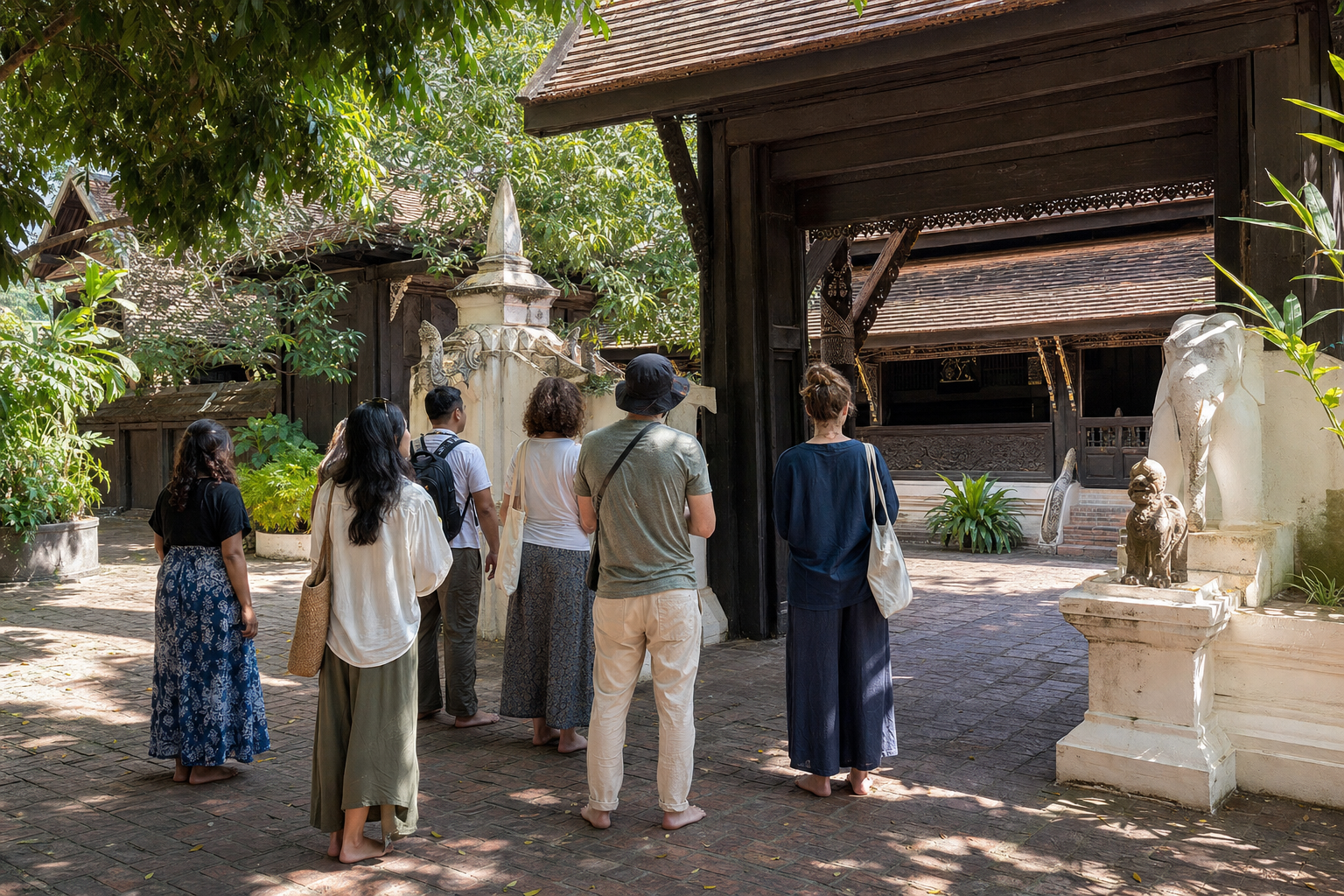
Wat Chedi Luang and Wat Phra Singh provide a practical introduction to Chiang Mai's active religious heritage. Their architecture, courtyards and devotional spaces are more meaningful when visited slowly rather than treated as photo stops. The Chiang Mai provincial tourism page identifies Wat Chedi Luang among the city's important attractions.
Wear clothing that covers shoulders and knees, follow footwear signs, keep voices low and do not interrupt worship. Rules for photography and access to individual buildings can change. A donation box does not necessarily replace a visitor ticket, and entry arrangements may differ between Thai and international visitors, so check the notice at each entrance.
Travelers with limited mobility should expect thresholds, steps and uneven historic surfaces. Ask staff about the most accessible route rather than assuming every structure can be entered.
3. Pair Wat Phra That Doi Suthep with the national park setting
Wat Phra That Doi Suthep is both a religious landmark and a mountain outing. The approach climbs through Doi Suthep-Pui National Park, so conditions can differ sharply from the city below. The terrace may offer broad views, but haze, cloud or rain can obscure them; the view is never guaranteed.
Choose a licensed road transfer. Shared red songthaews may operate toward the mountain, while private drivers provide more control. Agree on the destination, waiting arrangement and total fare before departure.
At the temple, the same modest-dress and quiet-conduct rules apply. The stair approach is part of the experience, but an alternative ascent may be operating; confirm accessibility on arrival. If adding another park stop, use the Department of National Parks page for Doi Suthep-Pui to check current notices first.
4. Give Doi Inthanon a full day
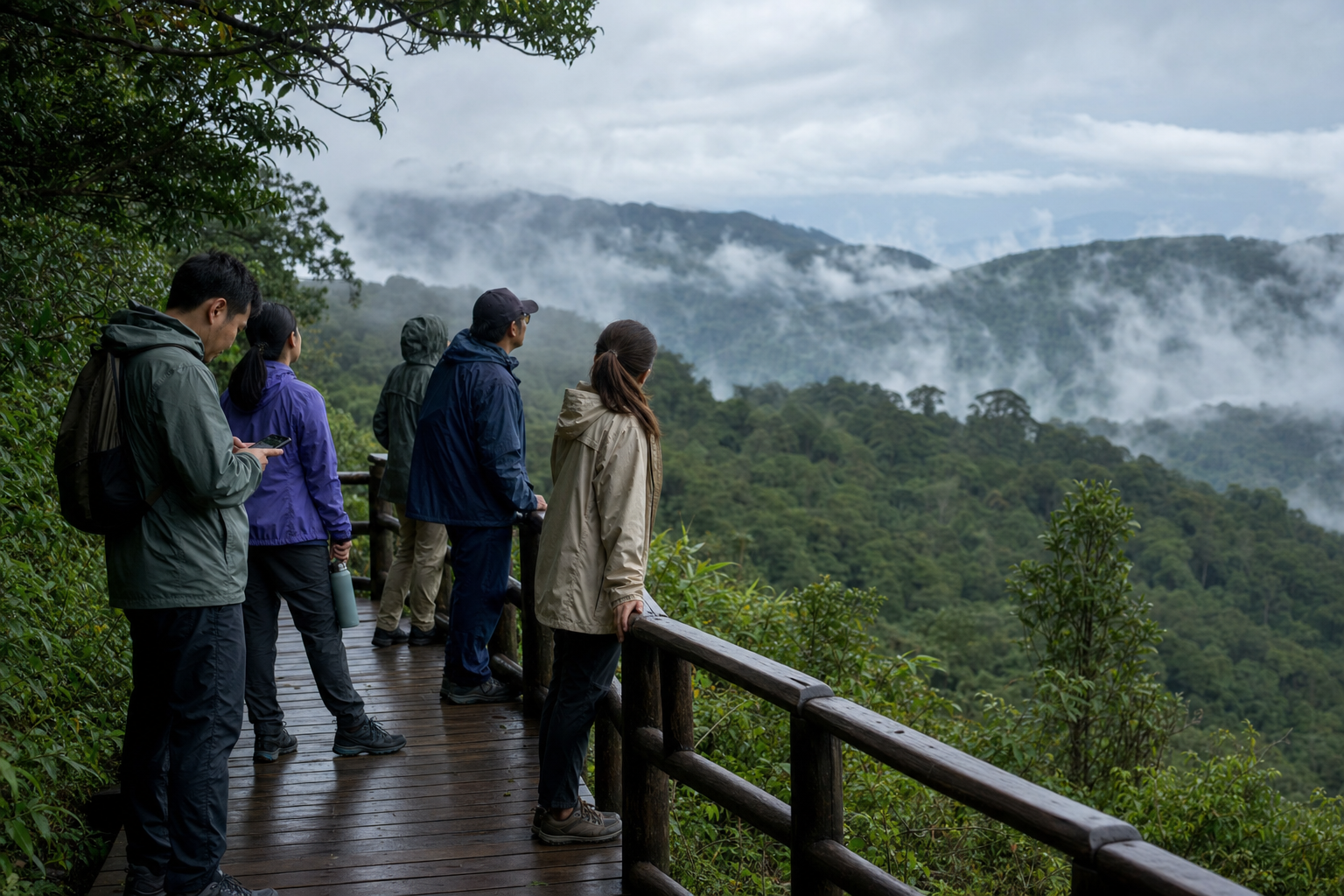
Doi Inthanon is the major nature day trip in this guide. It brings together high-elevation forest, waterfalls, viewpoints and short nature experiences, but the useful lesson for a first visit is logistical: it is not an extension of an Old City morning. Road time, changing weather and several widely separated stops justify a full day.
The summit area can feel much cooler and wetter than Chiang Mai city. Bring a light warm layer and rain protection even when town is hot. Wear shoes with grip and keep electronics protected. Waterfall flow, cloud cover and visibility depend on current conditions.
Some trails, including popular seasonal routes, close for rehabilitation or unsafe weather. A listing in an old blog or map does not prove that a trail is open. Check the Doi Inthanon National Park service page and current Department of National Parks notices before leaving.
A licensed day tour is convenient for solo travelers; a private driver may suit families or people needing a slower pace. Self-driving is for visitors comfortable with mountain roads and changing weather. A scooter is not a sensible default for an inexperienced rider.
5. Visit Mae Kampong as a community, not a backdrop
Mae Kampong is promoted as an ecotourism and homestay community in the mountains east of Chiang Mai. Its appeal comes from the village setting, cool-water streams, forested slopes and local enterprises rather than one monument. That also means visitors should behave as guests in a lived-in place.
Keep noise low, avoid blocking homes and lanes, request permission before photographing residents, and buy directly from local producers when appropriate. Weekend traffic and limited road space can affect the experience. A weekday visit may feel calmer, but no day is guaranteed to be quiet.
Mae Kampong deserves its own excursion; do not combine it with Doi Inthanon, which lies in another direction. Confirm the return pickup. The official TAT Chiang Mai overview includes Mae Kampong among the province's ecotourism experiences.
6. Explore plants and canopy views at Queen Sirikit Botanic Garden
Queen Sirikit Botanic Garden in Mae Rim offers a nature-focused alternative for travelers who do not want a demanding mountain hike. Its official visitor information lists greenhouse groups, plant collections, trails, a nature museum and a canopy walk. The site is extensive, so it should not be treated as a quick photo stop.
Road transport is required from central Chiang Mai. Surfaces, slopes and weather exposure vary; ask staff which areas suit your mobility and available time.
Check the official Queen Sirikit Botanic Garden website for current opening, tickets and temporary closures. Rain, maintenance or high winds may affect elevated features. Because the garden is in Mae Rim, pair it only with another nearby stop if the transport plan remains relaxed.
7. See contemporary Chiang Mai around Nimman
Nimmanhaemin Road, usually shortened to Nimman, shows a different side of the city. The district combines cafés, design shops, galleries, restaurants and modern accommodation near Chiang Mai University. It works best as a flexible late-afternoon or evening block rather than a must-see monument.
Walk the smaller lanes, but remember that creative businesses change quickly. Choose what is visibly open rather than crossing the district for an unverified social-media recommendation.
Nimman can be busy and pedestrian continuity is imperfect. Use marked crossings, expect traffic at major junctions and arrange a legal pickup point away from blocked entrances. It is a practical area for dinner after a Doi Suthep excursion because both lie west of the Old City, although actual travel time depends on traffic.
8. Browse Warorot and Ton Lamyai market district
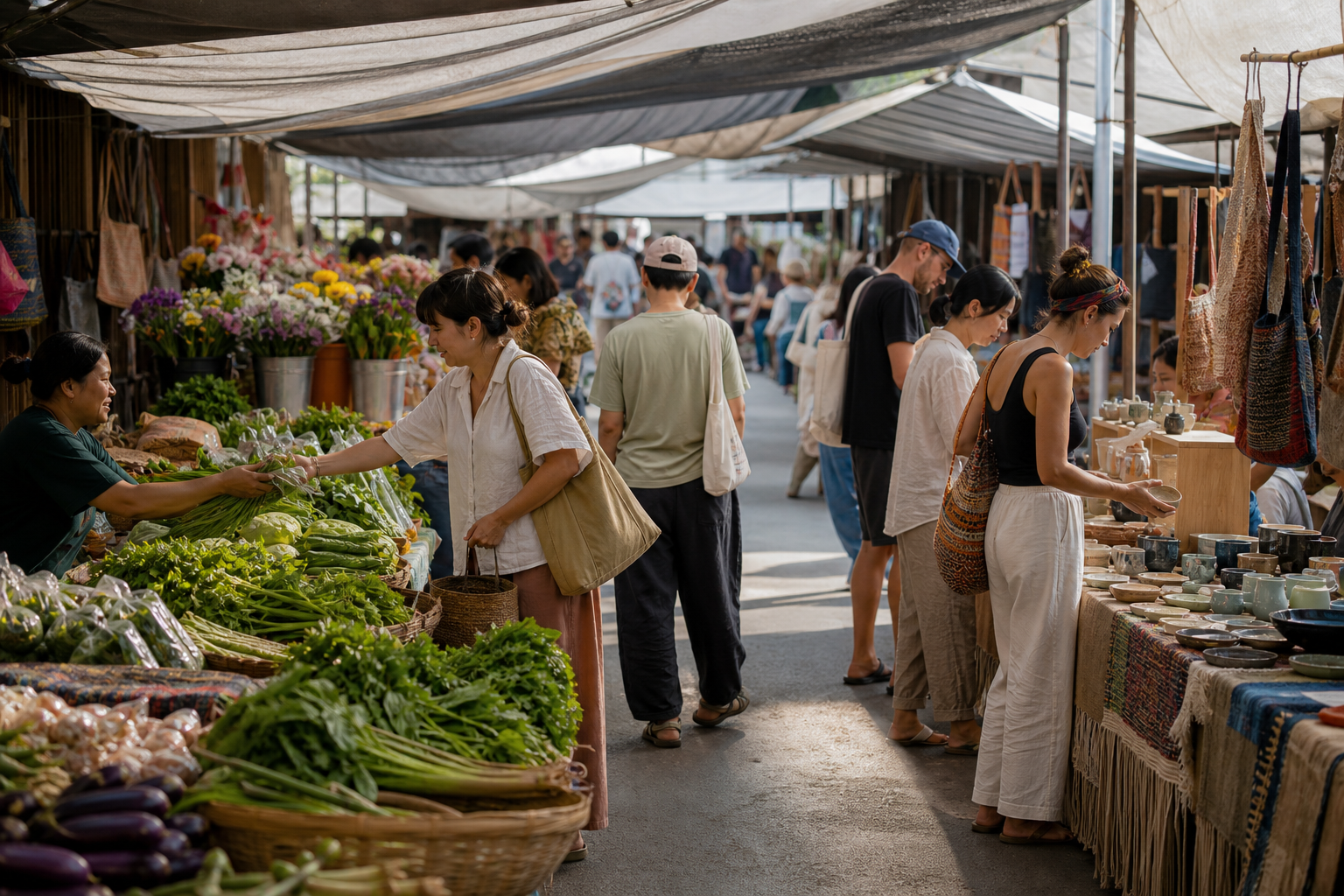
Warorot Market, often called Kad Luang, and the neighboring Ton Lamyai area form a practical commercial district near the Ping River. This is a useful place to look for dried foods, spices, clothing, flowers and everyday goods while seeing a market used by local shoppers as well as visitors.
The area can feel dense. Keep valuables secure, avoid stopping in narrow working aisles and ask before photographing vendors. If buying packaged food to carry internationally, check ingredients and your destination country's customs rules. Fresh produce, meat and plant material may face restrictions.
Treat prices and stock as variable, clarify the quantity and ask whether packaged food needs refrigeration. Warorot is more useful as a daytime market than a guaranteed late-night food destination.
9. Choose Sunday Walking Street when the calendar fits
The Sunday Walking Street runs from the Tha Phae side into the Old City along Ratchadamnoen Road. It brings together handicrafts, food and street activity in one pedestrian-focused evening, making it attractive for a short first visit.
Its weakness is the same as its strength: crowds. Arrive before the busiest period if you want to examine crafts, set a meeting point if traveling with others, and carry small denominations without displaying all your cash. Food stalls and craft sellers can change from week to week.
This market is a Sunday plan, not a daily attraction. Check the current event notice, weather and road arrangements before going. If your trip misses Sunday, use Warorot, Jing Jai or the Night Bazaar area rather than trying to recreate the same experience elsewhere.
10. Use Jing Jai Market for a weekend morning
Jing Jai combines farmers-market produce, prepared food, crafts and design-oriented retail in a landscaped setting. TAT describes the farmers and rustic markets as weekend-morning activities while noting that some shops in the wider complex operate daily.
That distinction matters. A traveler arriving late on a weekday may find a very different experience from the weekend market shown in photographs. Verify the current schedule through the venue before crossing town.
Jing Jai suits travelers interested in local ingredients, small producers and contemporary crafts. Bring a reusable bag, ask before photographing products, and avoid describing every item as “traditional”; some makers deliberately use modern design. See the TAT Jing Jai Market overview for context.
11. Keep Royal Park Rajapruek as a flexible garden option
Royal Park Rajapruek offers landscaped grounds and horticultural displays southwest of the city. The Chiang Mai provincial tourism page records its development as a continuing visitor destination after the international horticultural exposition.
Check current exhibits, hours and transport. The large grounds and weather can make a visit longer than expected, so do not force it into a crowded Old City schedule.
Northern Thai food guide: eight things to try
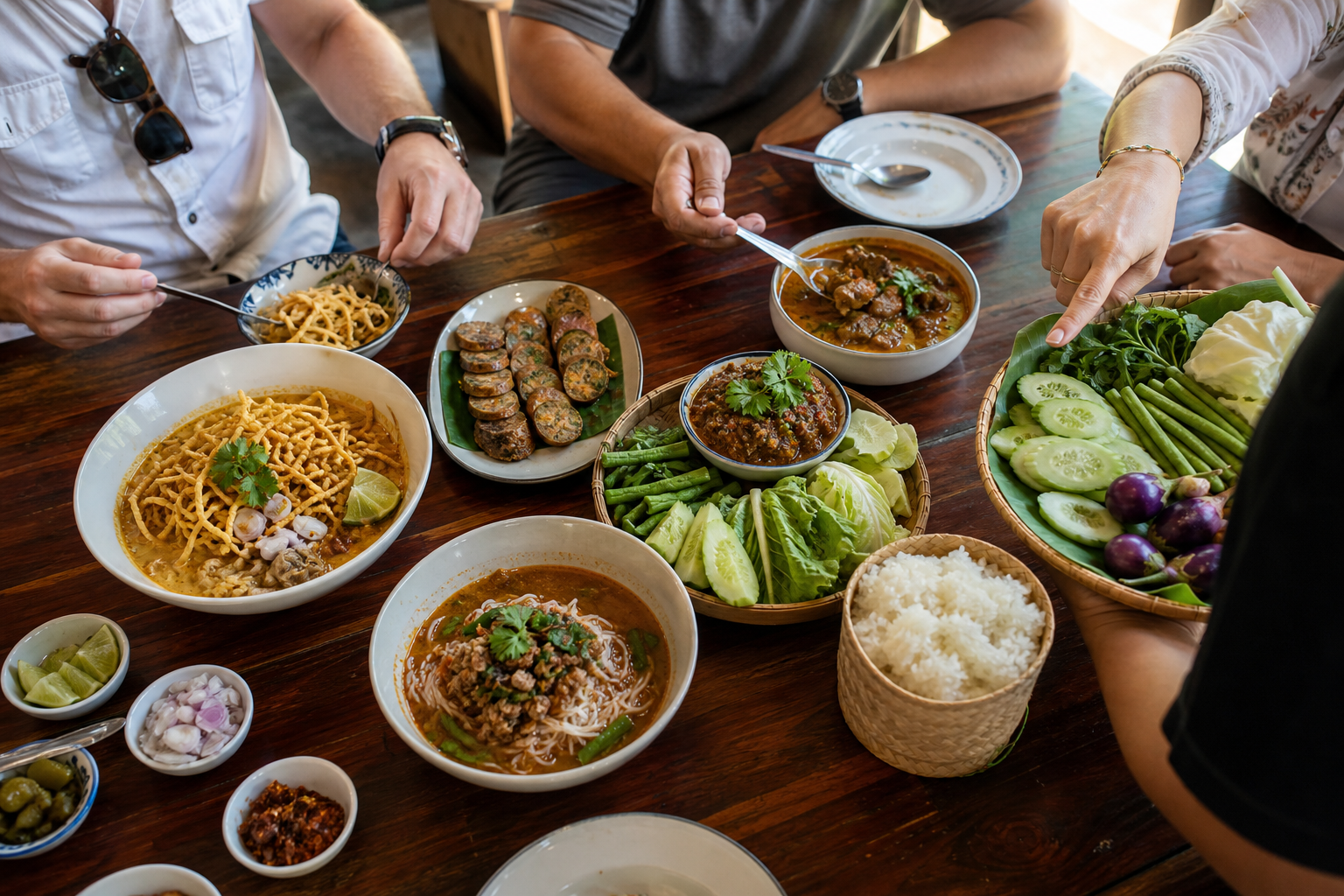
These are food categories, not promises about a particular restaurant. Recipes vary by cook and province, and a familiar dish name does not guarantee the same ingredients. Ask directly about allergies, dietary restrictions and heat level.
- Khao soi: egg noodles in a rich curry broth, commonly finished with crisp noodles and served with condiments. Meat and broth recipes vary.
- Sai ua: Northern-style sausage seasoned with herbs and curry spices. Ask about the meat, spice and preparation.
- Khanom jeen nam ngiao: rice noodles with a tomato-led Northern broth and assorted garnishes. Ingredients differ, so vegetarians should not infer that a vegetable-looking bowl is meat-free.
- Nam prik noom: a green-chilli dip often eaten with pork crackling or vegetables. Order the accompaniments that suit you and ask how spicy the batch is.
- Gaeng hung lay: a slowly cooked, spice-forward curry commonly prepared with pork. Some versions add fruit or other balancing ingredients.
- Nam prik ong: a tomato-based Northern chilli dip commonly paired with vegetables. Confirm the protein and seasoning.
- Gaeng khae: an herb-and-vegetable-rich Northern curry whose contents change by cook and season.
- Northern sweets: look for regional rice, sesame and cane-sugar preparations rather than expecting one universal dessert. Availability can be seasonal.
The Tourism Authority of Thailand's Northern food overview provides background on these categories. Share smaller dishes where practical; it is a better way to compare flavors without wasting food.
Getting around Chiang Mai
Central sightseeing can combine walking with red songthaews, tuk-tuks, taxis and app-based rides. State the destination clearly, agree on a songthaew price before boarding and verify an app vehicle's registration.
Chiang Mai International Airport lists public transport, shuttle, taxi, ride-hailing and car-rental options. Service details and fares can change, so use the official AOT transportation page on arrival rather than relying on an old fare screenshot.
For Doi Suthep, Doi Inthanon, Mae Kampong and Mae Rim, arrange a return plan before leaving town. Ask whether the quoted price includes waiting, park fees, parking and additional stops. Do not assume mobile coverage or instant ride availability at an outer-area attraction.
Two-day and three-day plans
Two days: city plus one mountain
Day 1: Begin at Tha Phae Gate, walk an Old City temple circuit, take a shaded lunch break and finish at Nimman or the market that matches the weekday.
Day 2: Choose Doi Inthanon for a full nature day, or choose Doi Suthep for a shorter mountain visit followed by Warorot and the riverside. Do not attempt both mountains in one rushed day.
Three days: the balanced first visit
Day 1: Old City orientation, Wat Chedi Luang, Wat Phra Singh and Sunday Walking Street if the calendar aligns.
Day 2: A full Doi Inthanon excursion with current park and weather checks.
Day 3: Choose Mae Kampong for community-based mountain scenery or Queen Sirikit Botanic Garden for plants and gentler outdoor exploration. Return for a Northern Thai dinner and a Nimman walk.
If weather closes the mountain plan, switch the order and use Warorot, Jing Jai, Nimman or a museum day. Flexibility is more useful than a non-refundable checklist.
Where to stay for a first visit
- Old City: convenient for temples, walking and the Sunday market; street access and noise vary by lane.
- Nimman: convenient for contemporary dining, cafés and west-side access; traffic can be busy.
- Night Bazaar or riverside: useful for evening activity and east-side road connections; choose the exact location carefully.
- Near the airport: practical for a very early departure, but less atmospheric for a first sightseeing stay.
Use the map to check the property's real entrance, not only the neighborhood label. Confirm lift access, breakfast timing, luggage storage, parking and late-arrival arrangements directly with the property.
Agoda accommodation placeholder: Insert a verified Agoda campaign URL here before publication. No affiliate URL has been fabricated for this draft.
Travelers combining Chiang Mai with the capital can also use our Bangkok BTS and MRT guide when planning the Bangkok portion of the trip.
Weather, air quality and safety checks
Check rain warnings, park notices and road conditions. Never enter a closed trail or waterfall area because an older itinerary says it is normally open.
Air quality also requires a current check rather than a promise based on the month. Use the Pollution Control Department's Air4Thai readings and follow health advice appropriate to you. Travelers with respiratory or cardiovascular conditions should seek medical guidance for their circumstances.
Use licensed transport, wear seat belts where provided and avoid driving after drinking. Save the accommodation address in Thai, keep emergency contacts available and carry water without leaving litter in parks or communities.
Frequently asked questions
Is Chiang Mai Old City walkable?
Many central sights can be linked on foot, but heat, rain, traffic crossings and uneven surfaces affect comfort. Plan shorter walking loops with breaks instead of circling the entire moat in one stretch.
Is Doi Inthanon or Doi Suthep better for a short trip?
Doi Suthep fits more easily into a half day. Doi Inthanon is the stronger choice for a dedicated nature day. Neither guarantees clear views, and current park access should decide the plan.
Which Chiang Mai market is best for food?
The useful answer depends on the day. Warorot suits daytime browsing, Sunday Walking Street suits a Sunday evening, and Jing Jai is oriented toward weekend mornings. Vendor mix and food availability change.
Can I visit temples in shorts?
Do not assume so. Carry clothing that covers shoulders and knees and follow the posted rules at each active religious site.
Should a first-time visitor rent a scooter?
Only a properly licensed and experienced rider should consider it, with valid insurance and appropriate safety equipment. A scooter is not the default solution for unfamiliar mountain roads.
Final planning checklist
- Choose one outer-area excursion per day.
- Match Sunday Walking Street and Jing Jai to the correct day and current schedule.
- Check DNP notices before Doi Inthanon or Doi Suthep-Pui.
- Check weather and Air4Thai before committing to a mountain day.
- Dress respectfully for active temples.
- Confirm ingredients instead of guessing from a dish name.
- Arrange the return ride before leaving the city.
- Replace the Agoda placeholder with a verified campaign link before publication.
The most satisfying first Chiang Mai trip is not the one with the most pins. It is the one that gives the Old City, mountains, markets and Northern food enough time to feel different from one another.
Leave a Reply