Table of Contents
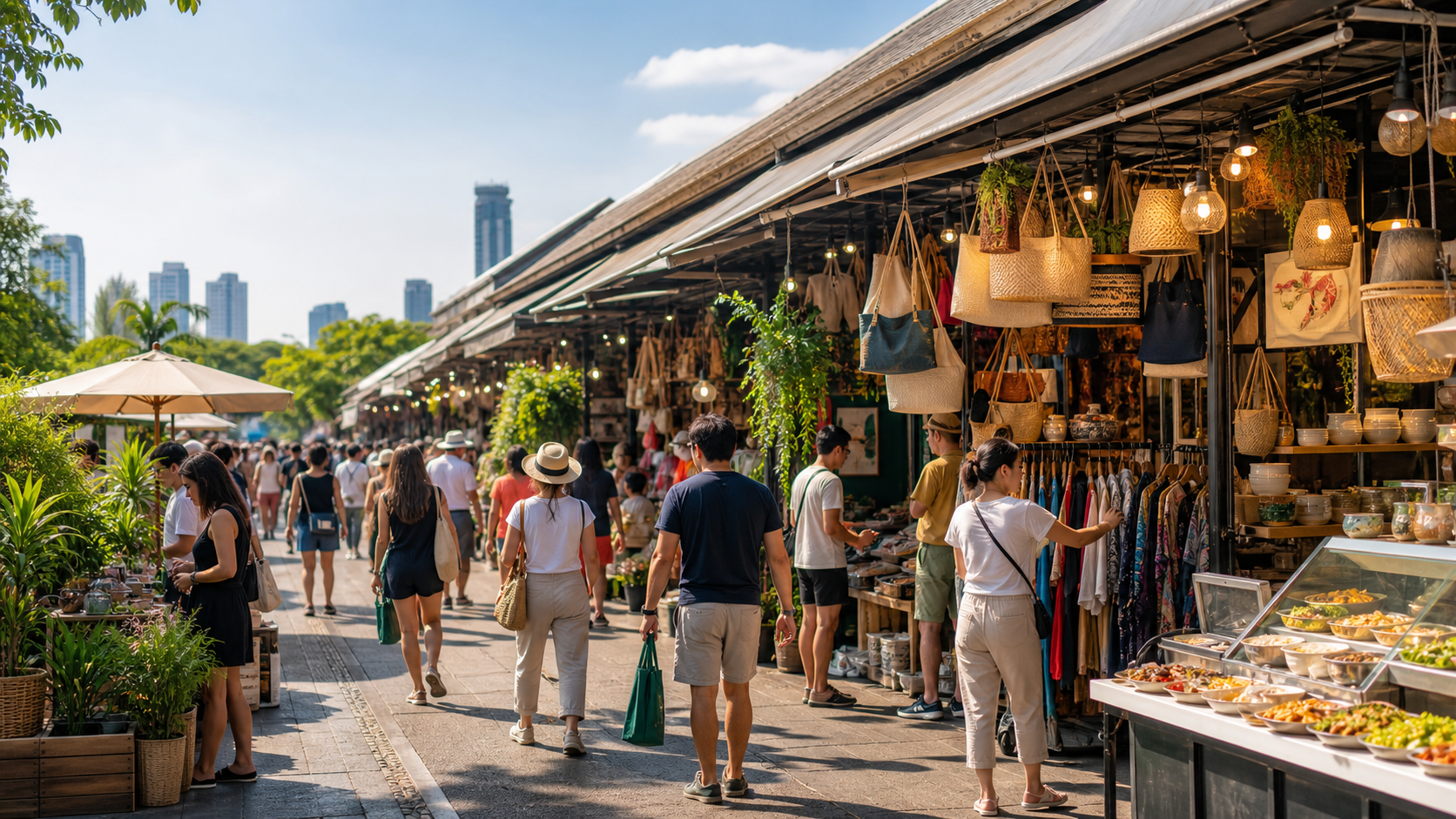
Chatuchak Weekend Market compresses fashion, vintage pieces, art, homeware, books, plants, snacks, and small restaurants into one maze. A good first visit means choosing priorities, arriving through the right station, and saving energy for food.
This Chatuchak Weekend Market guide provides three flexible itineraries, shopping-zone guidance, more than ten foods to look for, and practical advice for heat, rain, cash, bargaining, and bulky purchases. It is written for international visitors who have never been to the market before.
The simplest default arrival is MRT Kamphaeng Phet (BL12), Exit 2. Bangkok Expressway and Metro lists both Exits 1 and 2 for Chatuchak Weekend Market, and Exit 2 places visitors close to the market side of Kamphaeng Phet Road. BTS Mo Chit and MRT Chatuchak Park are also useful, particularly if they suit your hotel or the route you already know.
Information last verified: July 22, 2026. Market days, opening hours, individual stalls, section assignments, train fares, and services can change. Confirm current details before traveling.
Quick answers for a first Chatuchak visit
| Question | Practical answer |
|---|---|
| Best days for the broad market | Saturday or Sunday |
| Published weekend hours | 09:00-18:00; individual sellers vary |
| Easiest station for direct access | MRT Kamphaeng Phet, usually Exit 2 |
| Other useful stations | MRT Chatuchak Park and BTS Mo Chit |
| Best arrival time | Morning, before the strongest heat and biggest crowds |
| Minimum worthwhile visit | About two hours with a short priority list |
| Better first visit | Half a day with one food break |
| Navigation method | Section number + soi + gate + saved station pin |
| Payment | Carry Thai baht and ask before assuming cards or QR will work |
| Agoda | Verified affiliate link to be added before publication |
The Tourism Authority of Thailand currently lists the full weekend market for Saturday and Sunday, 09:00-18:00, while warning that shops keep their own hours. Public information about weekday specialty trading is inconsistent: one current tourism page lists plant trading on Thursday and Friday, while the market-information website lists Wednesday and Thursday. If plants or Friday trading are your main reason to visit, contact the Bangkok market office rather than relying on a fixed schedule in an old guide.
How to get to Chatuchak Weekend Market
MRT Kamphaeng Phet: the easiest default
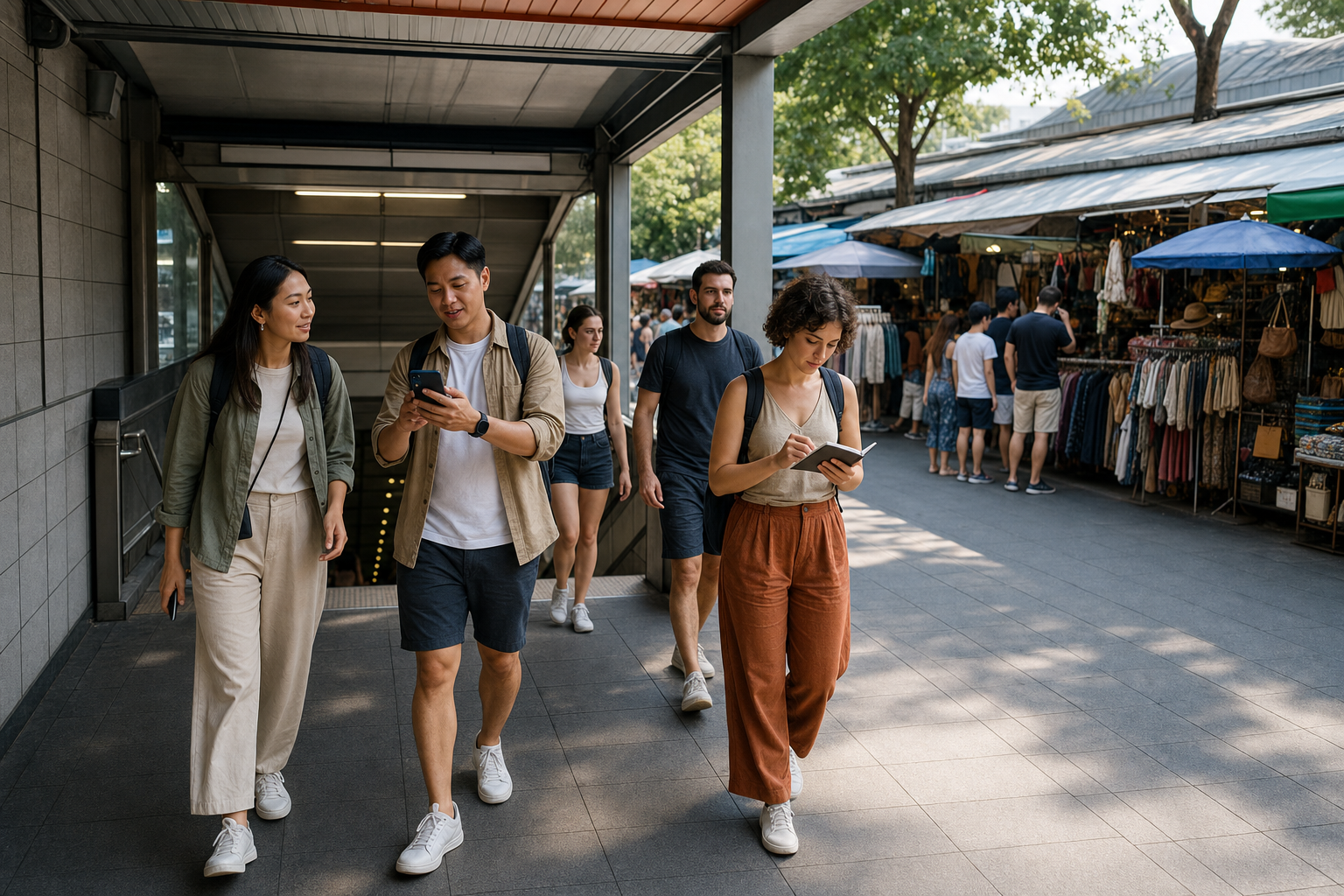
Take the MRT Blue Line to Kamphaeng Phet (BL12). BEM lists Exit 1 and Exit 2 for Chatuchak Weekend Market and Exit 3 for Or Tor Kor Market. For most first-time Chatuchak shoppers, Exit 2 is the clearest starting point because it emerges beside the weekend-market area.
Before entering the lanes, save the station exit on your phone. The market has multiple gates and a long perimeter, so “return to the MRT” can mean a very different walk depending on where you finish.
BTS Mo Chit: convenient from Sukhumvit and Siam
BTS Mo Chit is useful for travelers coming along the Sukhumvit Line from areas such as Asok, Phrom Phong, Siam, Ari, or Victory Monument. After leaving the station, follow current signs and pedestrian flow toward Chatuchak Park and the market. The walk is longer than emerging at Kamphaeng Phet Exit 2, but the route may be simpler if BTS is already convenient for your accommodation.
For help buying tickets and changing between systems, use How to Use the BTS and MRT in Bangkok: A First-Timer's Guide. BTS and MRT are separate fare systems, so do not assume one single-journey ticket covers both.
MRT Chatuchak Park: useful but less direct
MRT Chatuchak Park is another practical option, especially when transferring from BTS Mo Chit or approaching from the northern side. It is close to the park rather than the market's inner shopping lanes, so expect a walk before reaching the stalls.
If two stations are equally convenient, use Kamphaeng Phet to arrive and Mo Chit or Chatuchak Park to leave. A one-way walk through the market can be less frustrating than trying to retrace every turn.
Taxi or ride-hailing
A metered taxi or licensed ride-hailing service may suit families, travelers with limited mobility, or shoppers collecting larger purchases. Traffic and legal stopping points around the market vary, especially during peak weekend periods. Select a recognizable gate or station entrance as the destination instead of typing only “Chatuchak Market.”
For the return, walk to a legal pickup point on the perimeter. A driver may not be able to stop next to a narrow or crowded gate. Confirm the vehicle and license information in the app before boarding.
Understand the market before you enter
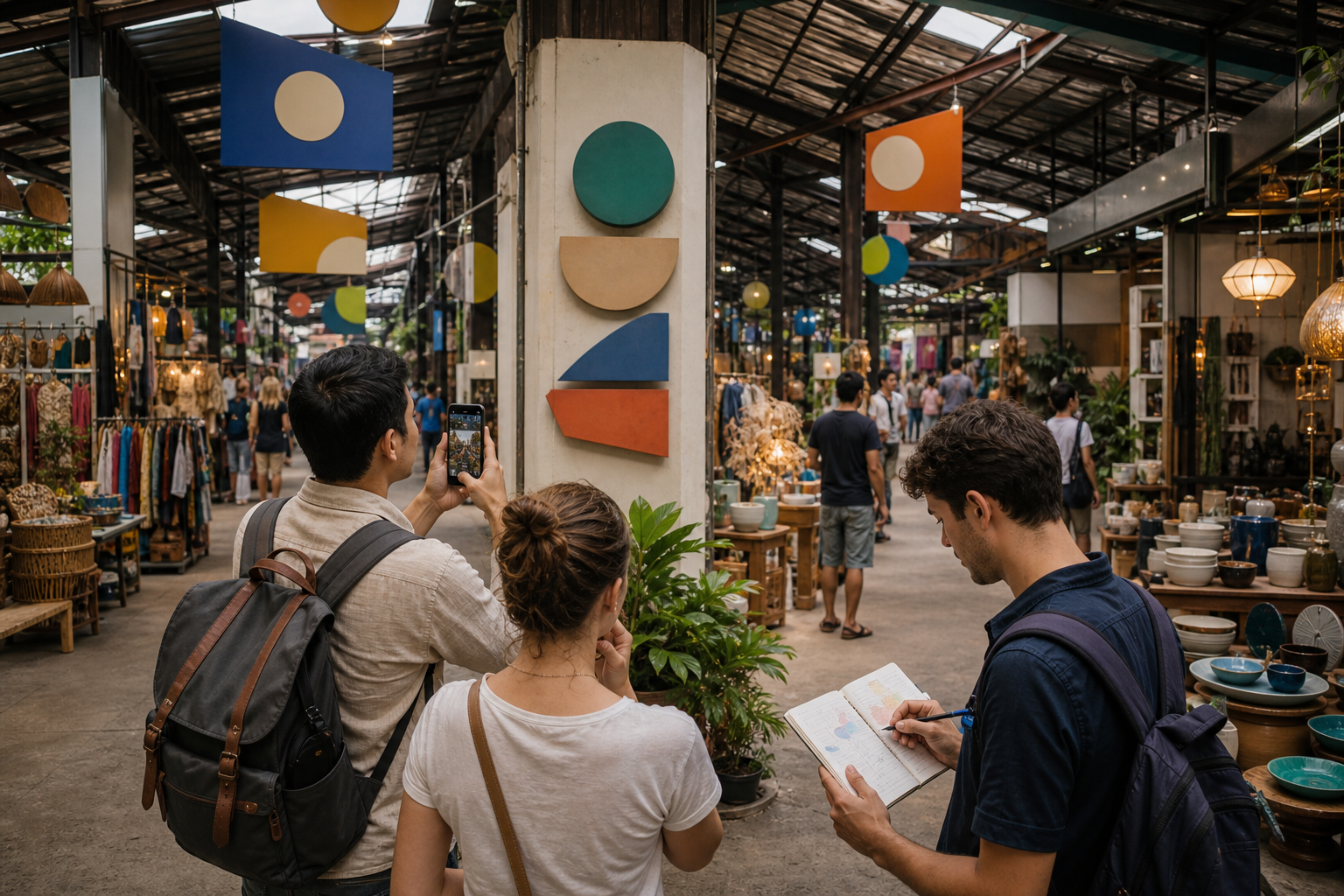
Chatuchak is organized through section numbers, sois, and gates. The section identifies a broad part of the market, while a soi is an internal lane. Gates connect the market to surrounding roads. The system is more useful than remembering a stall by appearance because many lanes look similar.
Current Tourism Authority of Thailand guidance gives useful examples: Section 1 for books, Sections 2-4 for fashion, Sections 5-6 for vintage items, Section 7 for art, and Sections 25-26 for interiors. Treat those as planning anchors, not permanent guarantees. Individual businesses and displays can move.
Use this navigation routine:
- Choose no more than three product priorities before arrival.
- Screenshot or photograph the market directory displayed on site.
- Record the section, soi, and nearest gate when you find something worth revisiting.
- Save your entrance station as a map pin.
- Agree on a meeting point if your group separates; the Clock Tower is a visible central reference, but choose a quieter gate when crowds are heavy.
Do not rely on “the shop with the blue awning” or “two lanes past the coconut stall.” Colors, neighbors, and temporary displays are not reliable coordinates.
What to buy at Chatuchak Market
Fashion and accessories
Sections 2-4 are current TAT starting points for fashion. Expect a mixture of small labels, casual clothing, printed shirts, accessories, bags, and mass-market products. Check seams, zippers, fabric composition, sizing, and care instructions before paying. Sizes may not follow the system used in your country.
Try clothing on only where the seller permits it. Inspect every piece in a multi-item purchase rather than assuming the second item matches the sample. For a gift, lightweight textiles and adjustable accessories are usually easier to pack than fitted clothing.
Vintage and second-hand items
Sections 5-6 are associated with vintage goods. Condition varies widely, which is part of the appeal but also the main risk. Check for stains, repairs, odors, missing components, electrical compatibility, and whether branded goods appear authentic.
Thai Customs lists counterfeit trademark goods as prohibited. A low price and familiar logo do not prove authenticity. If provenance matters, buy from a seller who can provide credible documentation and avoid products that create doubt.
Art, crafts, and small design objects
Section 7 is a current reference point for art. Small prints, ceramics, stationery, and contemporary craft pieces can be practical souvenirs because they are easier to pack than furniture. Ask whether a print is original, a reproduction, or a commercially printed design; those categories can have very different value.
Request protective wrapping before completing a fragile purchase. Photograph the item and packaging in case you need to discuss damage with a courier later.
Books and paper goods
Section 1 is associated with books. Check language, edition, condition, missing pages, and moisture damage. Old postcards, posters, and documents may look antique even when they are modern reproductions.
Do not assume that every old-looking object can be exported freely. Thai Customs identifies antiques and cultural objects as restricted categories that may require permission from the Fine Arts Department.
Homeware and interior pieces
Sections 25-26 are current TAT anchors for interiors. Measure items before buying and compare the packed dimensions with airline baggage limits. For lamps or electrical products, check voltage, plug type, bulb fitting, and whether replacement parts are available at home.
For furniture or heavy decor, obtain a written description, total packed price, shipping quote, insurance terms, expected dispatch date, and customs paperwork before payment. A verbal promise that an item “can ship anywhere” is not enough.
Plants, seeds, wildlife products, and other restricted purchases
Plants can be attractive, but Thai Customs lists plants and plant parts as restricted goods that may require permits. Your destination country can impose additional agricultural controls. Seeds, cuttings, soil, wood, and untreated natural materials should be checked against both Thai export rules and your home-country import rules.
Avoid wildlife, ivory, coral, shells from protected species, or products whose animal origin is unclear. Thai Customs specifically prohibits reserved animals and CITES-listed wildlife. Do not buy a questionable item because a seller says it is legal to carry.
Chatuchak Market food guide: 12 things to look for
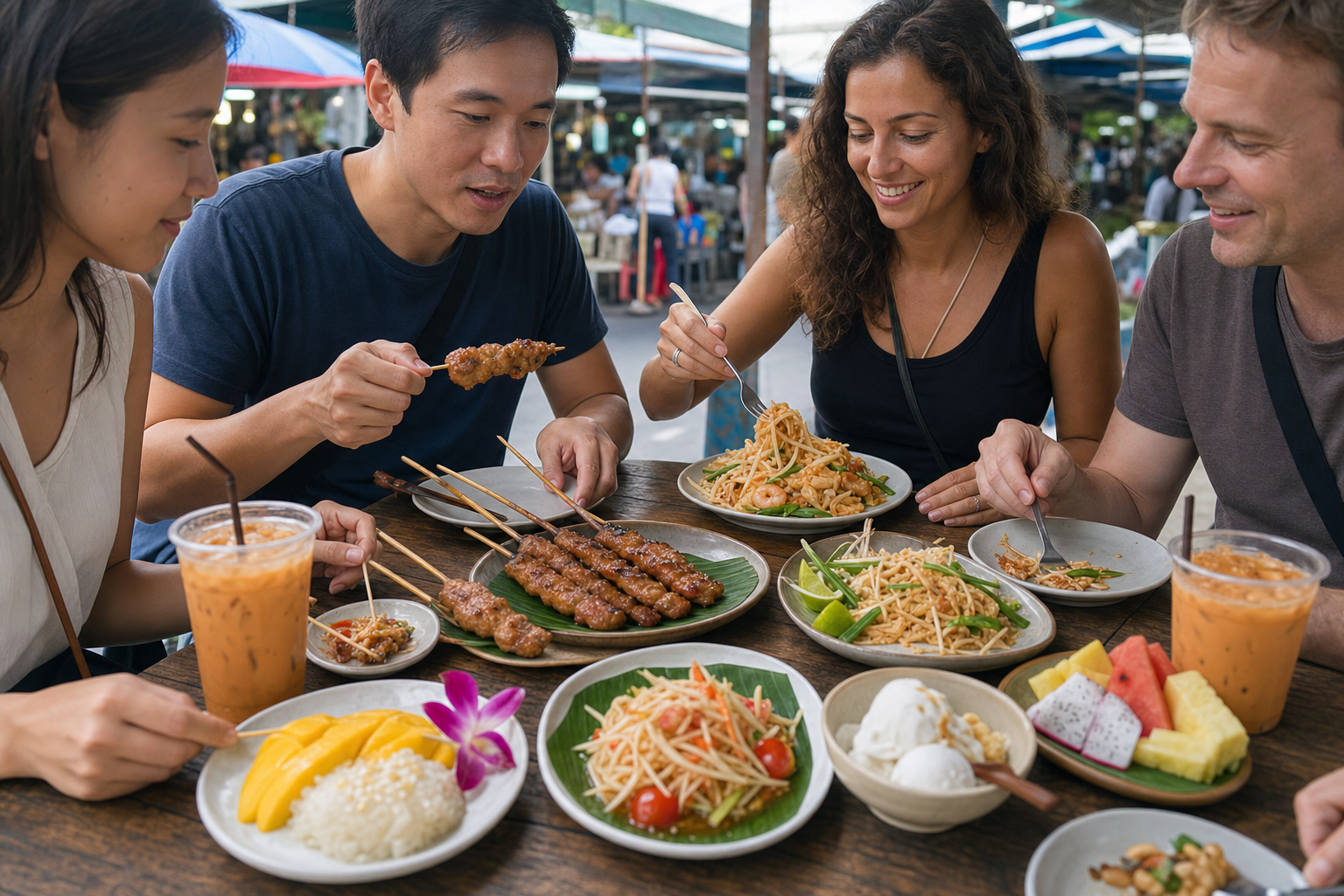
Food stalls and menus change, so these are categories to recognize rather than promises about a named vendor. Choose food that is being cooked actively, confirm prices, and tell the seller about allergies before ordering.
- Moo ping: Grilled pork skewers, often paired with sticky rice.
- Som tam: Green papaya salad; ask for your preferred chili level and disclose peanut or seafood allergies.
- Pad thai: Stir-fried noodles that provide a familiar, filling break from shopping.
- Boat-style noodles or other small noodle bowls: Useful for sharing if you want to keep tasting.
- Khao man gai: Chicken rice with sauce and broth, subject to stall availability.
- Sai krok Isan or grilled sausage: Fermented northeastern-style sausage, often served with vegetables.
- Fried snacks: Look for freshly cooked spring rolls, fritters, or other small portions rather than food left standing.
- Mango sticky rice: Sweet mango, coconut-seasoned sticky rice, and coconut cream when available.
- Coconut ice cream: A cooling market dessert; toppings and presentation vary.
- Fresh seasonal fruit: Choose cut fruit that appears properly chilled and handled.
- Thai iced tea or coffee: Sweet, cold drinks that can contain dairy or condensed milk.
- Herbal drinks or fresh juice: Ask about added sugar and ice if either is a concern.
Compact market kitchens can share utensils, oil, grills, and preparation surfaces. Vegetarian-looking food may contain fish sauce, oyster sauce, meat broth, dried shrimp, or lard. People with serious allergies should not rely on visual inspection alone.
BMA publishes food-sanitation guidance for markets, but official oversight does not guarantee that every individual purchase suits every traveler. Prefer food cooked to order, drink from sealed or clearly managed sources, and wash or sanitize your hands before eating.
Three practical Chatuchak itineraries
Two-hour essentials route
This plan is for visitors with limited time or low tolerance for heat and crowds.
- Arrive at Kamphaeng Phet MRT Exit 2.
- Spend the first hour in one priority category, such as fashion or art.
- Record the coordinates of one possible return purchase.
- Take one food and drink break.
- Make the final purchase, then return to Kamphaeng Phet or continue toward Mo Chit.
Do not attempt to cover the full market. A focused two hours can be more satisfying than rushing through many unrelated sections.
Half-day first-timer route
Begin in the morning, choose two shopping categories, and plan a seated break between them. For example, start with fashion, move toward art or homeware, then eat before reviewing your shortlisted purchases.
Use the first pass for comparison and the second for buying, but do not postpone a genuinely unusual item unless you recorded its exact section and soi. Finish at whichever station is closest to your final zone rather than automatically returning to the starting point.
Full-day explorer route
A full-day visit needs pacing. Begin with the categories that matter most, because heat, decision fatigue, and crowds can reduce your patience later. Eat a modest lunch, schedule a longer air-conditioned break outside or beside the market if needed, and return for a final focused session.
Separate “items to carry today” from “items requiring shipping.” Stop shopping early enough to confirm packing, pickup, and courier arrangements while sellers are still available. A full day should include rest—not simply more aisles.
Heat, rain, comfort, and accessibility
Chatuchak includes covered lanes but is not a consistently air-conditioned shopping center. Bangkok heat and humidity can become tiring quickly. Wear breathable clothing, secure walking shoes, sun protection, and carry water. Morning arrival reduces exposure to the hottest part of the day but does not eliminate it.
During rain, some lanes can become crowded as people move under cover. Carry a compact umbrella or light rain layer and protect paper goods and electronics. Never block a narrow lane while reorganizing bags.
Wheelchair and stroller users should expect uneven surfaces, thresholds, tight passages, and crowding. MRT Kamphaeng Phet has station accessibility facilities, but conditions inside the market vary. A shorter perimeter-focused route and quieter morning arrival may be more practical.
Know your limits. If you feel dizzy, weak, confused, or unusually unwell, stop shopping, move to a cooler place, hydrate, and seek assistance. Tourist Police can be reached through the multilingual 1155 hotline for tourist assistance.
Cash, cards, bargaining, and avoiding purchase problems
Carry small-denomination Thai baht. Some sellers may accept Thai QR payments or cards, but international visitors should not assume every payment method works. Ask before ordering food or requesting custom work.
Bargaining can be acceptable at local markets, but it should remain polite. Start by asking the price, compare similar items, and offer a reasonable amount—especially when buying several pieces. If a seller declines, accept the answer or walk away without confrontation. Food, clearly marked fixed prices, and original art may have little or no negotiating room.
Count change before leaving. For expensive purchases, request a receipt containing the item description and seller contact. VAT refunds are not automatic: the shop must participate in the official tourist-refund scheme and issue the required documents. A normal handwritten market receipt may not qualify.
Keep your phone, wallet, and passport secure in crowded lanes. Carry a copy of your passport rather than the original unless you need it for a specific transaction. Avoid displaying large amounts of cash.
How to take purchases back to your hotel
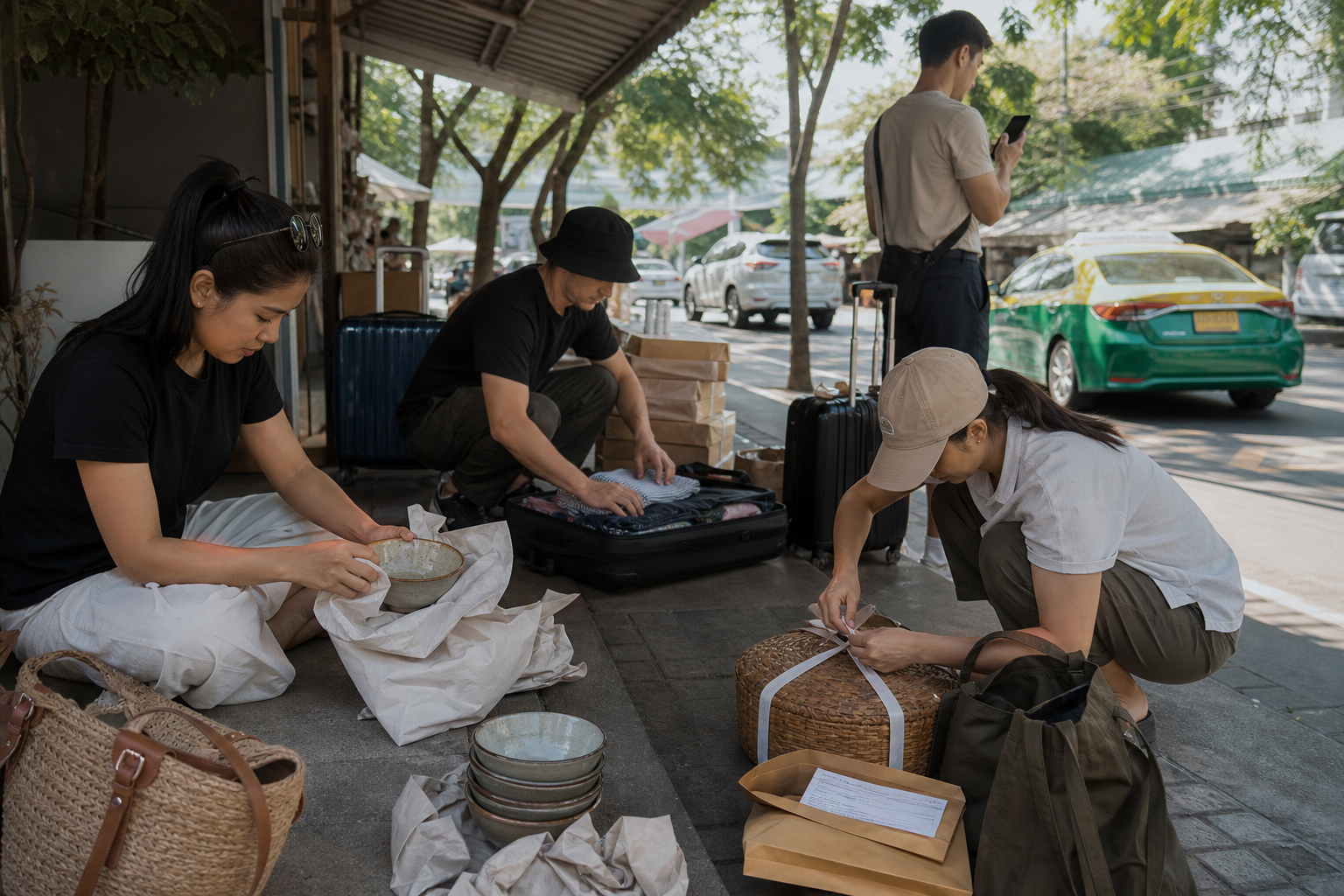
Small purchases should be divided between sturdy bags rather than loaded into one thin plastic carrier. Keep fragile objects upright and separate food from textiles or paper. Before leaving, check that you still have receipts, loose components, and any promised accessories.
For medium-sized items, a taxi or ride-hailing pickup from a perimeter gate is often easier than a crowded train. Select a legal pickup point and send the driver the gate or station name. Do not carry large objects onto a busy platform if they obstruct other passengers.
For furniture or international shipping, use a documented service with tracking, insurance, customs information, and a written inventory. Confirm who is responsible for packing, export clearance, import charges, damage, and delivery to the final address. Do not send money later to an unverified personal account based only on a messaging conversation.
Where to stay for a Chatuchak visit
You do not have to stay beside the market. Accommodation near the BTS Sukhumvit Line or MRT Blue Line can provide an easy rail journey while keeping you close to other Bangkok sights. Travelers comparing central bases can use 8 Best Hotels in Sukhumvit for First-Time Bangkok Visitors.
Staying near Ari, Mo Chit, Chatuchak, or Lat Phrao can shorten the market trip, while Sukhumvit or Siam may offer more evening choices. Compare the actual distance to a station, not simply the district name.
Agoda hotel search: Verified affiliate link to be added before publication.
Frequently asked questions
Is Chatuchak open every day?
The broad weekend market is currently listed for Saturday and Sunday, 09:00-18:00, with individual stalls varying. Weekday specialty schedules conflict across current public sources, so confirm directly when your trip depends on plants or Friday trading.
Which station is best for Chatuchak Market?
MRT Kamphaeng Phet, usually Exit 2, is the easiest default for direct market access. BTS Mo Chit and MRT Chatuchak Park are also useful.
How long do I need?
Two hours works for one product category and a quick meal. Half a day is better for a first visit. A full day suits serious shoppers who schedule breaks.
Can I pay by credit card?
Some sellers may accept cards or digital payments, but many transactions still require Thai baht. Confirm payment before ordering or commissioning anything.
Should I bargain?
Polite negotiation may be accepted for merchandise, particularly multiple items. Do not assume every price is negotiable, and avoid aggressive bargaining over food or original creative work.
Can I ship furniture home?
Possibly, but obtain written packing, insurance, customs, delivery, and payment terms. Check whether the item contains restricted wood, plant material, antiques, or wildlife products before buying.
Final checklist
Visit on Saturday or Sunday for the broadest market experience, arrive in the morning, and enter with two or three shopping priorities. Save your station, record section-soi-gate coordinates, share small food portions, and leave room for rest.
The most successful Chatuchak visit is selective. You do not need to see every lane. A few thoughtful purchases, a varied lunch, and a stress-free journey back are better than finishing the day overheated, lost, and carrying items you cannot legally take home.
Disclosure: This article may contain affiliate links. If you make a booking through one of these links, we may earn a commission at no additional cost to you.
Image note: Editorial images in this article are generated with AI. They illustrate general market navigation, shopping, food, and packing situations; they do not depict a specific seller or guaranteed real-world scene.
Leave a Reply