Table of Contents
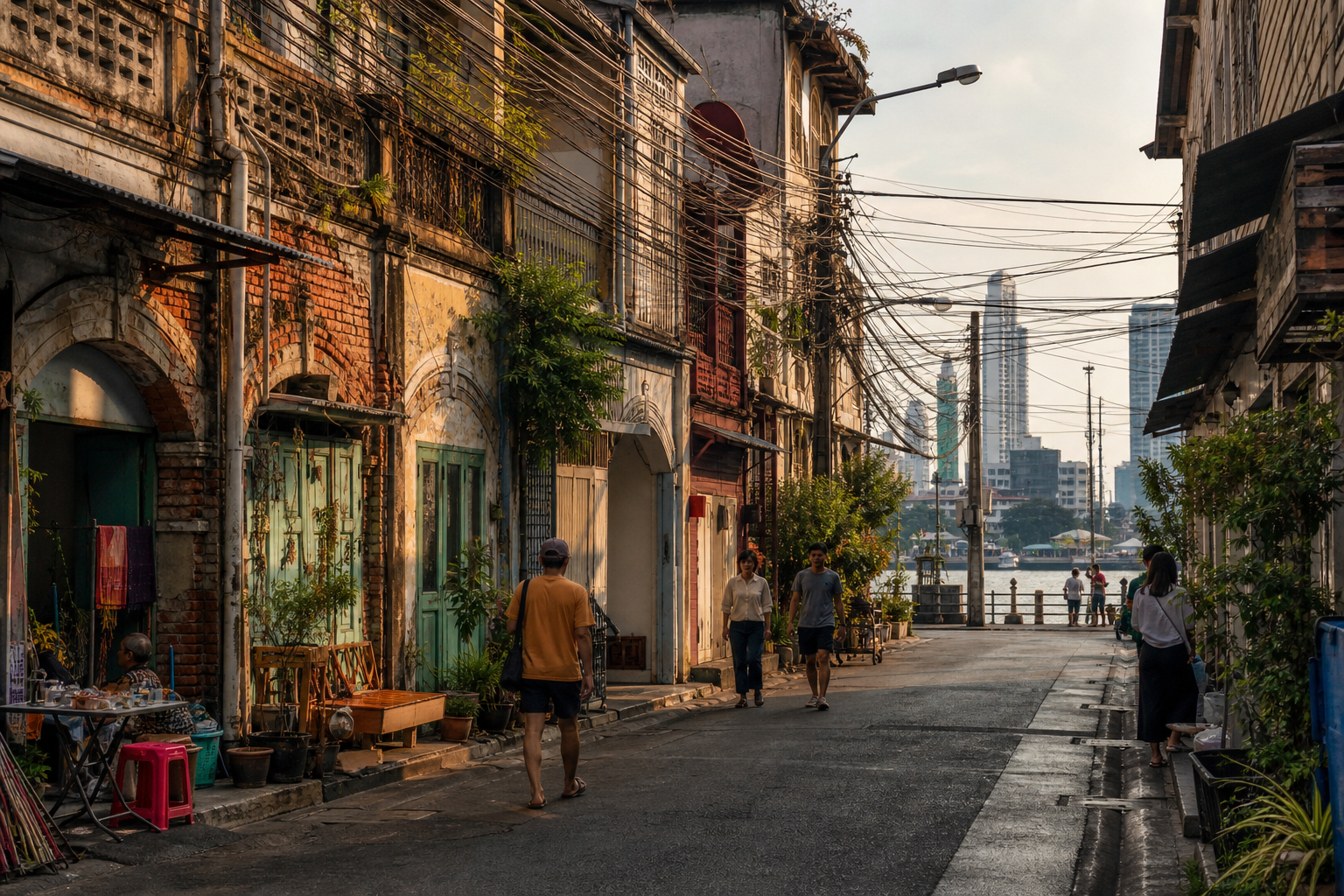
Most visitors walk part of Charoen Krung without knowing they are on it. Bangkok's oldest paved road runs 8.6 kilometres alongside the river, and it changes character four or five times along the way: the temple end near the Grand Palace, then Chinatown, then a quarter of two-hundred-year-old mansions and car-part workshops, then a strip of restored shophouses and reused warehouses, and at the far end a riverside night market.
This guide walks it from north to south and tells you where to join and leave. You are not going to do all 8.6 kilometres, and you should not try.
Disclosure: This article may contain affiliate links. If you make a booking through one of these links, we may earn a commission at no additional cost to you.
Information last verified: 31 July 2026. Opening hours, festival dates and independent venues on this strip change fast; confirm before you go.
Quick answers
- Charoen Krung is Bangkok's first modern road, built 1862 to 1864 under King Mongkut and first called Thanon Mai, or New Road.
- Start at Talat Noi and walk south. Talat Noi into Song Wat is the stretch worth your time, and it fills about half a day.
- Talat Noi is preservation, Song Wat is transformation. That distinction decides which one you will prefer.
- Asiatique opens at 11:00 and runs to midnight, according to Asiatique The Riverfront, checked July 2026. Treat it as an evening stop.
- Do not walk the whole 8.6 km. Use the MRT, the BTS and the express boat to skip the dull parts.
- The district transforms for Bangkok Design Week each cool season. The 2026 edition ran 29 January to 8 February 2026.
The strip at a glance
| Stretch | Nearest transit | Character | Best time |
|---|---|---|---|
| Chinatown end | MRT Wat Mangkon | Gold shops, dense street trade | Evening (see our Yaowarat guide) |
| Talat Noi | MRT Hua Lamphong | Old mansions, working workshops, shrines, alleys | Morning, before the heat |
| Song Wat | MRT Hua Lamphong | About 1.2 km of restored shophouses, new studios | Late morning to afternoon |
| Creative District | BTS Saphan Taksin | Reused warehouses, riverfront creative spaces | Afternoon |
| Asiatique | Shuttle boat from Sathorn Pier | Riverside night market and Ferris wheel | Evening, from 11:00 |
Road length and route per Wikipedia; Song Wat length per The Colours of Thailand and AIRPORTELs; Asiatique hours per Asiatique The Riverfront. All checked July 2026 and subject to change.
What is Charoen Krung and why does it matter?
Workers built Charoen Krung Road between 1862 and 1864 under King Mongkut, Rama IV, and it became the first road in Thailand to use modern construction methods, according to Wikipedia. It carried the name Thanon Mai, or New Road, which older Bangkok residents still use. Mongkut renamed it Charoen Krung, meaning "prosperous city".
Its significance runs deeper than its pavement. The road moved Bangkok from a city organised around water to one organised around land, and it set the pattern the city followed as it grew. The shophouses, the warehouses and the trading quarters all exist because this road put commerce on a line instead of a canal.
It runs about 8.6 kilometres alongside the Chao Phraya, heading south from near the Grand Palace and Wat Pho, through Chinatown and the old European quarter, across six districts: Phra Nakhon, Pom Prap Sattru Phai, Samphanthawong, Bang Rak, Sathon and Bang Kho Laem.
Where should you start walking?
Start at Talat Noi and walk south into Song Wat. That stretch is the densest and the most rewarding, it fills a comfortable half day on foot, and MRT Hua Lamphong drops you at the top of it. Skip the northern temple end unless you are combining this with a temple day, and take transport to Asiatique in the evening rather than walking there.
The full 8.6 kilometres is a road, not a route. Treat it as a single walk and you will end up on a hot pavement in Bang Rak wondering why you bothered.
Our Bangkok BTS and MRT guide covers the network if you are still working out the lines.
Talat Noi: what is actually there?
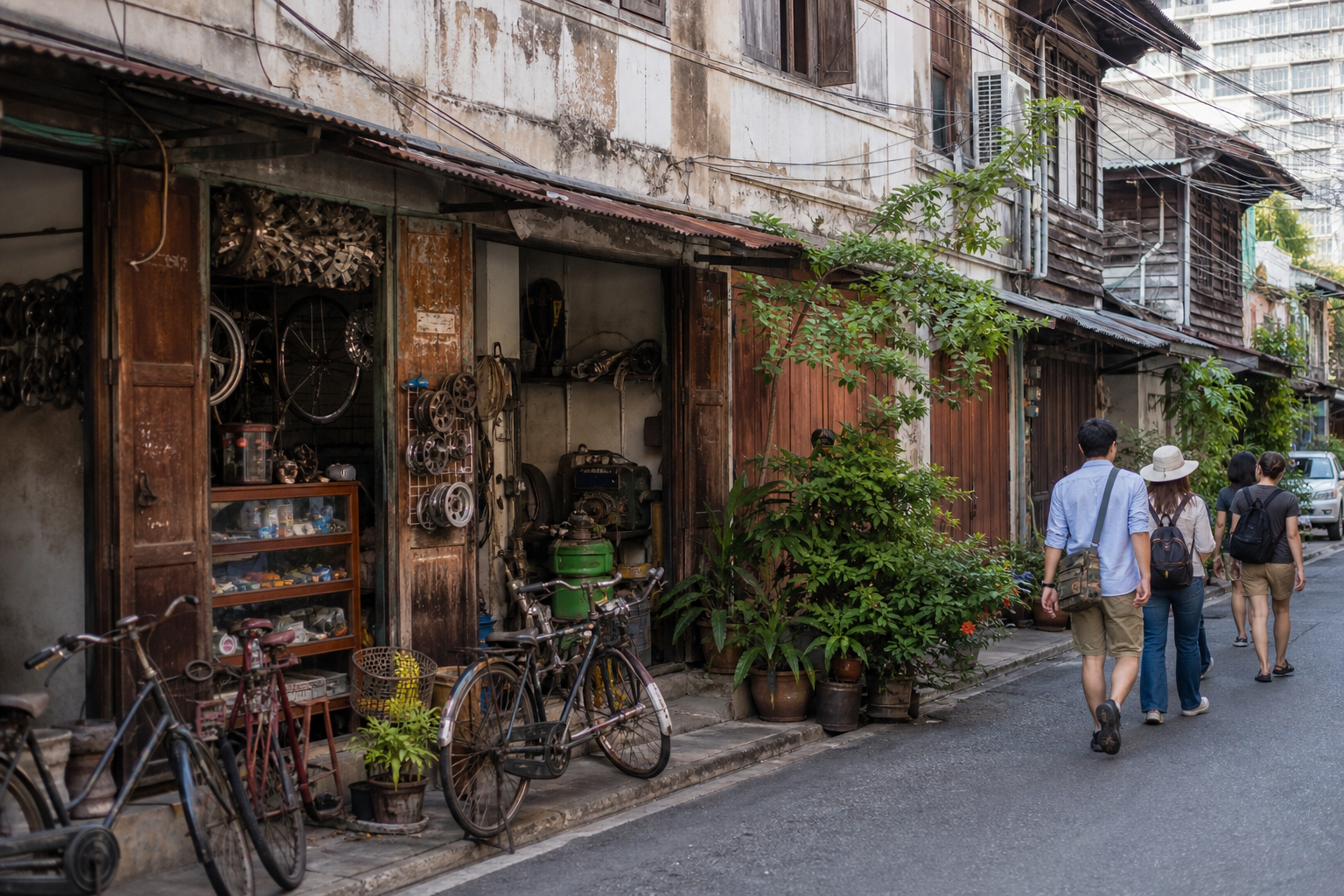
Talat Noi is a riverside quarter of alleys running off Charoen Krung, holding two-hundred-year-old mansions, working car-part workshops, century-old Chinese shrines and the Gothic-style Holy Rosary Church, according to The Colours of Thailand, checked July 2026. People live and work here. The workshops are businesses, not exhibits.
That is the appeal and the etiquette problem in one. Residents do their jobs while visitors photograph them. Ask before pointing a camera into a workshop, and stay out of doorways.
The one interior worth entering is So Heng Tai Mansion, a Chinese courtyard house in Teochew style with a swimming pool sitting in the middle of its courtyard, per Wikipedia. Admission costs about 50 baht, or nothing if you buy something at the café, per CK Travels, checked July 2026. This guide could not confirm its hours, so treat it as an opportunistic stop rather than a fixed point in your day.
Song Wat or Talat Noi: which is the better walk?
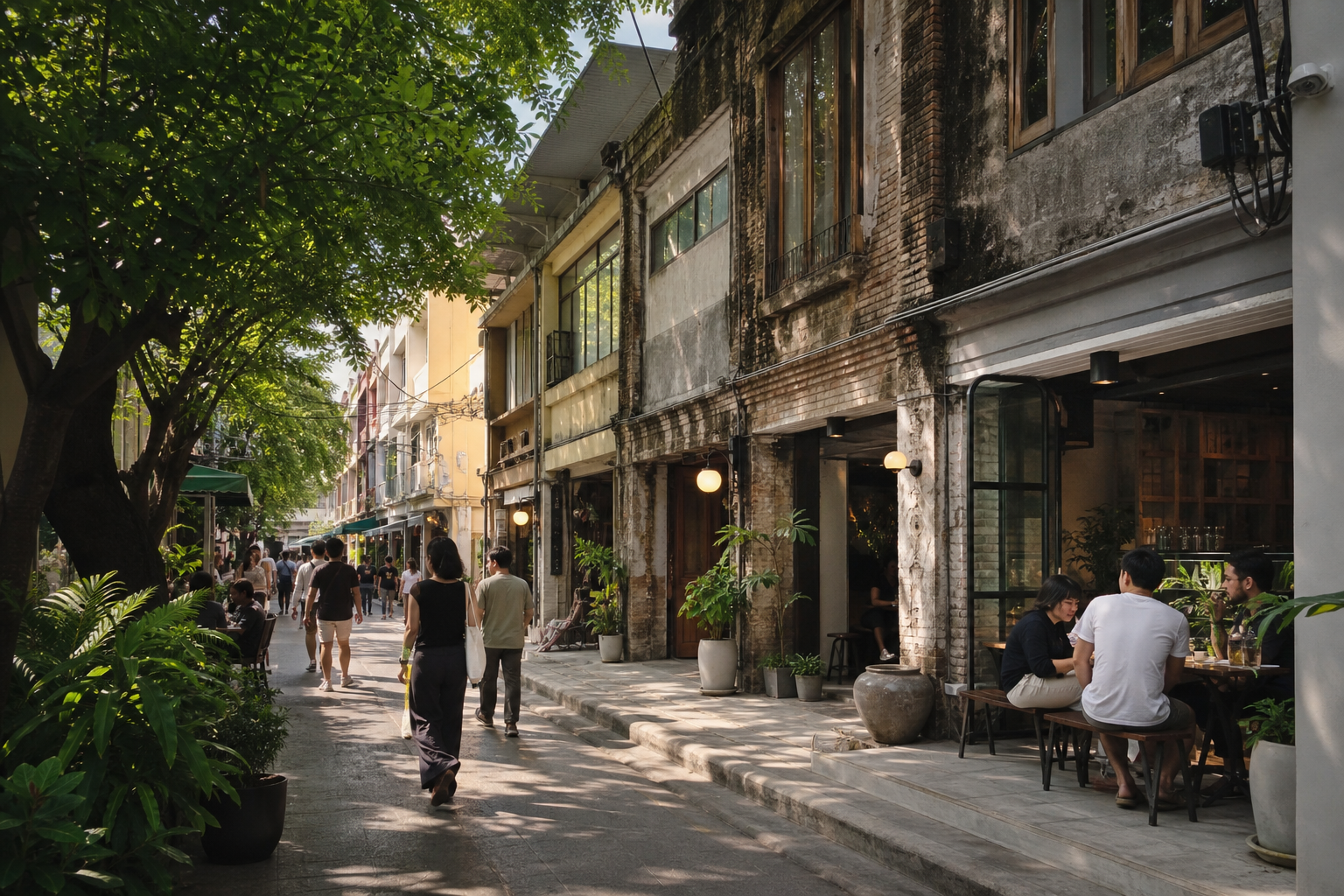
Both, in that order. The distinction between them does the work. Talat Noi is preservation. Song Wat is transformation. Talat Noi holds old buildings and old trades still doing what they always did. Song Wat covers about 1.2 kilometres of restored shophouses that went from quiet warehouse street to destination in a few years, per The Colours of Thailand and AIRPORTELs, checked July 2026.
Want atmosphere and texture? Talat Noi. Want somewhere to sit with a coffee and see what young Bangkok designers do with an old building? Song Wat.
Walk Talat Noi first and Song Wat second. You earn the coffee that way.
A deliberate omission: this guide names no cafés, galleries or bars on either street. Independent venues in this district open and close faster than any guide can track, and a list half of which has shut serves you worse than no list. Walk it and look.
What is the Creative District?
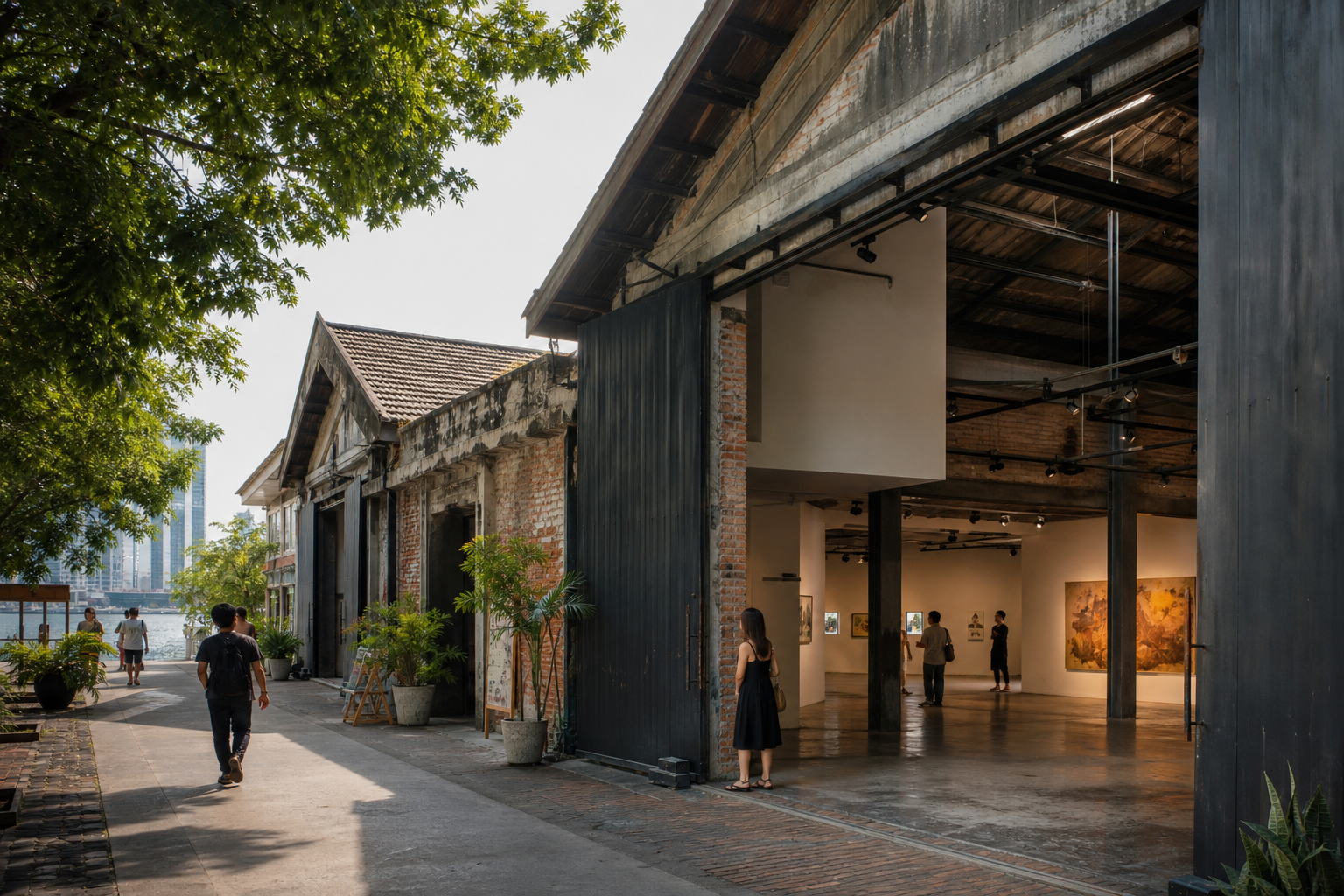
Charoen Krung and Talat Noi form Bangkok's designated Creative District, where reused warehouses and riverfront creative spaces sit alongside older trades, per Bangkok Design Week, checked July 2026. In practice the stretch south of Song Wat toward Bang Rak holds a concentration of galleries, studios and design-led spaces in buildings that once held cargo.
No fence marks it and no entrance charges you. It describes what happened to a few streets, and you experience it by walking them on an afternoon and going into whatever stands open.
BTS Saphan Taksin is the practical access point for this end.
When does the district change completely?
During Bangkok Design Week, which takes over Charoen Krung and Talat Noi along with Phra Nakhon, Pak Khlong Talat, Bang Lamphu and Khaosan, Hua Lamphong and Song Wat. The 2026 edition ran 29 January to 8 February 2026, with more than 350 programmes across over 140 venues, per Bangkok Design Week.
The festival reports over 400,000 visitors and more than 2,000 participants each year. That cuts both ways for a walker. Buildings that stay closed the rest of the year open up, and the streets you came here to find quiet stop being quiet.
Nobody had published dates for the next edition as of 31 July 2026. If you are planning a cool-season trip around it, check the official site rather than assuming the same dates repeat.
What is Asiatique and is it worth going?
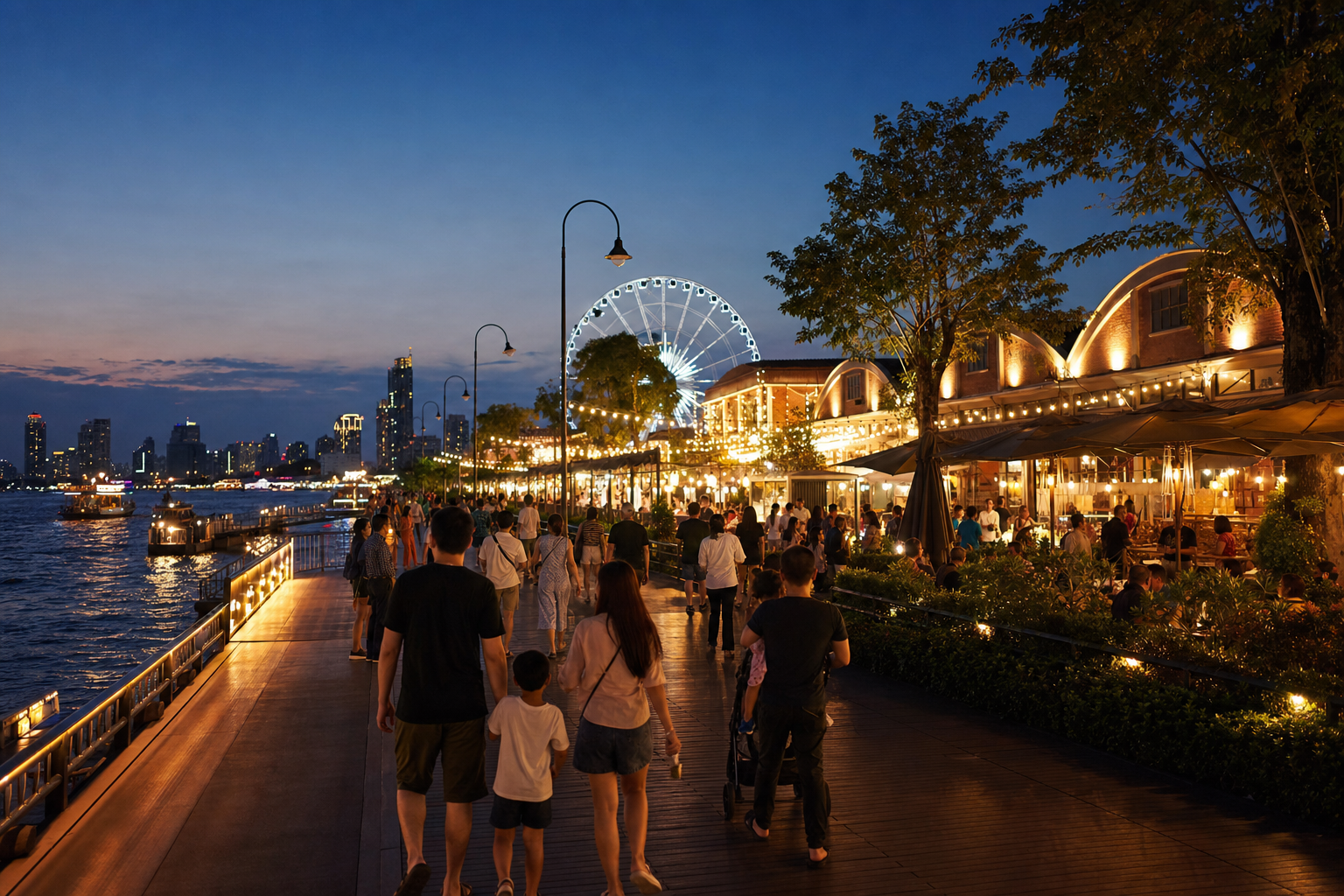
Asiatique The Riverfront Destination is a riverside night market and dining complex at 2194 Charoen Krung Road, at the far southern end of the strip. It opens daily from 11:00 to midnight, according to Asiatique The Riverfront, checked July 2026. Visitors turn up in the morning and find it closed, so that opening time matters.
Zones divide the site: Festival Village, Lifestyle Market, Warehouse 1 and 2 for dining, and a Big C mall. The landmark is Asiatique Sky. It is a Ferris wheel about 60 metres tall, which the operator calls Thailand's largest.
Is it worth going? It offers a polished, commercial, family-friendly evening at the opposite end of the spectrum from Talat Noi's workshops. If the rawness of the northern half appealed to you, Asiatique will feel manufactured. If you travel with children or want an easy dinner with a river view, it works well.
The practical warning: a shuttle boat serves Asiatique from Sathorn Pier, per Asiatique The Riverfront, but the operator publishes no hours for it. Confirm the last boat when you arrive. Standing at the far south end at midnight without a plan ends an evening badly.
Where should you stay near Asiatique?
On the Chao Phraya riverside rather than at Asiatique itself. Asiatique sits at the southern end of the strip with little around it, and the riverside hotel cluster further north around Sathorn and Saphan Taksin puts you a short boat ride away while also connecting you to the BTS and the rest of the river.
Our riverside Bangkok hotel guide covers that cluster in full, including which properties run their own shuttle boats. This guide does not duplicate it.
How long do you need?
Half a day for Talat Noi and Song Wat together, walked slowly. Add an afternoon for the Creative District stretch toward Bang Rak. Asiatique takes a separate evening, and you reach it by boat rather than on foot.
A full day works if you break it up. Talat Noi in the morning before the heat, lunch, Song Wat and the warehouses in the afternoon, then transport to Asiatique after dark. That covers the whole strip without walking 8.6 kilometres of it.
Practical tips
- Go early. Talat Noi's alleys offer no shade in the middle of the day.
- Wear shoes you can walk in. The surfaces run uneven and parts are working roads.
- Ask before photographing people at work. These are businesses, not a set.
- Do not plan around a specific café. They change fast on this strip.
- Check the last shuttle boat from Asiatique on the day.
- The Chinatown end after dark is a different trip. Our Yaowarat night food walk covers it, and the temple end belongs to the Old Town itinerary.
- On entry rules: in July 2026 the Thai cabinet approved reducing visa-free stays to 30 days and trimming the eligible list to 59 countries and territories, according to TAT Newsroom. As of 31 July 2026 the change had not taken effect. It applies 15 days after publication in the Royal Gazette.
Frequently asked questions
What is Charoen Krung Road famous for? It is Bangkok's oldest paved road, built 1862 to 1864 under King Mongkut and the first in Thailand to use modern methods, per Wikipedia. It moved the city from water transport to land, and the same road now strings together Chinatown, Talat Noi, Song Wat, the Creative District and Asiatique.
Where should you stay near Asiatique? On the riverside further north, around Sathorn and Saphan Taksin, rather than beside Asiatique itself. Little surrounds Asiatique, while the northern cluster connects to both the boats and the BTS. Our riverside Bangkok hotel guide covers those properties, including which run their own shuttle boats.
Is Talat Noi worth visiting? Yes, if you like places that still work rather than places restored for visitors. It holds old mansions, car-part workshops, Chinese shrines and the Holy Rosary Church, per The Colours of Thailand, checked July 2026. Go in the morning, walk slowly, and ask before photographing anyone at work.
What is the difference between Talat Noi and Song Wat? Talat Noi is preservation: old buildings and old trades, still operating. Song Wat is transformation, about 1.2 km of restored shophouses that became a destination in a few years. Walk Talat Noi first for texture, then Song Wat when you want to sit down.
What time does Asiatique open? Daily from 11:00 to midnight, according to Asiatique The Riverfront, checked July 2026. It works as an evening destination, and arriving in the morning means finding it shut. Confirm the last shuttle boat back to Sathorn Pier when you get there, because the operator publishes no hours for it.
When is Bangkok Design Week? It runs in the cool season. The 2026 edition took place 29 January to 8 February 2026, per Bangkok Design Week. Nobody had published dates for the next edition as of 31 July 2026, so check the official site. The festival fills the district with visitors, and it also opens buildings that stay shut the rest of the year.
Can you walk the whole of Charoen Krung? You can, but you should not. It covers about 8.6 km across six districts and much of the middle is ordinary city road. Walk Talat Noi into Song Wat, use the MRT and BTS to skip ahead, and take the boat to Asiatique.
Final thoughts
Charoen Krung rewards walking a piece of it well rather than covering all of it. The half day from Talat Noi into Song Wat ranks among the better walks in Bangkok because nobody has tidied it up. The workshops still work, the shophouses belong to somebody rather than to tourism, and the shift from one to the other happens over a few streets.
Go in the morning, keep the afternoon loose, and let Asiatique be a separate evening if you want it at all. Then let the Yaowarat night food walk handle dinner at the other end of the road.
Leave a Reply