Table of Contents
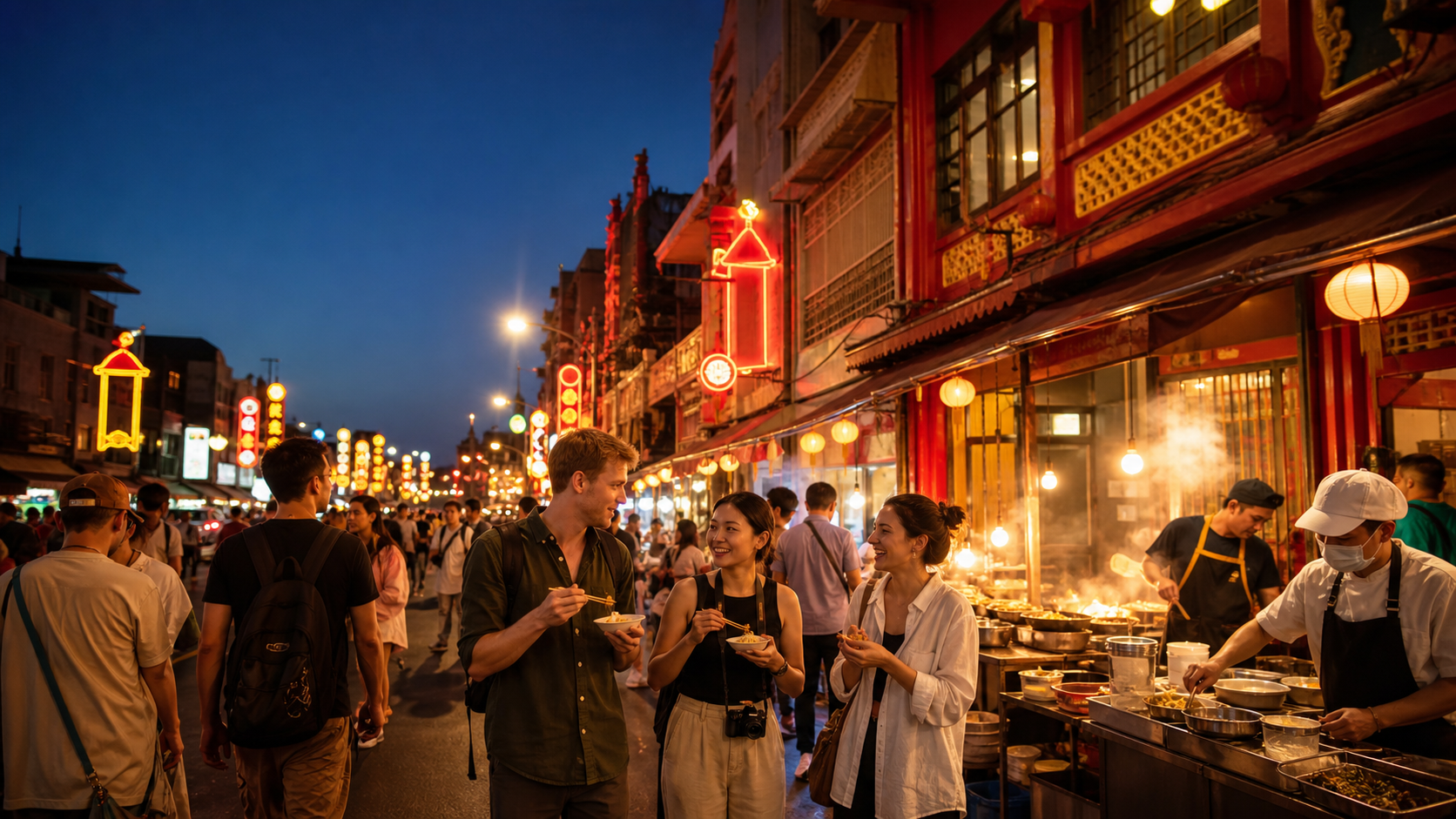
Bangkok's Chinatown comes alive after daylight softens and cooks set up along Yaowarat Road. This Yaowarat night food walk explains how to arrive from seven popular parts of Bangkok, follow a flexible nine-stop route, choose more than ten foods, and return before your last useful connection.
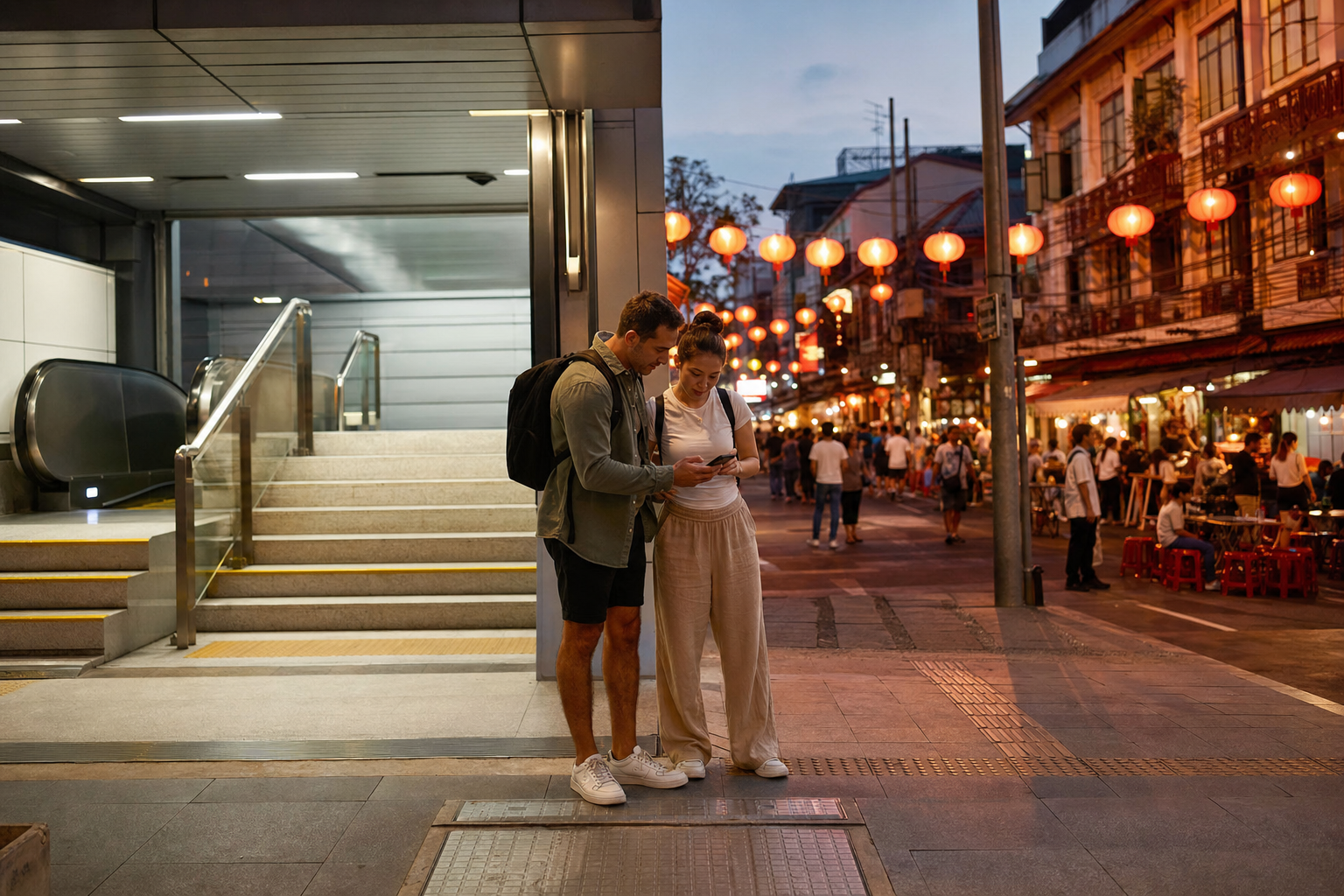
The simplest answer is usually MRT Wat Mangkon (BL29). Bangkok Expressway and Metro lists Exit 1 for Plaeng Nam Road, Phadung Dao Road, Yaowarat Road, Mo Mi Intersection, and the Old Market. Exit 2 serves Itsaranuphap, sometimes called Old Market Lane, and Mangkon Road. That makes the station a useful start and finish point for a self-guided loop.
Information last verified: July 22, 2026. Fares, train times, boat schedules, bus routes, vendor locations, opening hours, prices, and menu availability can change. Check official transport information and individual vendors on the day you travel.
Yaowarat night food walk at a glance
| Decision | Practical choice |
|---|---|
| Best rail arrival | MRT Wat Mangkon (BL29) |
| Useful station exit | Exit 1 for Plaeng Nam, Phadung Dao and Yaowarat Road; Exit 2 for Itsaranuphap |
| Suggested start | Early evening, before the busiest dinner period |
| Walking format | Nine flexible stops; skip or reverse sections as needed |
| Best approach to food | Share small portions and choose stalls that are visibly operating |
| River option | Ratchawong Pier, only while the relevant boat service is running |
| Late return | MRT if your direction is still operating; otherwise metered taxi or licensed ride-hailing pickup |
The stops are streets, junctions, and transport landmarks rather than supposedly permanent stalls. Vendors may move, close, or sell out, so choose what is visibly operating when you arrive.
How to get to Yaowarat from different parts of Bangkok
From Sukhumvit or Asok
If you are near Asok, Nana, Phrom Phong, or another central Sukhumvit location, get to MRT Sukhumvit (BL22) and take the Blue Line directly to Wat Mangkon (BL29). No BTS transfer is required once you are inside MRT Sukhumvit.
If BTS is closer, ride to BTS Asok, use the signed connection to MRT Sukhumvit, buy a separate MRT ticket, and continue to Wat Mangkon. For tickets and platform directions, read How to Use the BTS and MRT in Bangkok: A First-Timer's Guide.
From Siam or Pratunam
From Siam, take the BTS Silom Line to Sala Daeng, walk to MRT Si Lom (BL26), then ride directly to Wat Mangkon. BTS to Asok and MRT from Sukhumvit is another option. From Pratunam, use Ratchathewi BTS toward Asok, or take Airport Rail Link from Ratchaprarop to Makkasan and walk to MRT Phetchaburi. Choose by your exact starting point and the live journey planner.
From Silom or Sathorn
Travelers near MRT Si Lom, Lumphini, or Khlong Toei can take the Blue Line directly to Wat Mangkon. If you are closer to BTS Sala Daeng, walk through the interchange to MRT Si Lom first. From lower Sathorn locations near BTS Saint Louis or Surasak, it may be more practical to take BTS to Sala Daeng and change there.
Rail is normally easier to predict during the evening peak. A taxi may suit groups, limited-mobility travelers, or late returns, but time and fare depend on traffic.
From the riverside
The river can be an enjoyable early-evening arrival, particularly if you are already near an operating Chao Phraya Express Boat pier. Ratchawong Pier (N5) serves the Chinatown area; from the pier, continue inland toward Song Wat and Yaowarat.
The official boat schedule shows different lines, days, times, and fares. Its June 24, 2026 schedule lists 18 baht for the Orange Line and 23 baht for the Yellow Line, but not every service runs daily or late. Confirm both piers and direction before boarding; otherwise use MRT or a metered taxi.
From Khao San Road or Bangkok Old Town
Khao San Road does not have an adjacent BTS or MRT station. The simplest evening option for many visitors is a metered taxi or licensed ride-hailing trip to Wat Mangkon MRT, Plaeng Nam Road, or the Chinatown Gate. Travel time is traffic-dependent.
Bus routes change more readily than MRT service, so use the BMTA official route search that day. If you are near MRT Sam Yot (BL30), Wat Mangkon is the next station in one direction.
For a daytime route that combines major historic sights with the Old Town before reaching Chinatown, see Bangkok Temples and Street Food: A One-Day Old Town Itinerary. The present guide is intentionally different: it begins in the evening and concentrates on food and transportation.
From Suvarnabhumi Airport
For a rail-based route, take the Airport Rail Link from Suvarnabhumi to Makkasan, then follow signs for the walking connection to MRT Phetchaburi (BL21). From Phetchaburi, ride the Blue Line directly to Wat Mangkon.
AOT places the station on Level B1 and lists 05:30–24:00 service. A Thai government guide gives a distance-based fare of approximately 15–45 baht; add a separate MRT fare. With large luggage or a late arrival, an official airport taxi may be simpler, but road fare, tolls, surcharges, and time vary.
From Don Mueang Airport
The rail option is the SRT Red Line from Don Mueang to Krung Thep Aphiwat, followed by the connection to MRT Bang Sue (BL11) and a Blue Line train to Wat Mangkon. SRTET's July 2026 adult matrix lists the Don Mueang–Krung Thep Aphiwat Red Line fare at 33 baht. Add the separate MRT fare and allow time to navigate the interchange.
AOT also lists the A1 airport bus to Chatuchak/Mo Chit at 30 baht; from there, take MRT Chatuchak Park to Wat Mangkon. After a late arrival, check every connection before choosing either route.
A flexible nine-stop Yaowarat night food walk
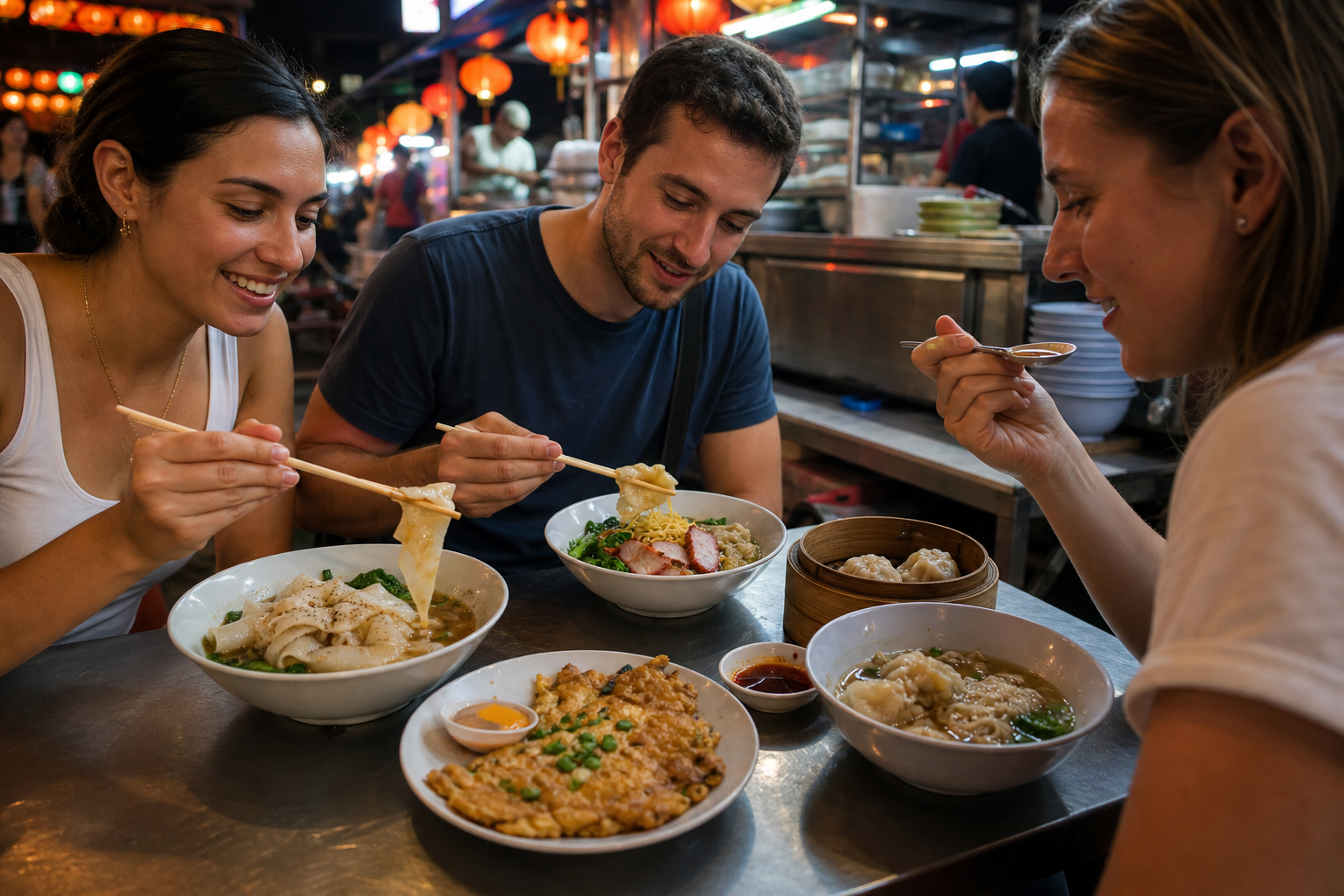
The stops below create a loose loop with an optional riverside extension. They are not timed reservations. Pause when something looks good, share dishes, and remove sections when the weather, crowds, or your energy level changes.
Stop 1: Wat Mangkon MRT arrival hub
Begin at Wat Mangkon MRT. Use Exit 1 if you want immediate access toward Plaeng Nam, Phadung Dao, Yaowarat Road, and the Old Market. Use Exit 2 if you prefer to begin inside the Itsaranuphap market lanes.
Save the station entrance and check the live last-train time for your direction. On the checked date, BEM showed approximately 23:28 in one direction and 00:12 in the other; those times are not universal.
Stop 2: Old Market and Itsaranuphap lane
This compact lane is calmer than the main road. Daytime businesses may be closing as evening vendors set up. Begin with a dumpling, roast meat, or a shared noodle bowl to keep room for later stops.
Stop 3: Plaeng Nam Road
Continue toward Plaeng Nam Road, one of the side streets explicitly listed at Wat Mangkon Exit 1. This is a useful place to compare queues and menus before committing to a full plate. Look for clearly displayed prices or ask before ordering.
Consider guay jub, rolled rice noodles in peppery broth. It may include crispy pork and offal; ask what is in the bowl, but understand that prepared broth may not accommodate every request.
Stop 4: The main Yaowarat Road food corridor
Turn onto the main road for the classic neon-lit Chinatown atmosphere. The Tourism Authority of Thailand describes Yaowarat as becoming more active after business hours as street-food vendors set up. Conditions still vary by weekday, festival, rain, road controls, and individual vendor schedules.
Keep to usable pedestrian space and never step into traffic for a photograph. Yaowarat is a working district, not a closed pedestrian market every night.
Stop 5: Phadung Dao Road
Phadung Dao is another useful branch from the main corridor and is listed by BEM for Wat Mangkon Exit 1. It can work as the seafood stage of the walk. Rather than choosing a place because a queue looks famous, compare cleanliness, price display, table turnover, and whether raw and cooked foods appear separated.
Share grilled prawns, squid, mussels, fish, or crab according to the day's menu. Confirm whether pricing is per plate, item, or weight before ordering.
Stop 6: Yaowaphanit junction and the noodle round
Return toward the main road and continue to the Yaowaphanit area. This is a logical moment for a noodle comparison: wonton noodles with barbecue pork, yen ta fo with its characteristically colored sauce, or another bowl prepared by a visibly active vendor.
Sharing one noodle bowl and one omelet leaves room for dessert. Portions and toppings vary, so menu photographs are guidance only.
Stop 7: Chinatown Gate at Odeon Circle
The Royal Jubilee Gate at Odeon Circle provides a clear non-religious landmark and a visual endpoint for the eastern side of the walk. It is useful for regrouping, calling a car, or deciding whether to extend the route.
Use designated crossings and photograph the gate from a safe pedestrian position. Festival traffic controls may alter access.
Stop 8: Charoen Krung side streets
Loop back through the Charoen Krung side of Chinatown rather than repeating every step on Yaowarat Road. The atmosphere is different: older shophouses, narrower side streets, and a mixture of businesses that may be open, closing, or already quiet.
Look for Yaowarat-style toast, black-sesame dumplings in ginger soup, or water chestnuts in coconut milk. If a cart is absent, move on rather than trusting an old location pin.
Stop 9: Song Wat and Ratchawong early-evening extension
If you started early and still have energy, extend the walk toward Song Wat and Ratchawong Pier. The riverside approach adds historic trading streets and a quieter contrast to the main food corridor. It works best before boat services and daytime businesses finish—not as a guaranteed late-night market.
Return toward Wat Mangkon or arrange a car at a legal pickup point. Never expect a late boat unless the official timetable confirms it.
What to eat: 12 ideas for a Chinatown Bangkok food guide
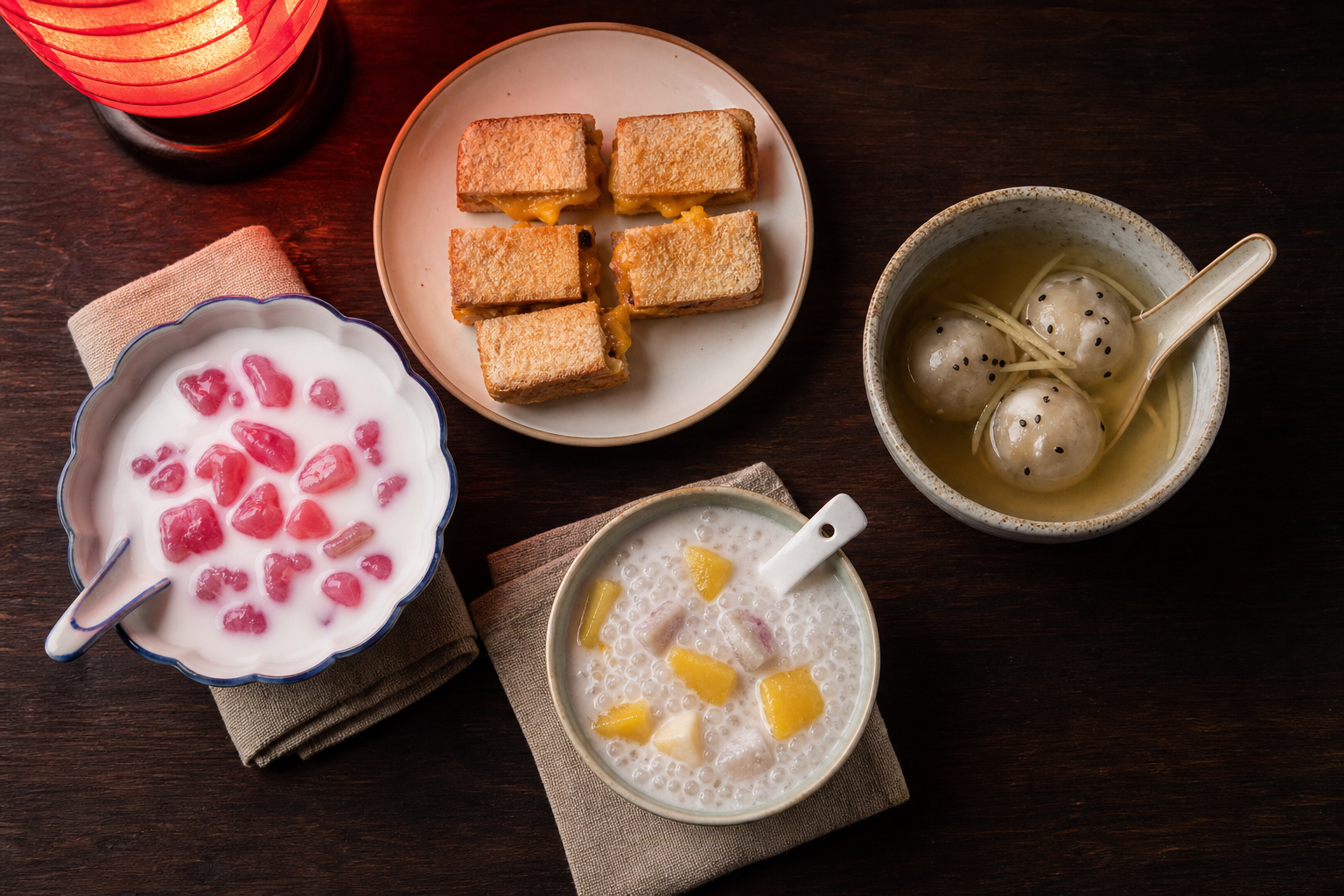
You will not find every dish every night, and no single person needs to eat all twelve. Use this as a recognition list:
- Guay jub: Rolled rice noodles in peppery broth, often with crispy pork or offal.
- Wonton noodles with barbecue pork: Egg noodles, dumplings, and sliced red-roasted pork.
- Yen ta fo: Noodles in a pink-red fermented-bean-curd-style sauce, often served with fish balls or seafood components.
- Grilled prawns: Ask whether the price is per plate, piece, or weight.
- Grilled squid or mussels: Best ordered freshly cooked rather than left standing.
- Oyster or seafood omelet: A rich, crisp-edged plate that is easier to share than to follow with several full meals.
- Dim sum: Choose a few baskets or pieces so the walk remains a tasting route.
- Roast duck or crispy pork over rice: A practical savory option when you want a compact plate rather than soup.
- Yaowarat toast: Crisp outside, soft inside, with sweet fillings that vary by seller.
- Black-sesame dumplings in ginger soup: Warm, nutty, and strongly flavored; confirm sesame allergies.
- Water chestnuts in coconut milk: A cooling dessert after peppery noodles or grilled food.
- Sago or fruit in milk or coconut milk: Availability changes, but it is a lighter way to end the evening.
TAT material supports dim sum, noodles, omelettes, guay jub, wonton noodles, seafood barbecue, toast, and Chinese desserts as food categories. Older features are not proof that a named stall is currently open.
How much time and money should you allow?
For most first-time visitors, allow roughly two to four hours depending on queues, walking pace, and whether you add Song Wat and the river. This is planning guidance, not a fixed tour duration.
Your food budget depends more on ordering style than on the number of stops. Sharing small dishes keeps costs controlled. Seafood can change the total quickly, especially when sold by weight. Confirm the amount and price before cooking begins. Carry some Thai baht because small vendors may not accept international cards, while also keeping money and phones secure in crowded areas.
Transport costs are easiest to calculate in the operators' live tools. BTS and MRT fares are distance-based. Airport Rail Link and Red Line fares are separate, and transfers generally require another ticket or payment. A taxi total depends on the meter, traffic, tolls, airport rules, and pickup conditions.
Last-train and late-night return plan
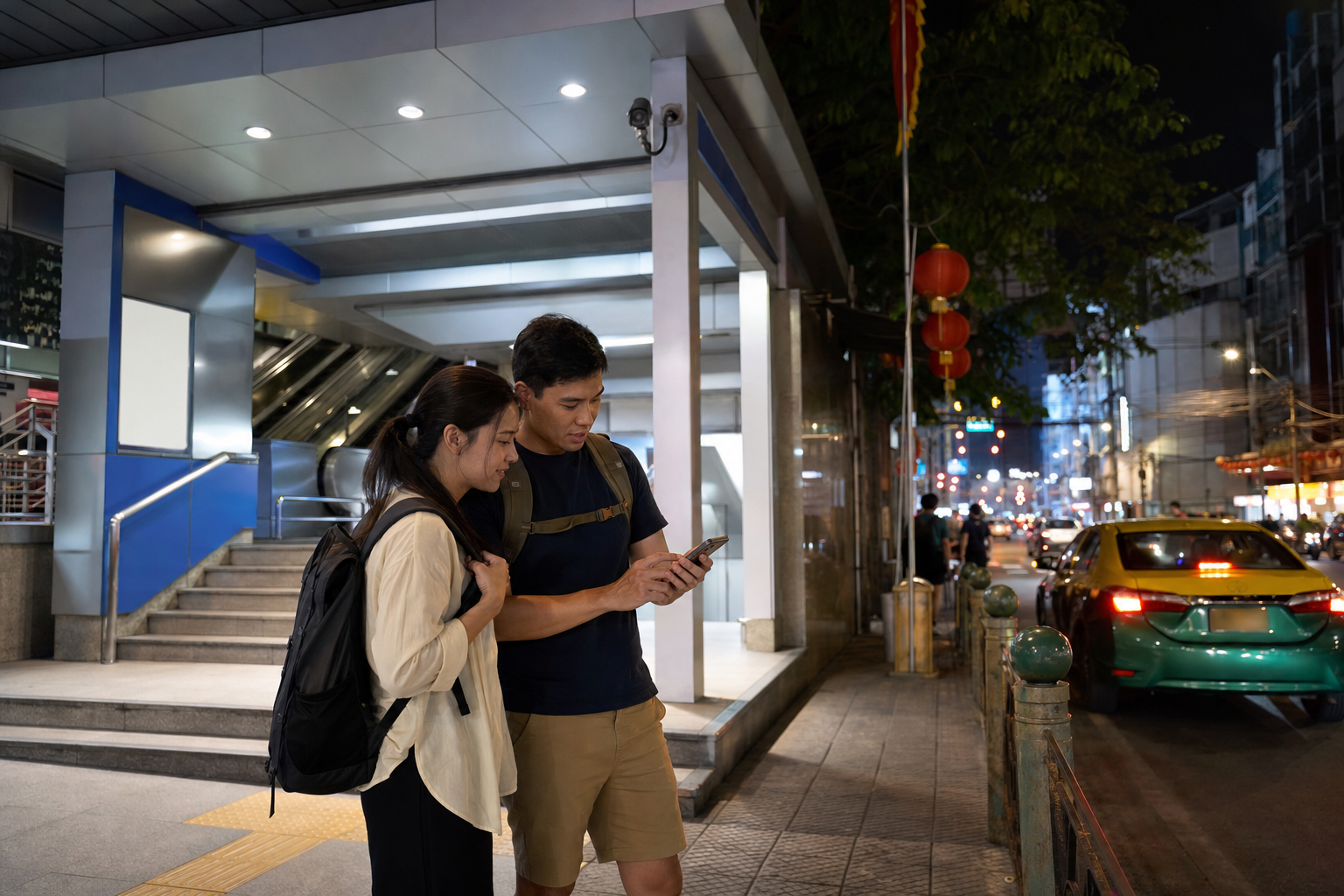
Do not rely on “the trains close around midnight” as your only plan. The last usable journey depends on your station, platform direction, transfer, and destination. A train that leaves Wat Mangkon late may arrive too late for a connecting BTS or airport service.
Before the first tasting:
- Open the BEM fare and first/last train page.
- Select Wat Mangkon and your direction.
- Check any BTS, Airport Rail Link, or Red Line connection separately.
- Set a personal departure alarm with a buffer.
- Save a taxi or licensed ride-hailing pickup point as Plan B.
When taking a taxi, use the meter where applicable and avoid anyone soliciting an unofficial fixed-price ride. Busy curbs may be unsuitable for pickups; walk to a well-lit side street or obvious landmark without blocking traffic. Travelers returning to the airport should leave a generous margin for terminal procedures rather than attempting a food walk immediately before a flight.
Practical food, comfort, and accessibility tips
- Allergies: Ask about peanuts, sesame, shellfish, fish sauce, soy, egg, milk, and shared cooking surfaces. Cross-contact is possible in compact kitchens.
- Hygiene: Prefer food cooked to order and served hot. Use hand sanitizer before eating, and choose drinking water from sealed containers.
- Heat and rain: Wear breathable clothing and carry a compact umbrella. Covered space is limited when a sudden storm moves through.
- Footwear: Uneven pavement, drains, crowds, and food-service equipment make stable closed or well-secured shoes helpful.
- Mobility: Wat Mangkon has elevators and ramps according to BEM, but the surrounding pavements and crowded lanes can still be challenging. A shorter out-and-back route from Exit 1 may be more practical than the full loop.
- Photography: Ask before taking close photographs of vendors or customers. Keep bags and cameras clear of hot cooking areas.
- Dietary needs: Vegetarian-looking dishes may use meat broth, oyster sauce, fish sauce, lard, or shared cookware. Request clarification rather than assuming.
Where to stay for a Yaowarat food evening
You do not need to stay in Chinatown to use this guide. Accommodation near any convenient MRT Blue Line station can simplify the return, while a Chinatown stay can reduce late-night transport. Sukhumvit offers broad hotel choice and direct MRT access from the Asok area; compare options in 8 Best Hotels in Sukhumvit for First-Time Bangkok Visitors.
Travelers who prefer to walk back after dinner may compare hotels near Wat Mangkon, Hua Lamphong, or the Chinatown river edge. Check the actual walking route, not just the district name, because major roads and narrow lanes affect convenience.
Agoda hotel search: Verified affiliate link to be added before publication.
Frequently asked questions
Which MRT station is best for Yaowarat?
Wat Mangkon (BL29) is the most useful general answer. Exit 1 serves Plaeng Nam, Phadung Dao, Yaowarat Road, and Old Market, while Exit 2 serves Itsaranuphap and Mangkon Road.
What time should I start a Yaowarat night food walk?
Early evening gives you time to orient yourself before peak dinner crowds and makes a river arrival more realistic. Vendor schedules vary, so there is no single hour when every recommended food is available.
Can I reach Yaowarat by BTS?
BTS does not stop directly on Yaowarat Road. Transfer to the MRT at an appropriate interchange, such as Asok–Sukhumvit or Sala Daeng–Si Lom, then ride to Wat Mangkon.
Is the river boat useful at night?
It can be useful for an early-evening arrival from the riverside, but services, days, and final departures vary. Check the official timetable and do not assume a late return boat will operate.
Is Yaowarat suitable for vegetarians?
Vegetarian food may be available, especially during particular festivals, but sauces, broths, and shared cookware can contain animal products. Ask each vendor and keep a backup dining option.
Do I need a guided tour?
No. The MRT and the nine-stop framework make a self-guided evening possible. A legitimate guided tour may still help travelers who want interpretation, dietary assistance, or less navigation.
Final planning checklist
Use Wat Mangkon as the default transport anchor, arrive before you are extremely hungry, and treat the evening as a sequence of small tastings. Keep the route flexible, verify the last train before the first order, and never assume that an old review proves a vendor's current hours, price, or location.
Yaowarat rewards curiosity more than checklist completion. A successful evening might include only five stops, three shared dishes, and an unhurried walk beneath the signs. The goal is not to consume every famous item—it is to understand how to arrive, explore respectfully, eat selectively, and return without stress.
Disclosure: This article may contain affiliate links. If you make a booking through one of these links, we may earn a commission at no additional cost to you.
Image note: Editorial images in this article are generated with AI. They illustrate the general atmosphere, transport planning, and food categories; they do not depict a specific restaurant, vendor, or guaranteed real-world scene.
Leave a Reply