Table of Contents
Hua Hin is the weekend Bangkok has been escaping to for nearly a century. It is a seaside town on the upper Gulf coast, about 200 km southwest of the capital and reachable in roughly three hours — close enough to leave after Friday work and be eating grilled seafood at a night market by evening. It trades island glamour for something more relaxed: a long swimmable beach, a famous old railway station, a cluster of excellent night markets, and easy half-day trips into national parks. This guide plans a two-to-three-day weekend: how to get there, where to base yourself, and what to do across Saturday and Sunday.
Disclosure: This article may contain affiliate links. If you make a booking through one of these links, we may earn a commission at no additional cost to you.
Information last verified: 2026-07-24. Prices, transport schedules, and market days and hours may change. Confirm with official operators and venues before you travel.
Is Hua Hin worth a weekend?
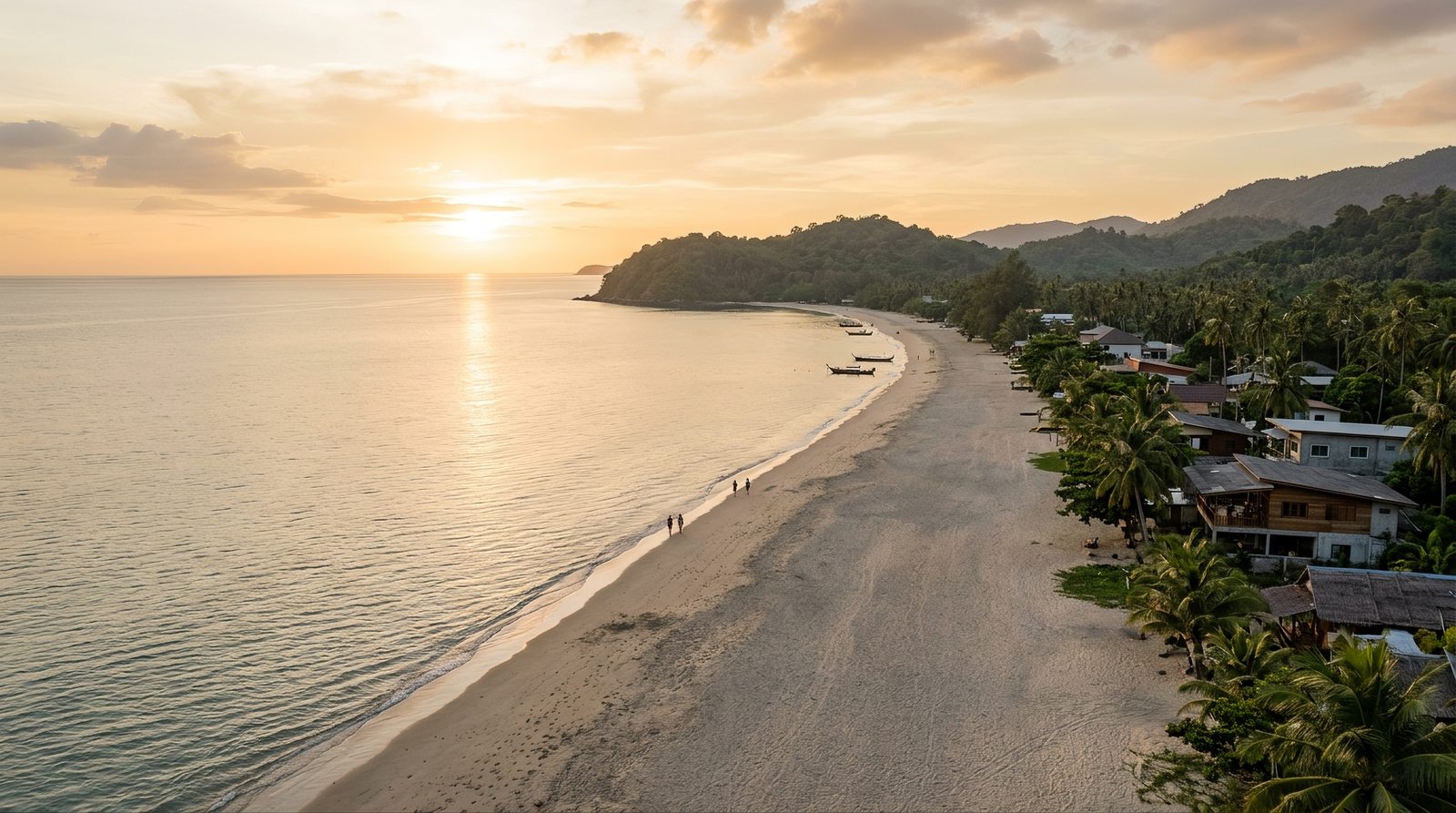
Yes — with the right expectations. Hua Hin is a town beach, not a postcard island: the sand is gold-grey and the water is calm Gulf water, good for a swim and a long walk but not the turquoise of Krabi or Samui. What Hua Hin does better than almost anywhere in easy reach of Bangkok is the weekend itself — short travel time, a genuine choice of night markets, fresh seafood, and enough day trips to fill a second morning. It suits couples, families, and anyone who wants a change of pace without a flight.
The town's character comes from its history. Hua Hin became fashionable in the 1920s when the royal family built a summer palace here — Klai Kangwon, meaning "far from worries" — and the aristocracy followed. That heritage still shapes the place: the grand old railway station, the golf courses, and a generally calmer, more genteel feel than Thailand's party beaches. It has grown a lot since, but it has kept the sense of being a retreat rather than a resort machine.
How to get to Hua Hin from Bangkok
The town is about 200 km from Bangkok, and there are four realistic ways to cover it.
| Option | Approx. cost | Approx. time | Best for |
|---|---|---|---|
| Minivan | around 180 THB | about 3 hours | Speed on a budget |
| Bus | roughly 300–500 THB | about 4–6 hours | Comfort, luggage space |
| Train | third class up to AC classes | about 3.5–4+ hours | The scenic, romantic arrival |
| Private car / taxi | premium rate | about 2–3.5 hours | Families and groups |
Minivan — the default
The quickest budget option is the minivan, at about three hours. The best-known service, Malee Travel, runs from the south side of Victory Monument roughly every 30 minutes from around 06:00 to 18:30 for about 180 THB. Vans also depart from Ekkamai, Mo Chit and Khao San, and drop-off points vary by operator — commonly Market Village, the town centre, or Blue Port — so check where your van terminates relative to your hotel.
Bus
Larger coaches leave from Bangkok's Southern Bus Terminal (Sai Tai Mai) for roughly 300–500 THB depending on the class of bus, taking about four to six hours with more stops. They run frequently from early morning until late at night and give you more room and luggage space than a van.
Train
The train is the slow, romantic choice. State Railway services run from Krung Thep Aphiwat Central Terminal and take around three and a half to four hours or more — longer than the van — but they deliver you to one of Thailand's most beautiful stations (more on that below). Fares run from third class up to air-conditioned seating. Timetables change, so check the official State Railway of Thailand channels before planning around a specific departure. If you are reaching the station by city transport, our Bangkok BTS and MRT guide covers the connections.
Private car or taxi
A private car or taxi is the most flexible option and, in light traffic, the fastest — roughly two to three and a half hours door to door. It costs a clear premium over the van but makes sense for families, groups, or anyone arriving late. Split between four people it is often closer to the bus in cost per head, with the door-to-door convenience the shared options cannot match.
Which should you pick? For a couple travelling light on a budget, the minivan is hard to beat. For a family with luggage, a private car removes the two friction points of Hua Hin travel — Bangkok's departure-terminal chaos and finding transport at the far end. The train is worth it once, for the journey and the arrival, if you are not in a hurry.
Where to stay: choosing your base
Hua Hin stretches along the coast, and where you sleep changes the feel of the weekend. Three broad areas cover most first-time visitors. (This guide compares areas rather than naming specific hotels — no individual property was verified for this update.)
- Town centre. Walking distance to the Hua Hin Night Market, the railway station, restaurants and the main beach access. This is the most convenient base for a market-and-food weekend and the easiest if you arrive without a car. The trade-off is some evening street noise.
- Beachfront resort strip (north of town). Larger resorts with pool-and-beach frontage, quieter and more spread out. Best if your idea of the weekend is a lounger and a pool with the markets as an evening outing rather than a doorstep. You will use taxis or songthaews to reach town.
- Khao Takiab (south end). A calmer beach area near Monkey Mountain and the Cicada and Tamarind markets, a short drive south of the centre. A good middle ground: quieter nights, with the town's best weekend market on your side of the bay.
For a first weekend, the town centre is usually the right call — it removes transport from the equation and puts the nightly market, the beach and the station within walking distance. Choose the resort strip or Khao Takiab on a return visit, or when the point of the trip is to slow down rather than to explore.
A two-day weekend plan
Saturday — town, station, and the central market
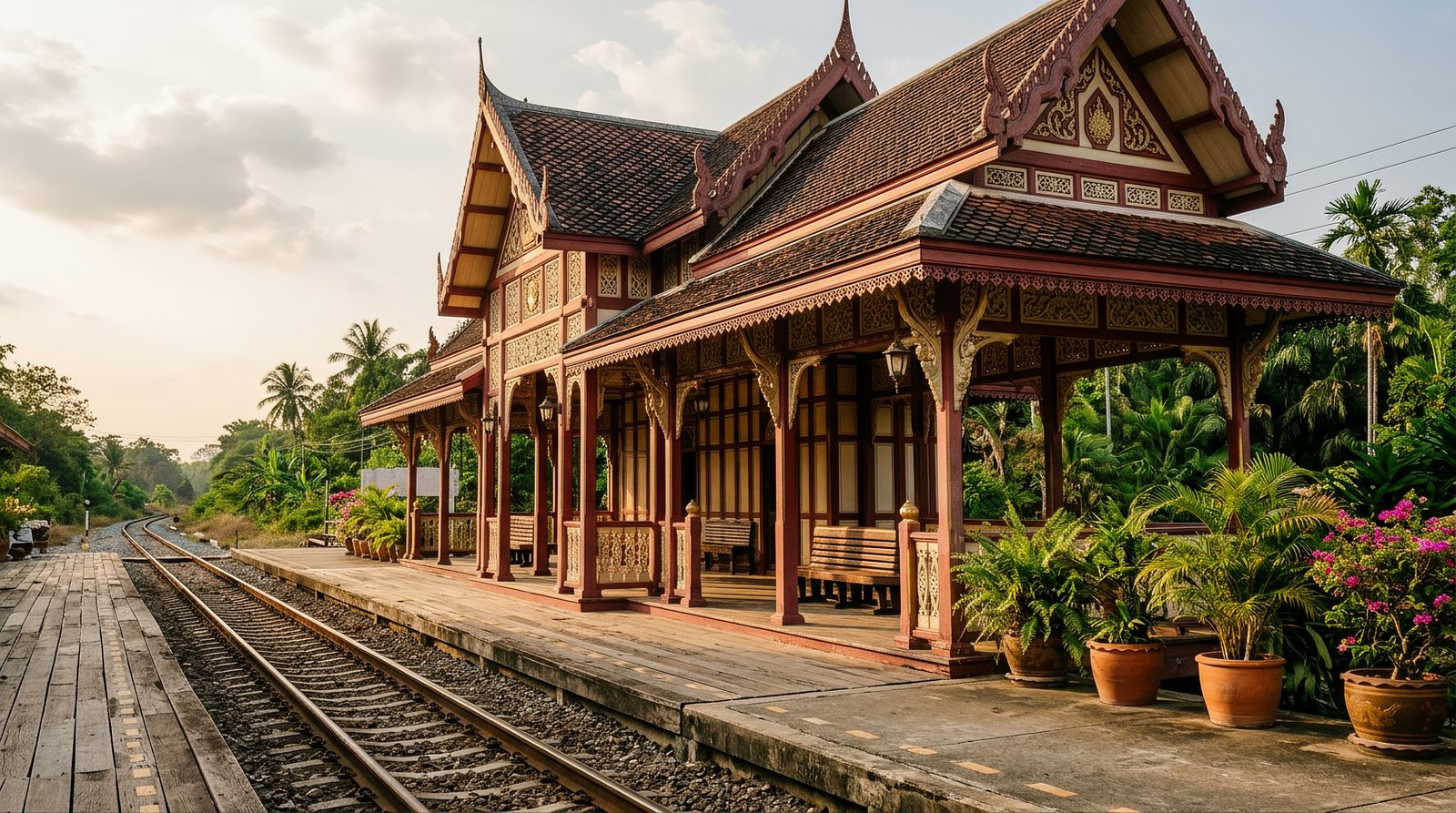
Start slow with the beach in the morning, when the sand is coolest and quietest. Mid-morning, walk to Hua Hin Railway Station — one of the oldest and most photographed stations in Thailand, a red-and-white timber building with an ornate royal waiting pavilion once used by the king. It is a short walk from the town centre and takes ten minutes to enjoy.
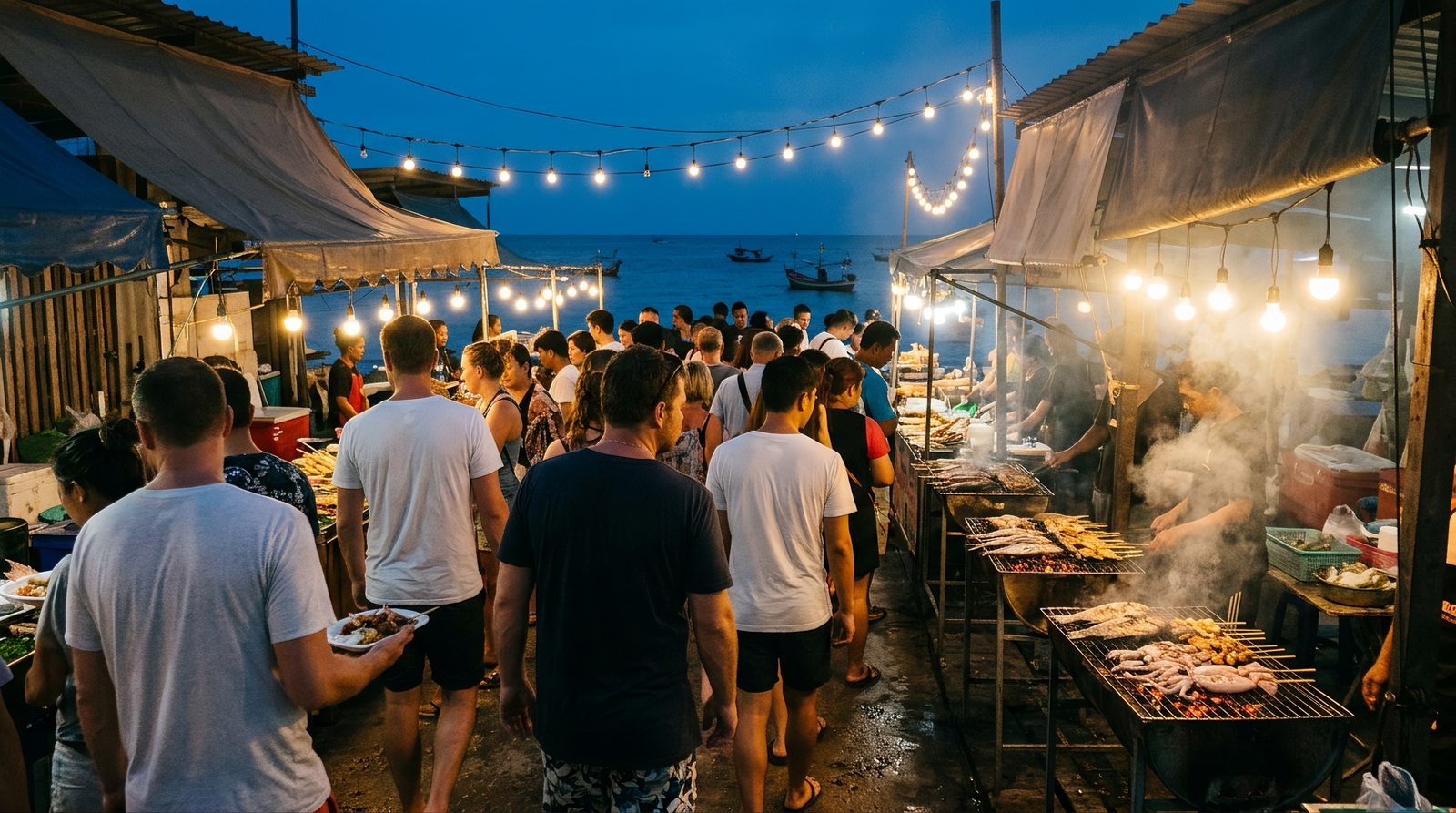
Spend the afternoon out of the heat — a long lunch, a spa, or the pool — then aim for the Hua Hin Night Market in the evening. Unlike the weekend-only markets to the south, this downtown market runs every night, roughly from late afternoon until around midnight, along the Dechanuchit area near Petchkasem Road. It is the seafood-and-street-food heart of town: grilled prawns and fish, pad thai, skewers, Thai sweets and beachwear stalls. Come hungry and graze.
Sunday — Monkey Mountain and the weekend markets
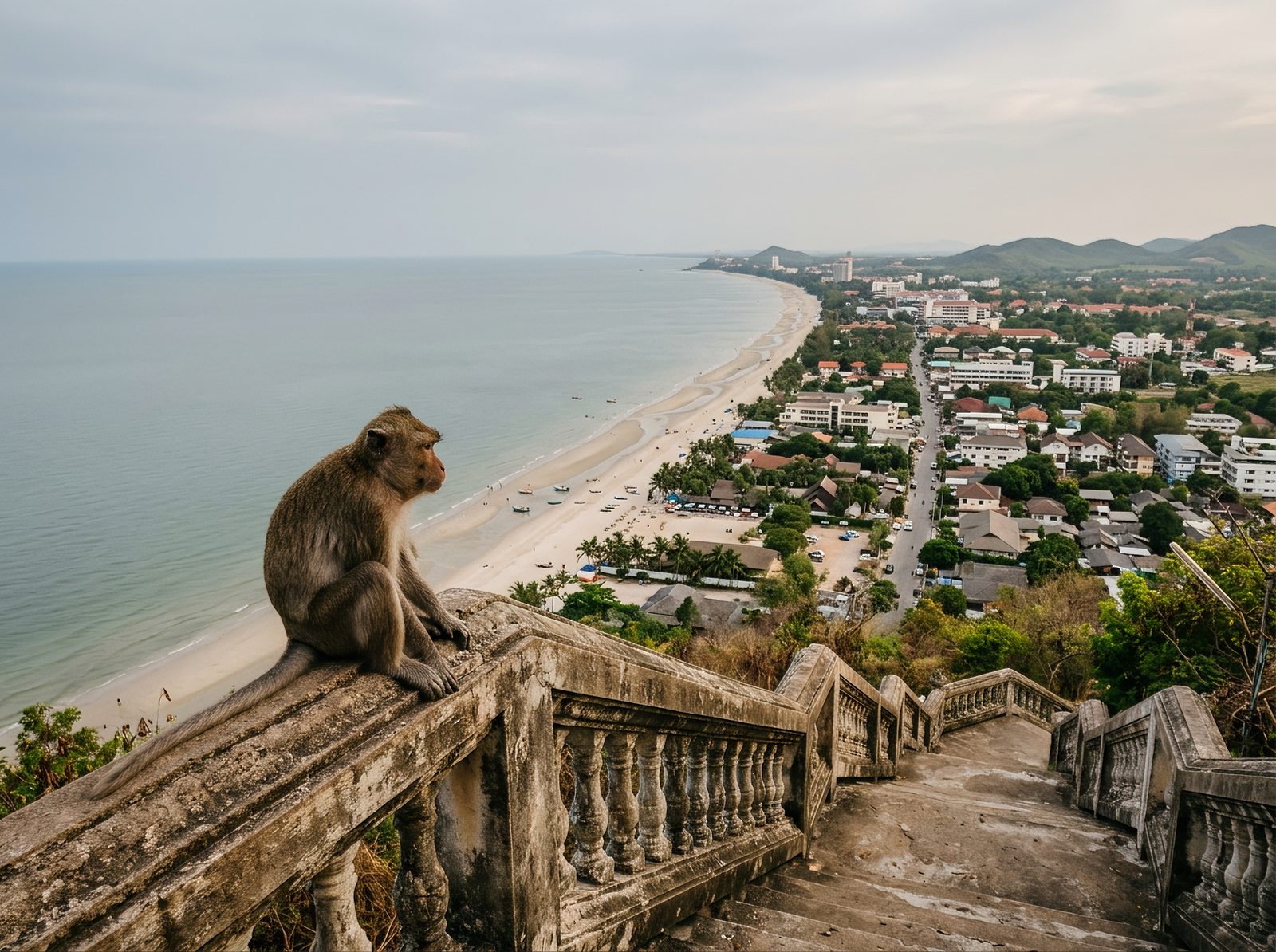
Head south to Khao Takiab, or Monkey Mountain, where a stairway climbs to the hilltop temple of Wat Khao Takiab and views back along the bay. A word of caution that is not optional: the resident macaques are bold and can be aggressive. Do not carry visible food, keep bags zipped and close to your body, and do not try to feed or photograph them at close range.
If your weekend falls Friday to Sunday, time the evening for Cicada Market at Khao Takiab, open weekends and public holidays from around 5pm. It is the most atmospheric market in Hua Hin — arts, crafts, design goods, live music and stage performances rather than the usual souvenir stalls — and the adjacent Tamarind Market handles the food in a hawker-style setting. Days and hours shift seasonally and around holidays, so confirm before you build an evening around them.
If you have a third day
With an extra morning, two day trips stand out, both needing a car or tour: Sam Roi Yot National Park to the south, home to Phraya Nakhon Cave and its much-photographed royal pavilion lit by a shaft of daylight; and Pa La-U Waterfall, inland toward the Myanmar border. Both are season-dependent — greener and fuller after rain, but check access conditions first.
More to do around town
- Plearn Wan — a vintage 1960s-style wooden shopping village on the road toward Khao Takiab, with retro stalls, street snacks and photo-friendly old storefronts. Good for an early evening before a market.
- The beach itself — long and walkable, with pony rides a long-standing (if divisive) local sight. Swimming is generally easy in calm season; heed any flag warnings and seasonal jellyfish notices.
- Golf — Hua Hin is one of Thailand's oldest golf destinations, dating to the royal court's patronage in the 1920s, with several courses if that is your weekend.
- Spas and wellness — the resort strip is well stocked with spas, and a mid-afternoon massage is the standard local answer to the heat between a morning beach and an evening market.
- Cha-am — the quieter beach town about 25 km north makes an easy add-on if you want a second, calmer stretch of sand, and is a common alternative base for travellers who find central Hua Hin too busy.
What to eat
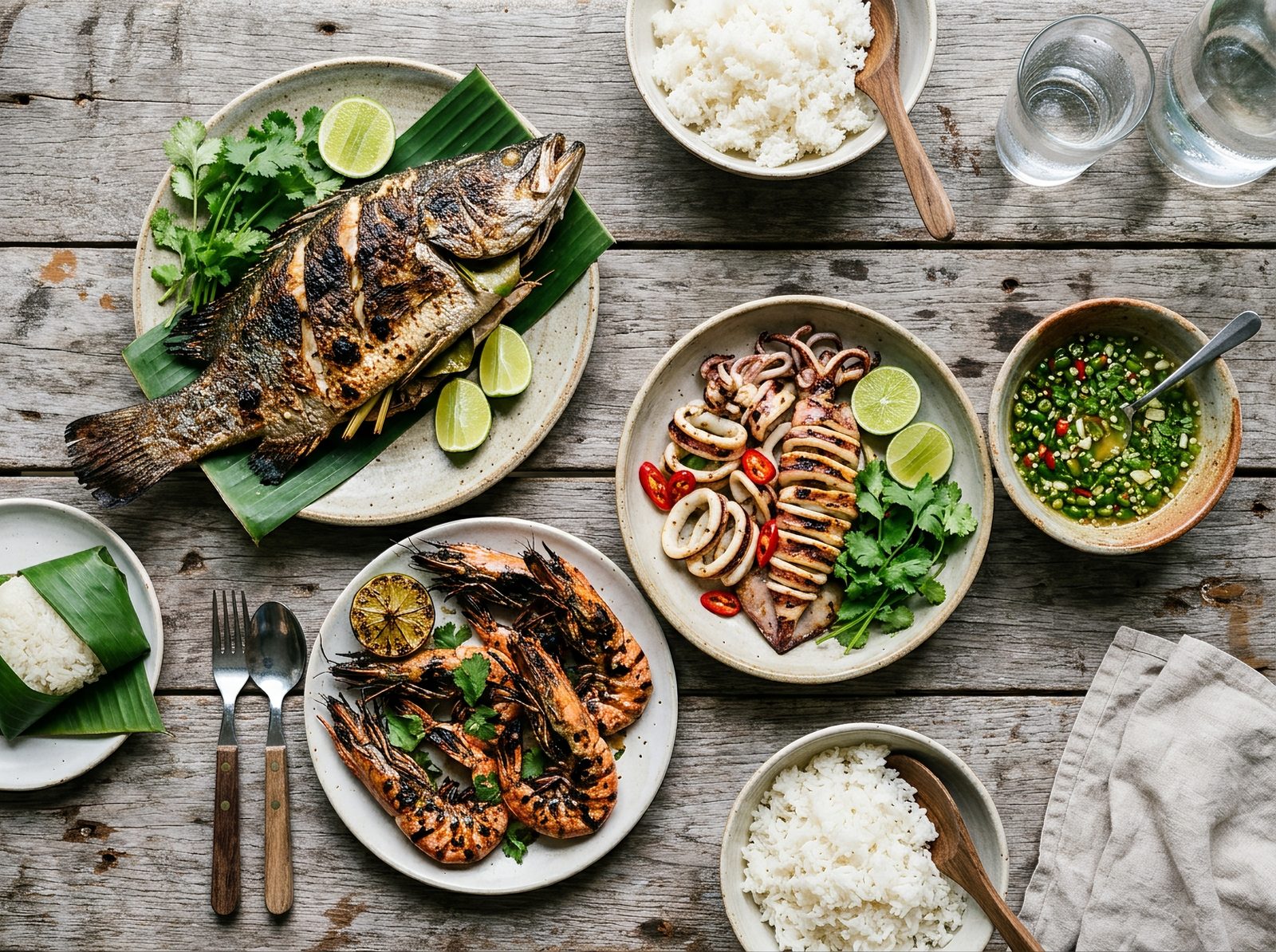
Hua Hin's food is built on Gulf seafood. At the fishing pier and the night markets you will find grilled fish, prawns and squid sold by weight — confirm the per-kilogram price before ordering, as fresh seafood is priced up front. Beyond seafood, the night markets cover the Thai street-food canon: pad thai cooked to order, grilled pork skewers, curries over rice, mango sticky rice and fresh coconut.
We are not naming specific restaurants in this guide, since none were verified against a current official source for this update. The central night market on any evening, and the pier and Tamarind markets at the weekend, give you the range without a booking.
When to go
Hua Hin has a real advantage over Thailand's southern coasts: it is one of the driest parts of the country, so even the wet season keeps plenty of sun.
| Period | What to expect |
|---|---|
| December–mid-March | Cool and dry, about 20–30°C, low humidity. The prime weekend window. |
| March–May | Hot season, building to April highs around 34°C. Great for the pool, tough for midday walking. |
| June–October | Rainy season, but drier than the Andaman and Gulf islands, with frequent sunny spells. |
The one month to weigh carefully is October, Hua Hin's wettest — averaging around 254 mm of rain across roughly 17 rainy days. A weekend can still work, but pack for showers and keep the beach plans flexible.
Practical tips
- Book market timing, not just the trip. The best markets (Cicada, Tamarind, the pier) are weekend-evening only. If your visit is midweek, the central night market is your reliable option.
- Watch the monkeys at Khao Takiab. Secure food and bags; do not feed them.
- Carry cash. Markets and pier seafood stalls are cash-first; bring small notes.
- Confirm seafood prices by weight before it hits the grill.
- Getting around town is easiest by songthaew, Grab or a hired scooter — and if you rent a scooter anywhere in Thailand, you need a motorcycle licence plus an International Driving Permit, and a helmet is mandatory.
Frequently asked questions
How many days do you need in Hua Hin? A weekend — two nights — is the classic trip and covers the beach, the railway station, one or two night markets and a Monkey Mountain climb. Add a third day for Sam Roi Yot or Pa La-U.
What is the best way to get to Hua Hin from Bangkok? The minivan is quickest on a budget (about 3 hours, ~180 THB). The bus is roomier, the train is the scenic slow option, and a private car is best for families.
Which night market is best in Hua Hin? Cicada Market at Khao Takiab is the most atmospheric but opens only Friday to Sunday. The downtown Hua Hin Night Market runs every night and is the best all-round option for food.
Is Hua Hin good for families? Yes. The beach is calm and swimmable, distances are short, night markets are easy with kids, and there are no ferries or flights to manage. Keep children close at Monkey Mountain.
When should I avoid Hua Hin? October is the wettest month. It is still doable, but weekends in December to February are the most reliable for beach weather.
Do I need to book a hotel in advance for a weekend? For peak-season weekends (December–February) and Thai long weekends, yes — Hua Hin is a domestic favourite and the best-value town-centre rooms go early. Outside those windows there is usually more flexibility, but booking ahead still secures the areas closest to the markets.
Is Hua Hin better than Pattaya for a beach weekend? They serve different moods. Hua Hin is calmer, more family- and food-oriented, and keeps a royal-town character; Pattaya is busier and nightlife-driven. For a relaxed seaside weekend with night markets and seafood, Hua Hin is the easier fit.
Final thoughts
Hua Hin rewards a light plan: arrive Friday evening, spend Saturday between the beach, the railway station and the downtown market, and give Sunday to Monkey Mountain and a weekend market before heading home. It is the least complicated seaside weekend within reach of Bangkok — and if you are weighing it against a bigger trip, our Ayutthaya day trip is an even shorter escape, while the Koh Samui guide covers the island alternative when you have longer.
Image note: Editorial images in this article are generated with AI for illustration; they do not depict specific properties, businesses, markets, or named beaches as documentary photographs.
Leave a Reply