Table of Contents
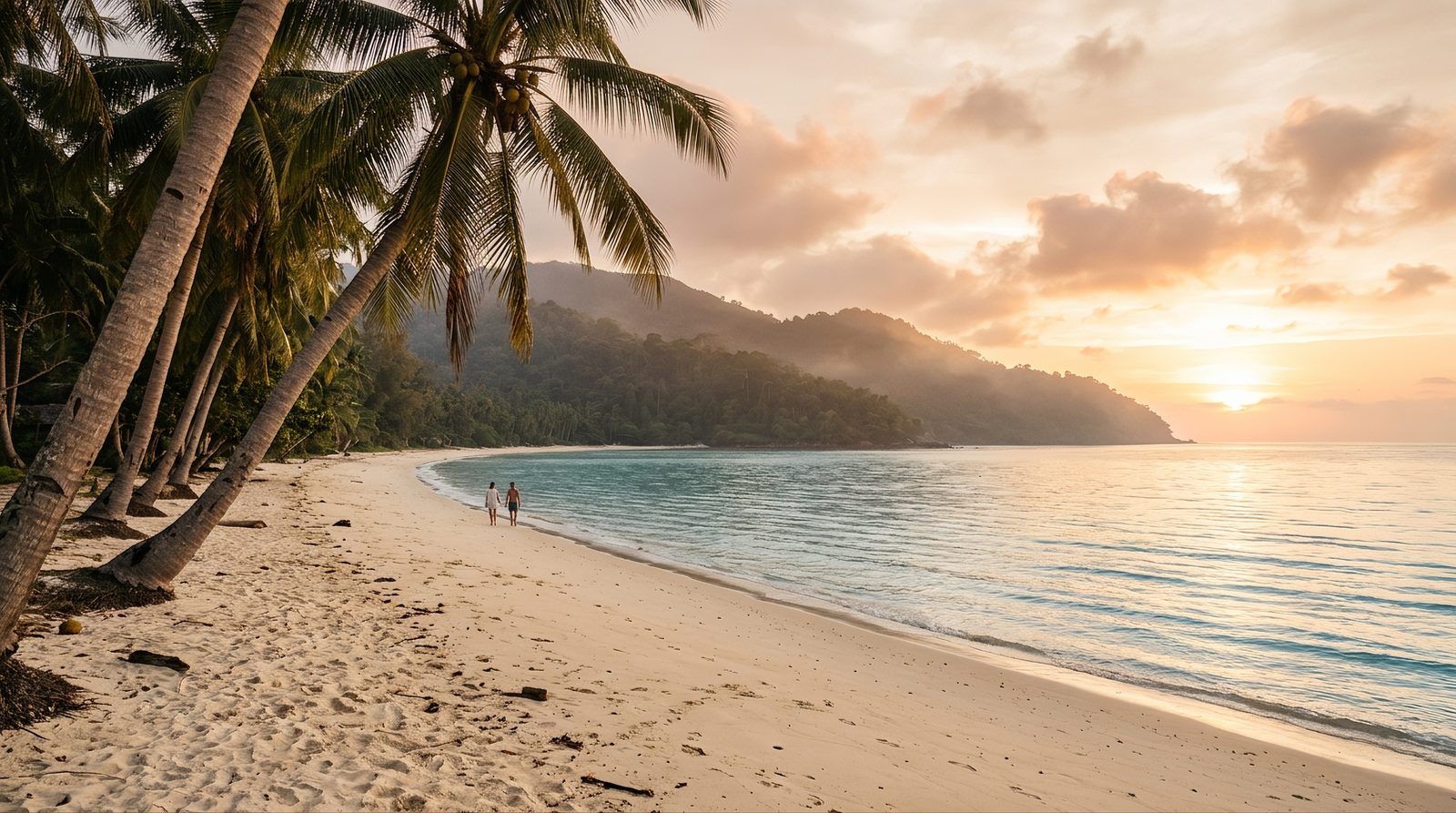
Koh Samui is big enough that where you sleep shapes your whole trip. The island's ring road runs about 50 km, and the five main beach areas — Chaweng, Lamai, Bophut, Choeng Mon and Maenam — feel genuinely different from one another. Pick the wrong one and you will spend your holiday in taxis; pick the right one and most of what you want is a short walk away. This guide compares the five areas for first-time visitors, explains how to get to the island, how to move around once you are there, and the one seasonal fact that catches out travelers who plan Samui like Phuket.
Disclosure: This article may contain affiliate links. If you make a booking through one of these links, we may earn a commission at no additional cost to you.
Information last verified: 2026-07-24. Prices, ferry and flight schedules, opening hours, and market days may change. Confirm with official operators before you travel.
The short answer
If you want one recommendation before the detail: first-time visitors who want everything nearby should base in Chaweng or Lamai; travelers who want atmosphere and food over nightlife should choose Bophut; couples wanting quiet should look at Choeng Mon; and anyone prioritizing value and calm should consider Maenam.
| Area | Character | May suit | Trade-off |
|---|---|---|---|
| Chaweng | Longest, liveliest beach; most restaurants, shops and nightlife | First-timers who want action and the widest choice | Busiest and most crowded part of the island |
| Lamai | Second-biggest hub; large beach, good-value dining, rocky headland scenery | Travelers wanting full amenities at a calmer pace | Fewer high-end options than Chaweng |
| Bophut | Restored Sino-Portuguese shophouse waterfront, calm swimming, Friday walking street | Families, couples, food and atmosphere seekers | Smaller beach; less nightlife |
| Choeng Mon | Small quiet bay, calm shallow water, minutes from the airport | Couples and honeymooners wanting quiet | Limited dining outside hotels |
| Maenam | Long, quiet north-coast beach with island views | Budget travelers, families, longer stays | Spread out; you will want transport |
A note on scope: this guide compares areas, not individual hotels. We do not name specific properties here because no individual resort was verified against official sources during this update.
How to get to Koh Samui
There are two realistic routes, and the choice is mostly budget versus time.
Fly directly to Samui Airport (USM)
Koh Samui is the only Gulf of Thailand island with its own airport, which makes it far easier to reach than its neighbours. Flying straight in is the fastest option by a wide margin — you land minutes from Choeng Mon, Bophut and Chaweng — but the route carries a price premium over the mainland alternative. If you are travelling with children, arriving late, or on a short trip, that premium usually buys back a half-day of travel in each direction.
Fly to Surat Thani, then bus and ferry
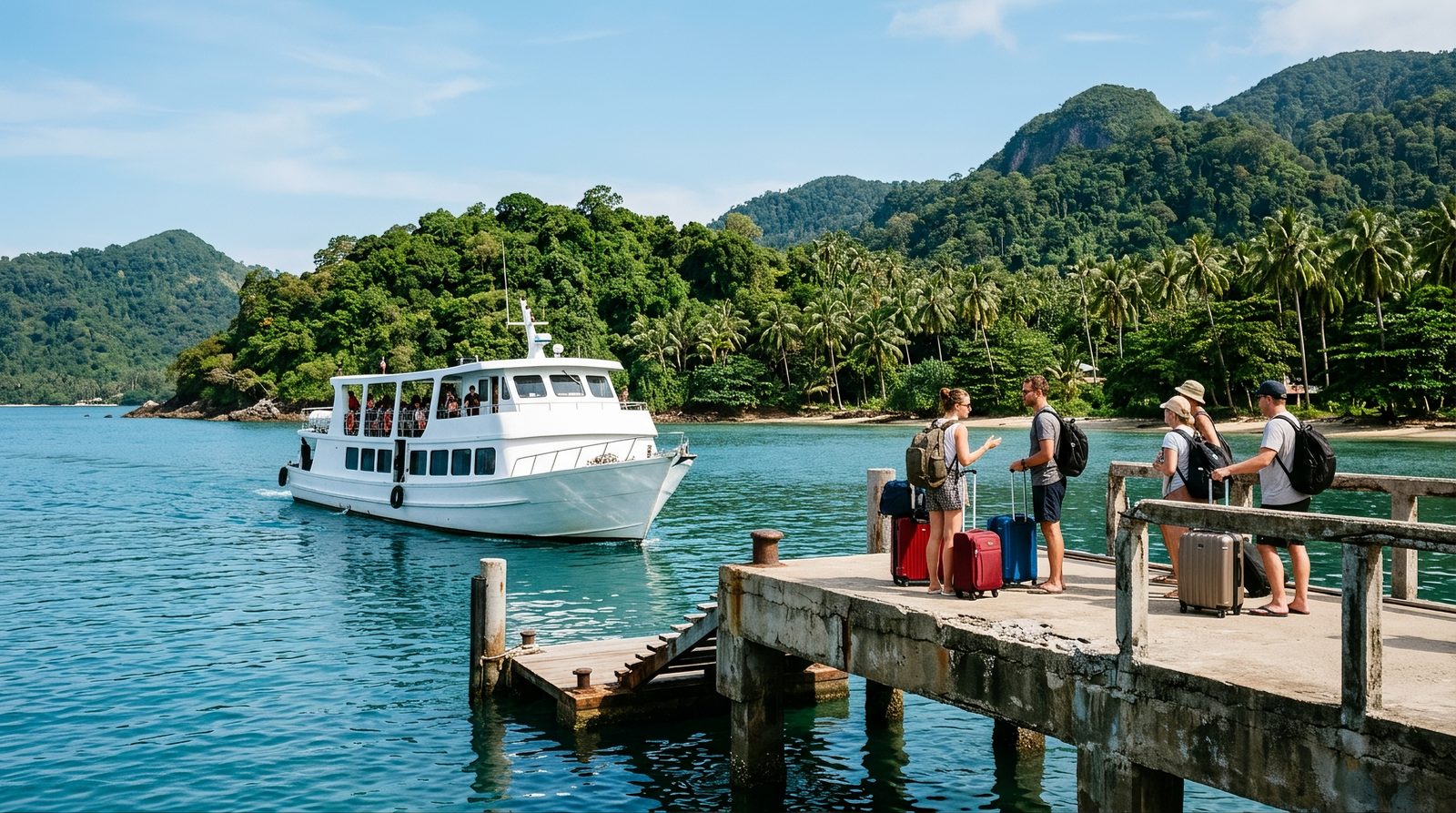
The budget route is to fly to Surat Thani on the mainland and continue by combined bus and ferry ticket. Budget roughly 1.5 hours from the airport to Donsak Pier, then about 1.5 hours on a vehicle ferry to the island — call it 3 to 4 hours door to door once transfers are counted. Combined tickets are commonly sold for around 600–750 THB.
Ferries from Donsak run roughly hourly from about 05:00 to 19:00, with around 14 sailings a day. Seatran's vehicle ferries take about 90 minutes into Nathon Pier on the island's west coast; Lomprayah's high-speed catamarans cut the crossing to roughly 45 minutes but run fewer times per day. Sailings are weather-dependent, so build slack into a same-day onward flight.
If you are combining Samui with mainland Thailand, note that the Surat Thani gateway also serves Khao Sok National Park — the two pair naturally in one itinerary.
The five areas in detail
Chaweng — the default first-timer choice
Chaweng is the island's main event: the longest beach, the widest sand, and by far the greatest concentration of restaurants, convenience stores, massage shops, dive operators and bars. If it is your first time on Samui and you want to step out of your hotel and find everything within walking distance, this is the safe pick.
The trade-off is exactly what you would expect. Chaweng is the busiest, noisiest and most developed stretch of coast, and the central section can feel crowded in high season. The beach itself is genuinely good — fine sand, generally decent swimming — but you will share it.
Base here if: you want the most choice, easy transport links, and do not mind crowds.
Lamai — the calmer full-service alternative
Lamai is the island's second-largest hub and, for many first-timers, the sweet spot. You still get a big beach, plenty of restaurants across price points, shops and services — but with noticeably fewer people than Chaweng and better value on dining. The southern end has a distinctive rocky headland that gives the area more visual character than a straight strip of sand.
It is about 15–20 minutes by road from Chaweng, so you can dip into the busier scene when you want it and retreat afterwards.
Base here if: you want everything Chaweng offers at a slightly slower pace and better prices.
Bophut and Fisherman's Village — atmosphere and food
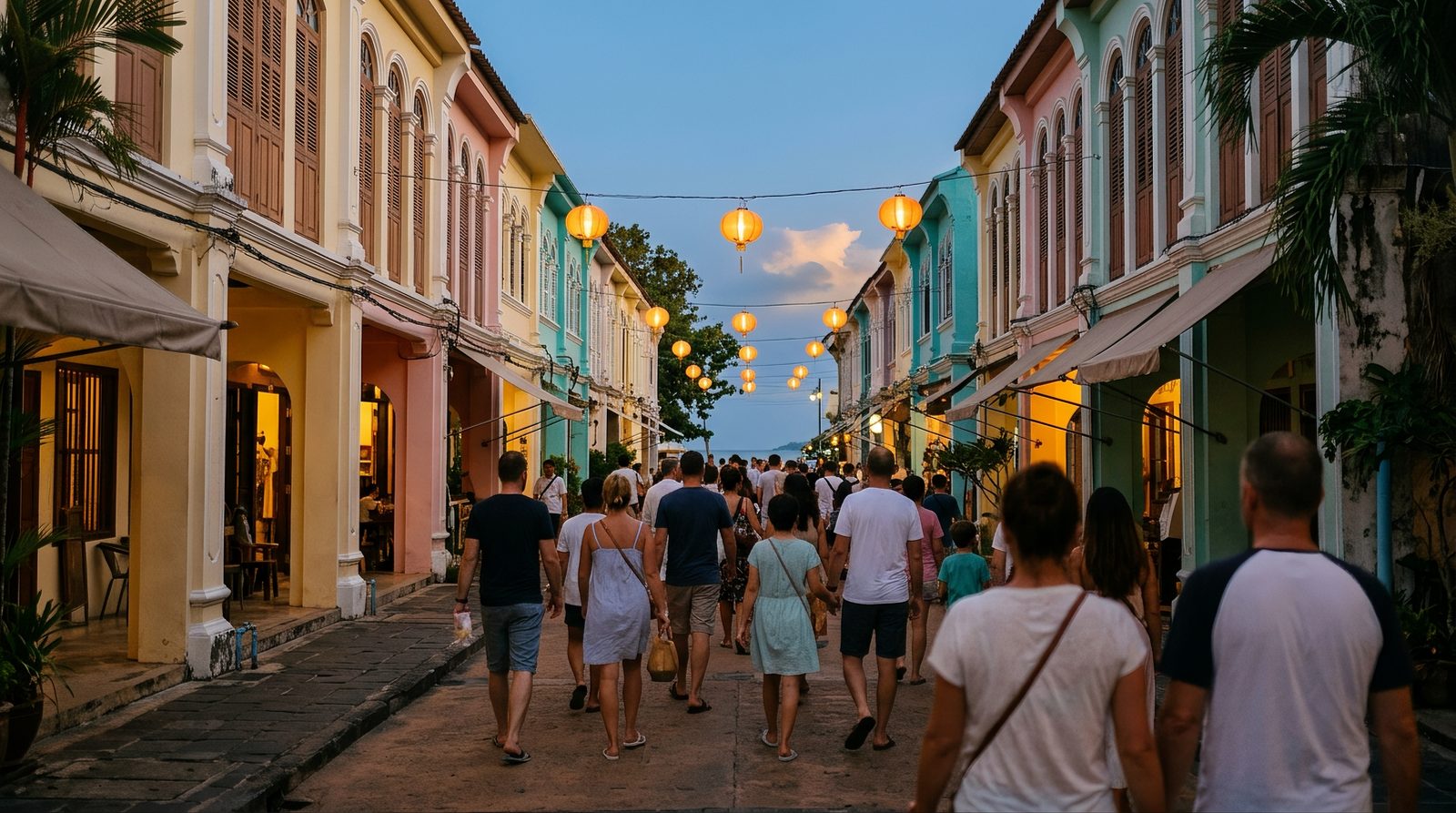
Bophut, on the north coast, is built around Fisherman's Village: a restored strip of Sino-Portuguese shophouses on the waterfront now filled with cafés, boutiques and restaurants. The beach is calm and shallow — good for young children — though smaller and less dramatic than Chaweng or Lamai.
The area's signature event is the Friday walking street, when the shophouse road closes to traffic and fills with food stalls, live music and craft sellers. It is free to attend and is one of the island's genuine highlights. Market days can change, so confirm locally before building an evening around it.
Base here if: you care more about atmosphere, food and walkable charm than nightlife or a big beach.
Choeng Mon — quiet, and closest to the airport
Choeng Mon is a small, sheltered bay on the northeast corner. The water is calm and shallow, the bay is scenic, and the whole area is quiet by Samui standards — which is why it draws couples and honeymooners. It also happens to sit minutes from the airport and within a short drive of both Chaweng and Bophut, so "quiet" does not mean "cut off".
The limitation is dining: outside of hotel restaurants, choice is thin, and you will travel for variety.
Base here if: you want calm water and a peaceful base, with the busy areas on tap when you want them.
Maenam — value and space
Maenam is a long, quiet beach on the north coast with views across to neighbouring islands. It has traditionally offered the best accommodation value on Samui, and the pace is slower than anywhere else on this list. It suits longer stays, families who do not need nightlife, and travelers who want a beach that never feels crowded.
Because the area is spread out along the coast road, plan on using scooters, songthaews or taxis more than you would in Chaweng.
Base here if: value, space and quiet matter more than having everything on your doorstep.
Getting around once you arrive
The ring road circles the island in about 50 km — a non-stop drive of roughly two to two and a half hours. In practice you will only ever ride sections of it.
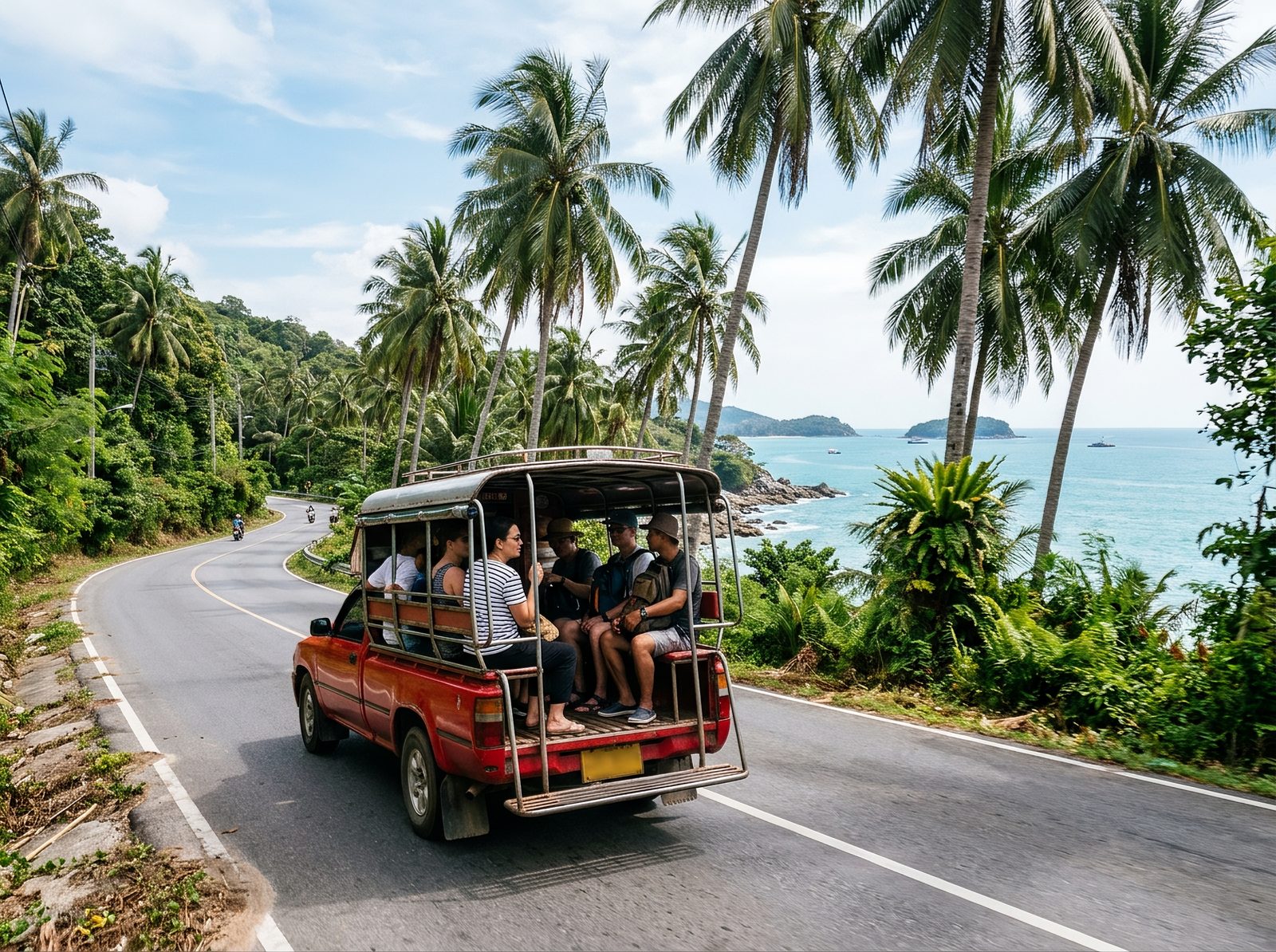
- Songthaew (shared red pickups): the local workhorse. Flag one down on the ring road, tell the driver where you are going, and expect roughly 50–150 THB per trip depending on distance. Fares are negotiated, not metered, and there is no fixed timetable — agree the price before you get in.
- Taxi and Grab: official counters at the airport quote fixed transfers of roughly 400–800 THB depending on the area. Between areas, expect a wide range — Chaweng to Bophut is commonly quoted anywhere from about 150 to 400 THB. Grab works best around Chaweng, Bophut and the airport, and is less reliable in remote corners.
- Car hire: roughly 1,000 THB per day for an economy car, up to around 2,500 THB for an SUV. Worth it for families or anyone based in Maenam.
Scooters: read this before you rent
Scooters rent for roughly 150–300 THB per day and are the most popular way to get around. They are also the single biggest source of avoidable trouble for visitors, so be clear on the rules:
- Thai law requires a motorcycle licence from your home country plus an International Driving Permit covering motorcycles. A car licence alone is not enough.
- Riding without a valid licence carries a fine of about 1,000 THB, and failing to produce a licence about 2,000 THB. Enforcement has tightened noticeably, with regular checkpoints in tourist areas.
- Helmets are mandatory for rider and passenger, with fines up to around 2,000 THB.
- The bigger issue is insurance: travel and rental policies routinely refuse claims when the rider was not legally licensed. A minor accident can become a very expensive one.
If you do not hold the correct licence, songthaews, Grab and a hired car with a driver will cover everything you need.
When to go — the fact that catches people out
Koh Samui sits on the Gulf coast, and it does not share the weather cycle of Phuket and Krabi on the Andaman side. Travelers who assume "Thailand's islands are dry in November" plan the wrong island.
| Period | What to expect |
|---|---|
| December–February | Driest stretch, calm sea, roughly 24–30°C. The most reliable window. |
| March–May | Hot season, roughly 26–33°C, long sunny days. |
| June–September | Showers, but generally workable; green landscape, lower prices, fewer crowds. |
| October–November | Heaviest rain and strongest winds of the year, with November the wettest month. |
Showers, even in the wet months, are often intense but short — commonly 20 to 60 minutes rather than all-day grey. That makes the shoulder months usable if you accept some disruption to boat trips, which are the first thing weather cancels.
The practical upshot: when our Krabi guide and Phuket beaches guide describe the Andaman coast clearing up in November, Samui is usually in the thick of its wettest weeks. If November is your only travel window, the Andaman side is the safer bet — and vice versa in June and July.
What to do from your base
You do not need a packed itinerary on Samui, but four things are worth planning around:
Big Buddha (Wat Phra Yai). The island's landmark — a roughly 12-metre golden seated Buddha on the north coast near the airport, visible from a distance. It is an active temple, so cover shoulders and knees.
Fisherman's Village Friday walking street. Bophut's shophouse street closes to traffic and turns into a food and craft market. Free, atmospheric, and the best single evening out on the island for most visitors.
Na Muang waterfalls. In the forested interior, with two tiers — the lower one is easy to reach and has a natural pool, while the upper tier is around a 30-minute hike. Flow depends heavily on recent rain.
Ang Thong National Marine Park. An archipelago of 42 islands with limestone peaks, beaches and a famous hidden lake. It can only be visited with licensed tour operators, trips are weather-dependent, and the park can close in rough conditions — so book it early in your stay to leave room for a weather reschedule.
What to eat
Samui's food sits at the junction of southern Thai cooking, central Thai classics and Gulf seafood. Look for:
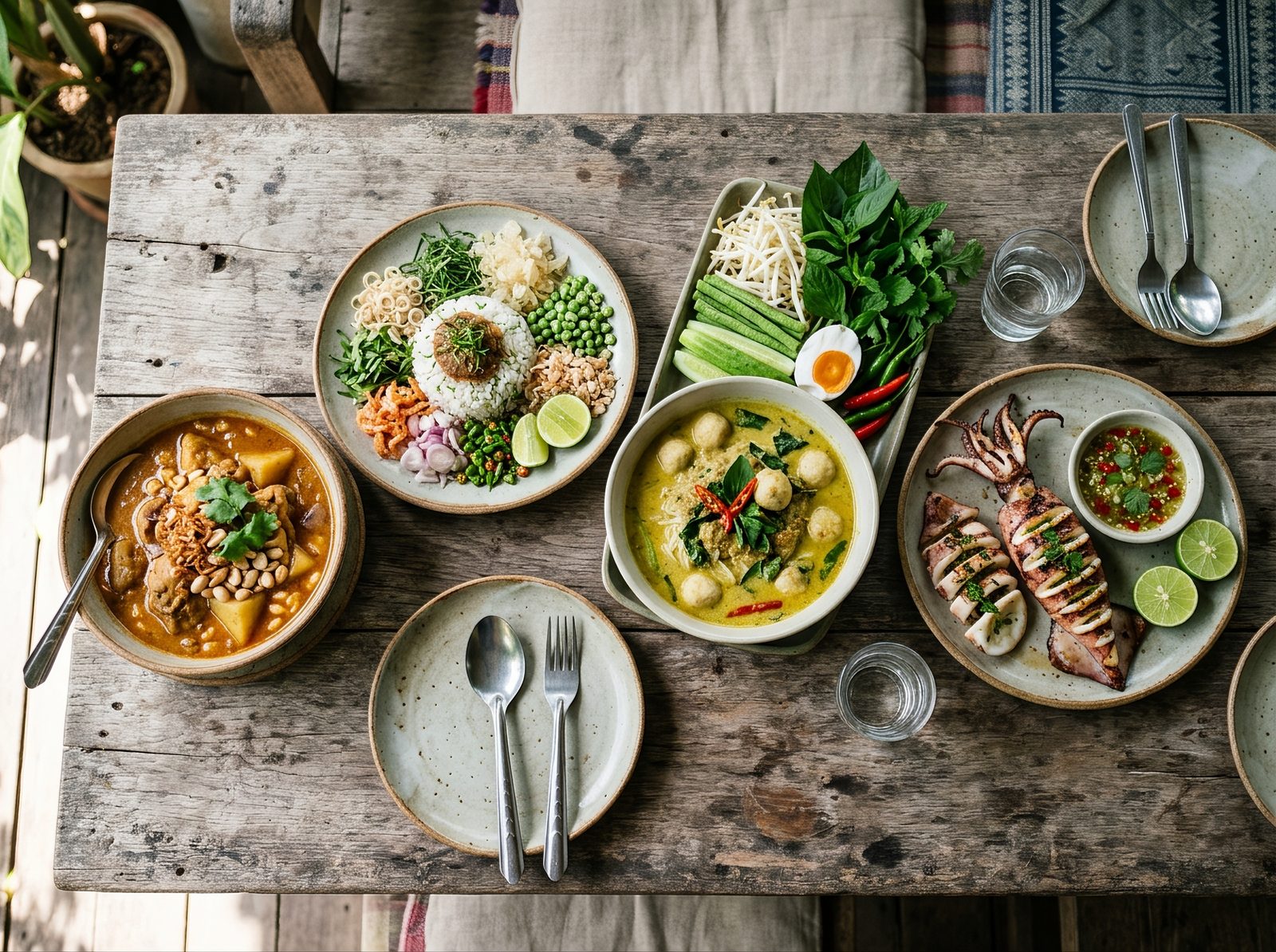
- Massaman curry — coconut-rich, mild, with potato, peanuts and warm spices; the gentlest introduction to southern cooking.
- Gaeng tai pla — an intense fermented-fish curry, salty and pungent, at the opposite end of the spectrum. Order it if you want the real southern palate.
- Khao yam — a southern rice salad with fresh herbs, toasted coconut and tamarind dressing; light, and a good lunch in heat.
- Khanom jeen — fermented rice noodles served with a choice of curry sauces, usually with a tray of vegetables to add yourself.
- Gulf seafood — grilled squid, whole fish and prawns, usually priced by weight. Confirm the per-kilogram price before ordering.
We are not naming specific restaurants in this guide, since none were verified against a current official source in this update. Fisherman's Village on a Friday and the Lamai and Chaweng food streets on any evening will give you the range without a reservation.
Frequently asked questions
Which area is best for a first visit to Koh Samui? Chaweng if you want everything within walking distance; Lamai if you want the same convenience with fewer crowds. Both are easy first-time bases with good transport links.
Is it better to fly straight to Samui or via Surat Thani? Direct flights save roughly half a day in each direction but cost more. The Surat Thani route with a combined bus-and-ferry ticket (around 600–750 THB) is meaningfully cheaper and takes about 3–4 hours from the mainland airport.
Do I need a scooter on Koh Samui? No. Songthaews, Grab and taxis cover the ring road, and a hired car with driver handles the rest. Only rent a scooter if you hold a motorcycle licence plus an International Driving Permit.
When is the worst time to visit Koh Samui? October and November bring the heaviest rain and strongest winds, with November the wettest month. This is the opposite pattern to the Andaman coast.
How long should I stay on Koh Samui? Four to five nights lets you settle into one base, take an island or marine-park day trip, and keep a spare day for weather. A week suits Maenam or Choeng Mon, where the appeal is slowing down.
Can I visit Ang Thong Marine Park independently? No — access is through licensed tour operators only, and trips depend on sea conditions.
Final thoughts
Samui rewards choosing deliberately rather than defaulting to the biggest beach. Decide first what your days should feel like — walkable and busy, calm and slow, or somewhere between — then pick the area that already looks like that, and let transport handle the rest. If you are still weighing islands, our Krabi and Phuket beaches guides cover the Andaman alternatives, which run on the opposite weather cycle.
Image note: Editorial images in this article are generated with AI for illustration; they do not depict specific properties, businesses, or named beaches as documentary photographs.
Leave a Reply