Table of Contents
Bangkok can feel enormous on a first visit, but its historic heart is compact enough for one rewarding day. This Bangkok temples and street food itinerary connects six distinctive stops: the Grand Palace and Wat Phra Kaew, Wat Pho, Wat Arun, Pak Khlong Talat flower market, Wat Mangkon Kamalawat, and Yaowarat Chinatown. You will move through royal Bangkok, cross the Chao Phraya River, see a working market, enter a Chinese Buddhist temple, and finish with an evening street-food crawl.
The route is ambitious but realistic if you start at 08:30, keep lunch focused, and reach Wat Mangkon before it closes. It combines walking, a short cross-river ferry, and the MRT Blue Line. It does not require a private guide or a copied transit map.
Affiliate disclosure: This article contains an Agoda affiliate placeholder. If a booking link is later activated and you make a reservation through it, we may earn a commission at no extra cost to you.
Information verified: 19 July 2026. Temple access, admission prices, transport operations, and market trading can change. Check the linked official pages again on the morning of your visit, especially the Grand Palace schedule.
Your one-day route at a glance
| Time | Stop | What to do | Verified visitor information |
|---|---|---|---|
| 08:30-10:30 | 1. Grand Palace and Wat Phra Kaew | See Bangkok's royal and sacred core | Official visitor hours 08:30-16:30; ticket sales until 15:30; foreign visitor ticket THB 500 |
| 10:45-12:00 | 2. Wat Pho | Visit the temple complex and the Reclining Buddha | Official plan lists 08:00-19:30; admission THB 300 |
| 12:00-13:15 | Old Town lunch | Try curry rice or pad Thai near the river | Choose a busy, clean vendor; stall hours and prices vary |
| 13:30-15:00 | 3. Wat Arun | Cross the river and explore the Temple of Dawn | TAT lists 08:00-17:30; admission THB 200 |
| 15:30-16:20 | 4. Pak Khlong Talat | Walk through the flower-market district | Public market area; individual traders set their own hours |
| 16:30-17:20 | MRT transfer | Sanam Chai to Wat Mangkon | Follow current station signs and use the official trip planner |
| 17:20-17:55 | 5. Wat Mangkon Kamalawat | Make a short, respectful temple visit | TAT lists 07:00-18:00; free admission; no photography inside buildings |
| From 18:00 | 6. Yaowarat Chinatown | Build your own street-food dinner | Public streets remain accessible; individual vendors vary |
This schedule deliberately puts the Grand Palace first because its ticket cutoff is earlier than its closing time and ceremonial access may change. It also places Wat Mangkon before dinner because the temple is listed as closing at 18:00.
Before you go: dress, money, heat, and transport
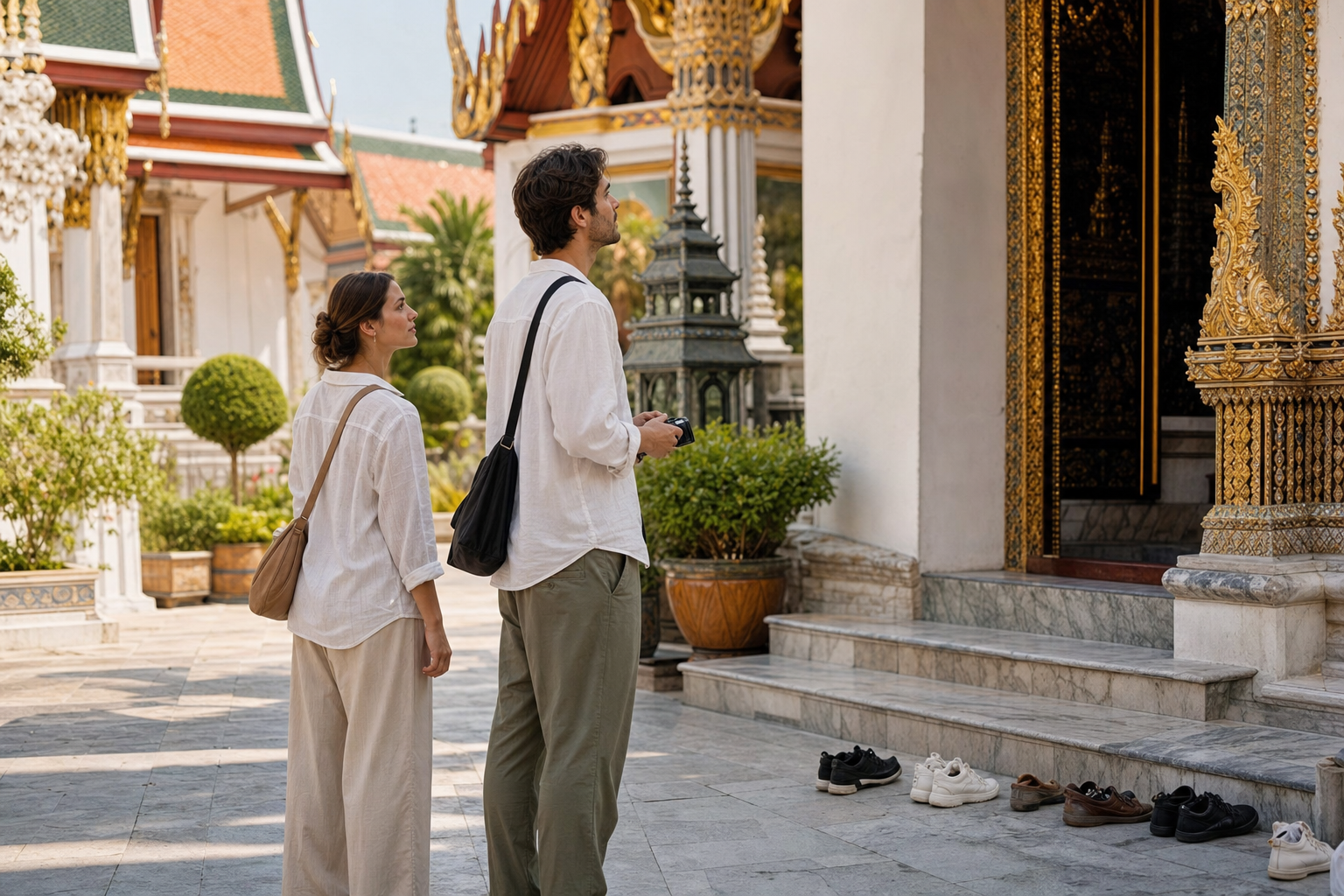
Wear clothing that covers your shoulders and knees from the start of the day. The Grand Palace's official rules exclude sleeveless, cropped, transparent, torn, and very tight clothing, as well as shorts and miniskirts. Wat Pho also asks visitors to dress politely and not wear shorts. A lightweight shirt with sleeves and long, breathable trousers or a below-knee skirt is the simplest solution. Bring footwear that is easy to remove because you may need to take it off before entering sacred interiors.
Carry a modest amount of Thai baht in smaller notes for admissions, snacks, ferry tickets, and stalls that do not accept cards. The three ticketed sights in this route total THB 1,000 at the prices verified above, before food and transport. Do not treat that as a permanent package price; each attraction controls its own admission.
Bangkok is hot and humid for much of the year. Bring water, sun protection, and a compact umbrella. Drink regularly, but do not rush inside temple compounds. Build in short seated breaks and skip a minor section if the heat or crowds make the timetable uncomfortable.
For the rail portion, review our Bangkok BTS and MRT Guide. You need only one MRT Blue Line ride for this itinerary: Sanam Chai to Wat Mangkon. Follow the station's current signs because exits and access arrangements can change.
Stop 1: The Grand Palace and Wat Phra Kaew
Aim to be at the entrance shortly before 08:30. The cooler morning and early start make it easier to appreciate the complex before the middle of the day. Treat the Grand Palace and Wat Phra Kaew as one stop: they form the royal compound covered by the visitor ticket, not two separate itinerary entries.
The official Grand Palace schedule lists visitor hours of 08:30-16:30, with ticket sales until 15:30. The foreign visitor ticket is THB 500 and includes access to Wat Phra Kaew within the complex. Royal ceremonies can close individual areas or alter admission, so open the official schedule on the day you visit.
Give yourself roughly two hours. Move slowly around the galleries and courtyards, and follow every barrier and one-way instruction. Wat Phra Kaew is an active sacred site. Keep your voice low, follow posted photography restrictions, and never point your feet toward a Buddha image when seated.
The dress check here is strict. The safest approach is to arrive properly dressed rather than depend on buying or borrowing a cover at the entrance. The official practical information page provides the full list of prohibited clothing and transport guidance.
Getting to the Grand Palace
There is no BTS station at the gate. The official visitor information suggests river and rail combinations, including MRT access via Sanam Chai followed by local transport. For a first-time visitor staying along Sukhumvit, allow plenty of time for the morning journey. A metered taxi or app-based car can be convenient before rush-hour traffic intensifies, while MRT Sanam Chai plus a short onward ride gives you more predictable rail time.
If you have not chosen a base yet, the Best Hotels in Sukhumvit guide compares practical areas near Bangkok's main urban rail corridor.
[View Hotel Deals]
Stop 2: Walk to Wat Pho
From the Grand Palace area, walk south toward Wat Pho, following current pedestrian signs and crossings. The distance is short, but pavements can be crowded and uneven. Do not follow anyone who tells you an attraction is closed without checking the official schedule or the entrance yourself; politely decline unsolicited detours.
Wat Pho's official visitor plan lists opening hours of 08:00-19:30 and admission of THB 300. It also asks visitors to dress politely and not wear shorts. Confirm current details on the official Wat Pho plan page.
Allow about 60 to 75 minutes rather than treating the Reclining Buddha as a single-photo stop. Walk through the courtyards, look at the chedi and tiled surfaces, and give worshippers space. Remove shoes where instructed.
Wat Pho is also associated with traditional Thai medicine and massage, but availability, queues, and service prices are not included in this itinerary. If a treatment matters to you, consult the temple's current official information and reserve extra time. Do not let an unplanned queue jeopardize the river crossing and later Wat Mangkon visit.
Old Town lunch: choose two dishes, not a feast
By noon, you will need shade, water, and a simple meal. Save the larger tasting session for Yaowarat. Around the Old Town and river, look for a busy shop or stall with clearly displayed food and a steady turnover.
Two practical lunch choices are:
- Khao gaeng (curry rice): rice with one or two prepared curries or stir-fried dishes. Pointing makes ordering straightforward, but ask about spice if you are sensitive.
- Pad Thai: stir-fried rice noodles, typically balanced with sour, sweet, salty, and nutty elements. Ingredients vary, so ask before ordering if you have allergies.
Choose one dish or share two. Select food that is cooked hot, clean your hands, and drink sealed or properly dispensed water.
Stop 3: Cross the river to Wat Arun
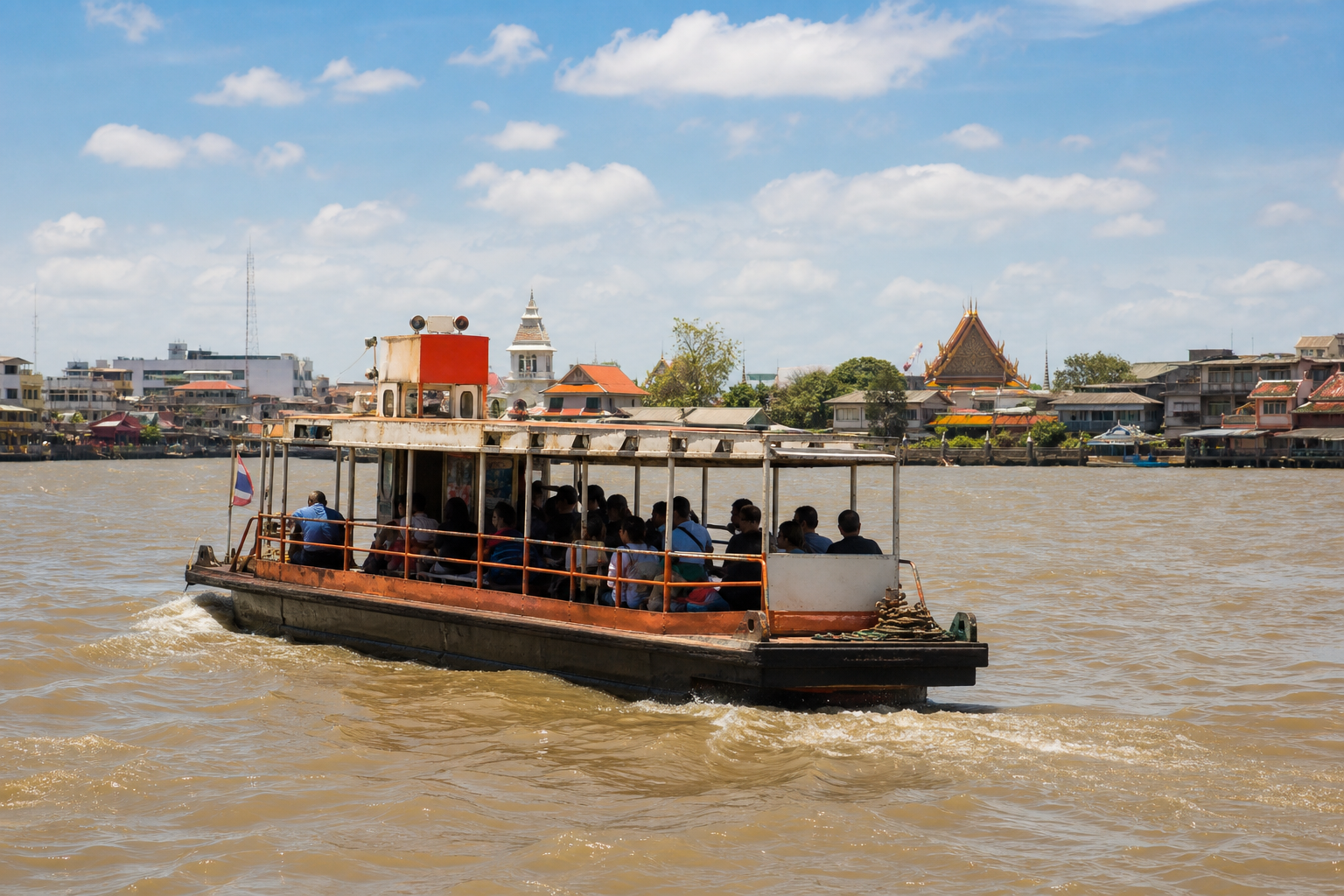
Walk to the operating cross-river pier near the Wat Pho side and follow signs for Wat Arun. Pier names, boarding points, fares, and frequencies can change, so confirm the destination with staff before boarding and keep small cash ready. This is a local river crossing, not a long sightseeing cruise.
Keep phones and loose items secure, remain behind safety lines, and wait for staff before stepping on or off.
Tourism Authority of Thailand visitor information lists Wat Arun at 08:00-17:30 with THB 200 admission. Check the current TAT Wat Arun page and any notice at the ticket office. The same respectful clothing used for the morning temples is appropriate here.
Allow about 75 to 90 minutes. Some steps can be steep, so use handrails, obey closed-area signs, and do not climb beyond your comfort level.
Avoid treating the temple as a costume backdrop. If you rent traditional clothing nearby, keep poses respectful and do not block circulation. Commercial rental quality, prices, and photography permissions vary and are not endorsed here.
After the visit, use the local crossing back to the east bank. Ask staff which boat returns to the Wat Pho or Pak Khlong Talat side; do not assume every boat at the pier follows the same route.
Stop 4: Pak Khlong Talat flower market
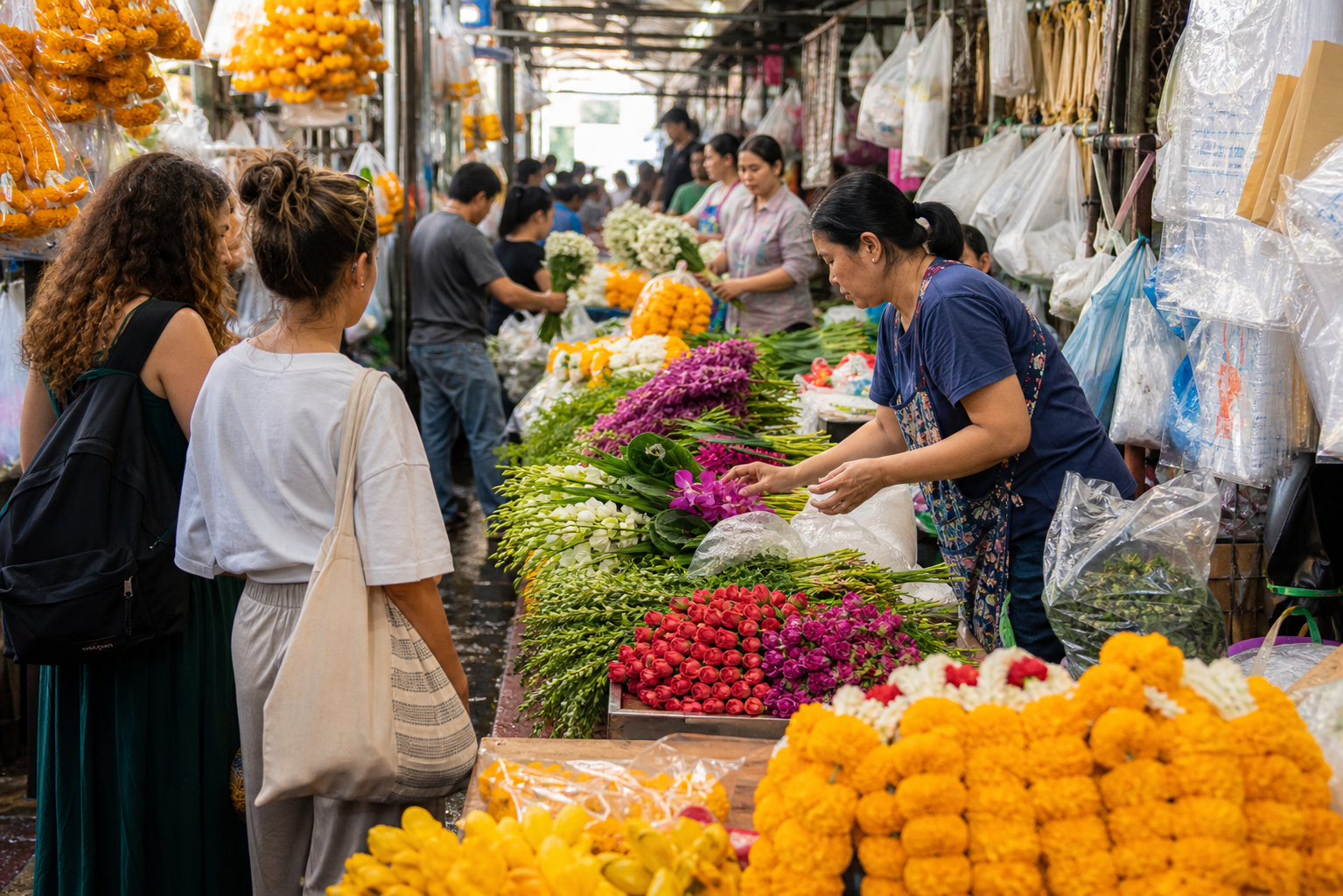
Continue toward Pak Khlong Talat, Bangkok's historic flower-market district near Sanam Chai. This is a working commercial area rather than a ticketed attraction. Bangkok Metropolitan Administration material describes shops during the day and more roadside flower trading at night, which is why it is better to describe the district as active across different periods rather than claim every stall operates 24 hours.
Spend 30 to 45 minutes observing flowers and the rapid work of traders. Selection changes with deliveries and festivals. Keep out of loading paths and ask before taking close portraits.
There is no general admission ticket to walk the public market streets, but purchases are separate. If you buy flowers, remember that carrying them through a crowded MRT and food market may be inconvenient. A small garland is easier than a large bouquet, though religious offerings should be handled respectfully.
MRT Sanam Chai is the useful transition point. Current BMA material references access from the station, but exits can be temporarily rerouted. Follow station signage rather than relying solely on an old screenshot.
Transfer: MRT Sanam Chai to Wat Mangkon
Enter MRT Sanam Chai on the Blue Line and travel to Wat Mangkon. Buy a single-journey token or use an eligible payment method described in the Bangkok BTS and MRT Guide. Keep the same payment medium through the gates and check the platform direction before boarding.
At Wat Mangkon station, BEM's official station page identifies Exit 3 for Wat Mangkon Kamalawat and Exit 1 for Yaowarat Road. Use Exit 3 for the temple first. If the day is running late, prioritize arriving before 18:00 and move the market browsing or snack break to another visit.
Stop 5: Wat Mangkon Kamalawat
Wat Mangkon Kamalawat introduces a Chinese Buddhist setting after the Thai royal and temple architecture of the morning. Tourism Authority of Thailand lists the temple at 07:00-18:00 with free admission. It also states that photography is prohibited inside buildings. Arriving around 17:20 gives you a short window; enter quietly and never delay closing routines.
Allow 25 to 35 minutes. Keep your phone away inside buildings and follow restrictions during ceremonies.
Temple admission is listed as free, but donation boxes may be available. Donations are optional unless a current sign states otherwise. Do not buy offerings unless you understand where and how they should be presented.
Because this temple closes earlier than the food district, do not reverse the order. Yaowarat will still be lively after the temple visit, while a late dinner cannot reopen a closed religious site.
Stop 6: Yaowarat Chinatown street-food evening
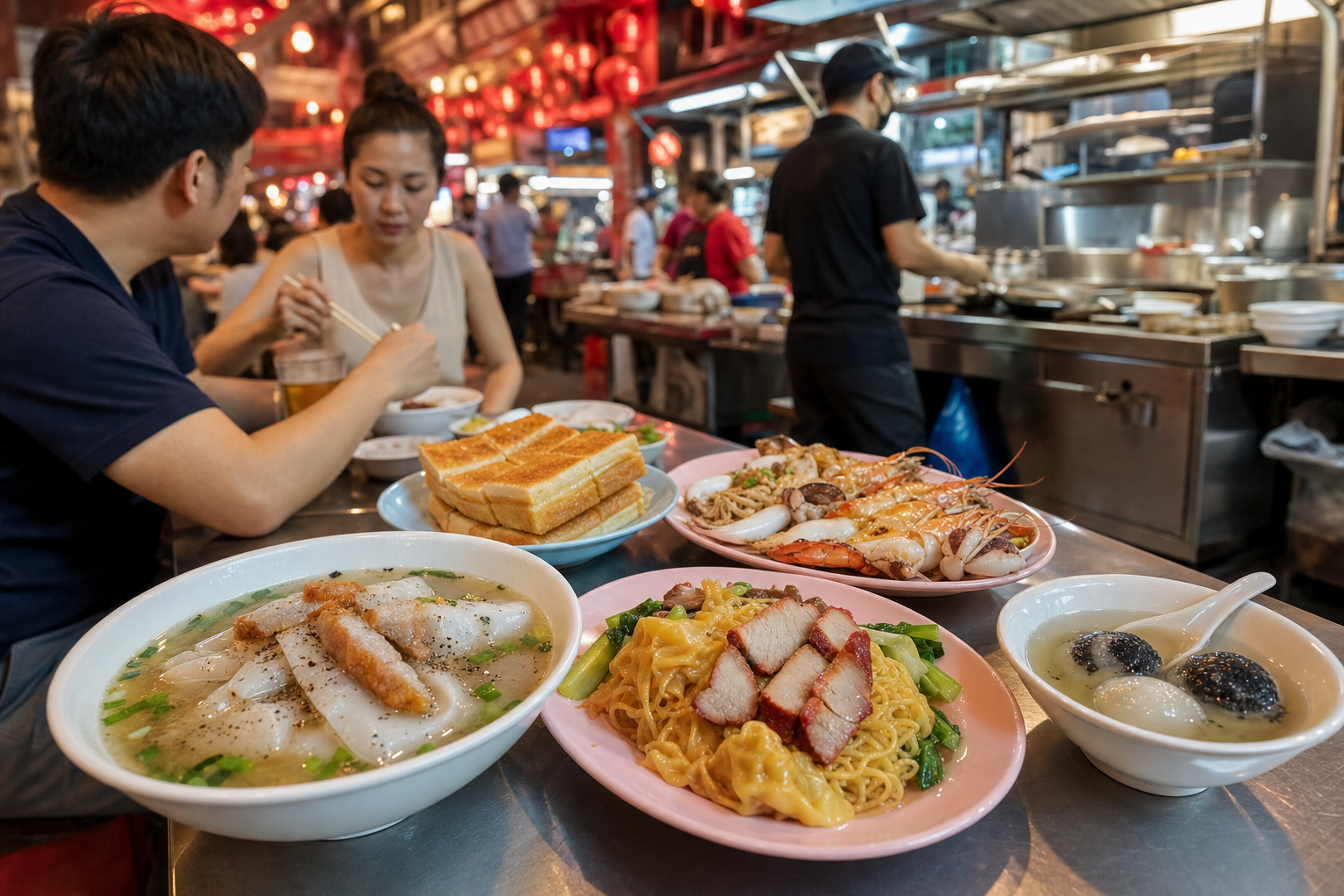
Leave via the route toward Yaowarat Road; BEM identifies Wat Mangkon Exit 1 for the main road. Yaowarat is a district, not one gated attraction, so it has no single admission fee or universal opening time. Many food vendors trade from late afternoon into the evening, but each business controls its own days and hours. Treat old blog schedules as leads, not guarantees.
The best strategy is to share portions and build dinner in stages. You already have two lunch ideas; here are six more foods that fit the neighborhood and are documented in Tourism Authority of Thailand food material:
- Guay jub: rolled rice noodles in a peppery broth, often served with crispy pork and offal. Ask what is included if you prefer no offal.
- Wonton noodles with barbecued pork: a compact bowl that can be ordered dry or with broth depending on the vendor.
- Grilled seafood: choose a busy grill, confirm the item and price before ordering, and make sure shellfish is thoroughly cooked.
- Khao moo daeng or khao moo krob: rice with red barbecued pork or crispy pork, usually served with sauce and accompaniments.
- Yaowarat-style toast: crisp bread filled or topped with sweet custard, condensed milk, or other flavors. One portion is easy to share.
- Black sesame dumplings in ginger soup: a warm Chinese-style dessert with a nutty filling and aromatic broth.
Other possibilities include chicken rice, water chestnuts in coconut milk, or sesame balls. Pick three or four foods, share them, and adjust when a stall is closed or a queue is excessive.
How to choose a street-food stall
Look for steady customer turnover, an orderly preparation area, ingredients protected from unnecessary handling, and food cooked thoroughly. Choose dishes prepared hot in front of you when possible. If you have allergies, carry a translated allergy card; vague requests such as “no seafood” may not cover fish sauce, oyster sauce, shrimp paste, or shared cooking surfaces.
Ask the price before committing when it is not displayed. Keep cash and your phone secure, step away from the ordering area after receiving food, and do not stand in traffic lanes. Dispose of skewers and bowls properly. Alcohol, very spicy food, heat, and dehydration are a poor combination after a full day outdoors.
Tourism Authority of Thailand's Yaowarat food article is useful for understanding characteristic dishes, but its older business details should not be treated as a live directory. Walk the area and choose what is visibly operating that evening.
A realistic budget
At the verified admission prices, the Grand Palace and Wat Phra Kaew cost THB 500, Wat Pho THB 300, and Wat Arun THB 200. Wat Mangkon is listed as free, while Pak Khlong Talat and Yaowarat are public commercial districts without a general entrance ticket. That puts the fixed attraction total at approximately THB 1,000 per adult foreign visitor before transport, food, shopping, and optional donations.
Food costs depend on portions, ingredients, and venue. Rather than promise a street-food price range that can quickly become outdated, decide on a personal dinner ceiling, ask prices, and share dishes. Keep extra money for transport back to your hotel if you finish late or feel tired.
If the day falls behind schedule
Do not rush through roads, piers, or temple steps to save ten minutes. Use this priority order:
- Check whether the Grand Palace is open before leaving your hotel.
- Keep the Grand Palace, Wat Pho, and Wat Arun in the morning-to-mid-afternoon sequence.
- Shorten Pak Khlong Talat to a 15-minute walk if necessary.
- Reach Wat Mangkon before its listed 18:00 closing time.
- Let Yaowarat dinner start later; it is the most flexible part of the route.
If the Grand Palace is unexpectedly closed for a royal event, do not buy an unofficial “replacement tour” under pressure. Confirm the closure through the official site, spend longer at Wat Pho and Wat Arun, and consider a deeper Old Town walk before continuing to the market and Chinatown.
Heavy rain may interrupt the river crossing. Follow pier staff instructions and never board during a suspension. A taxi or ride-hailing car can connect the east-bank stops, but traffic may be slow. The itinerary is a framework, not a reason to ignore local safety decisions.
Temple etiquette for first-time visitors
Bangkok's temples are living religious spaces. A few habits make the visit more comfortable for everyone:
- Cover shoulders and knees, and avoid transparent or torn clothing.
- Remove shoes wherever signs or rows of footwear indicate.
- Speak quietly and silence notifications.
- Do not point feet toward Buddha images or climb on sacred structures.
- Ask before photographing people; obey every no-photography sign.
- Give worshippers space and never interrupt a ceremony for a picture.
- Avoid affectionate posing or exaggerated “funny” gestures around sacred images.
The rules at the entrance always take priority over a general travel guide. Staff may restrict access for worship, maintenance, ceremonies, or safety.
Final checklist
Before leaving your hotel:
- Recheck the Grand Palace's official schedule and ticket cutoff.
- Confirm current Wat Pho, Wat Arun, and Wat Mangkon visitor information.
- Wear temple-ready clothing; pack water, sun protection, and an umbrella.
- Carry small Thai-baht notes and a payment backup.
- Save the names “Sanam Chai” and “Wat Mangkon” offline.
- Keep the two internal guides open for Bangkok rail basics and Sukhumvit hotel planning.
- Treat the timetable as flexible whenever weather, worship, or official instructions require a change.
Done thoughtfully, this Bangkok temples and street food itinerary reveals more than a collection of landmarks. It shows how Bangkok's royal heritage, Thai and Chinese religious traditions, river transport, working markets, and everyday food culture sit within one connected urban story.
Leave a Reply