Table of Contents
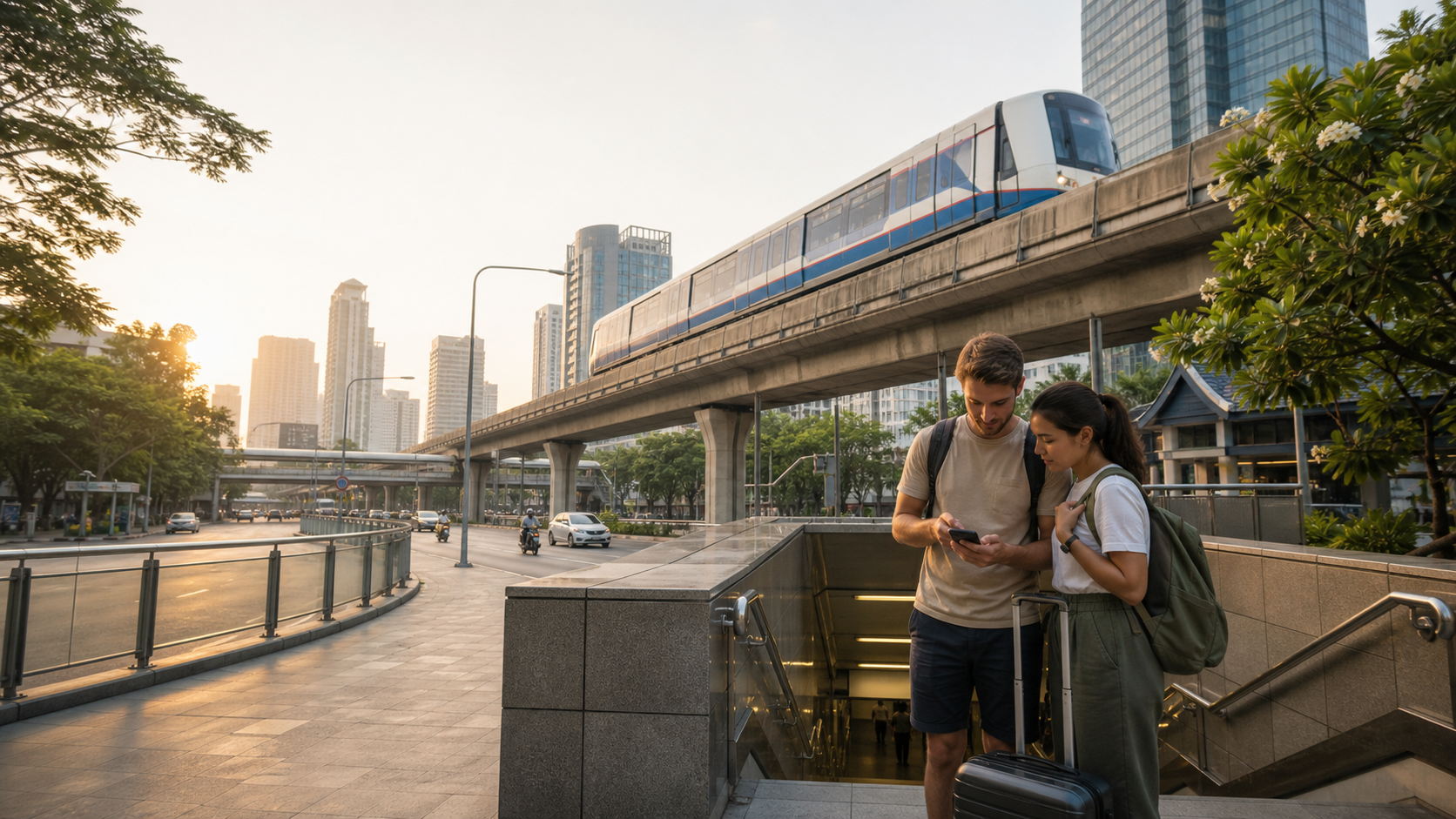
Bangkok’s rail network can look complicated on your first day, but the basic routine is simple: identify the nearest station, choose BTS or MRT, check the terminal station shown for your direction, pay, tap in, ride, and tap or insert your ticket when you leave. This Bangkok BTS and MRT guide explains each step without requiring you to memorize the entire network.
The BTS Skytrain is mostly elevated and is especially useful along Sukhumvit, Silom, Siam, and the riverside connection at Saphan Taksin. The MRT includes the Blue Line, which is underground through much of central Bangkok before becoming elevated in outer sections, plus other connected lines. BTS and MRT are operated as separate fare systems, so a transfer between them normally means leaving one paid area and entering the other.
Disclosure: This article may contain affiliate links. If you make a booking through one of these links, we may earn a commission at no additional cost to you.
Information last verified: July 19, 2026. Hotel prices, availability, opening hours, and transportation schedules may change. Check the official BTS and BEM journey tools before travel, particularly for first and last trains.
BTS or MRT: Which One Do You Need?
Start with your destination rather than the color of a line. Search the place in a map app, then confirm the nearest station’s full name and code. A hotel described as “near Sukhumvit” could be close to one of many stations, so the station name matters more than the neighborhood label.
The BTS network has two core lines:
- The Sukhumvit Line runs through areas including Mo Chit, Ari, Victory Monument, Siam, Chit Lom, Asok, Phrom Phong, Thong Lo, Ekkamai, and farther in both directions.
- The Silom Line serves National Stadium, Siam, Sala Daeng, Chong Nonsi, Saphan Taksin, and stations toward Bang Wa.
- The two BTS lines meet inside the paid area at Siam.
For most first-time visitors, the MRT Blue Line is the other essential line. It serves areas such as Chatuchak Park, Phetchaburi, Sukhumvit, Si Lom, Sam Yan, Hua Lamphong, Chinatown at Wat Mangkon, the old-city side at Sam Yot and Sanam Chai, and the western side of the river. The Blue Line connects with the Purple Line at Tao Poon.
Do not assume every rail line accepts the same ticket. BTS, BEM-operated MRT, Airport Rail Link, and other urban lines may have different fare media and rules. Plan one leg at a time.
The Three Things to Check Before Leaving Your Hotel
1. The exact station name and code
Station codes reduce confusion when English spellings vary. For example, Sukhumvit MRT is BL22, while Asok is a BTS station. They form a useful transfer pair, but they are not the same station or the same fare system.
Save your destination in both English and Thai if possible. Showing the Thai name to station staff or a taxi driver can help if your final destination is a walk from the station.
2. The terminal station for your direction
Platforms are commonly labeled by the line’s terminal station, not by every attraction along the way. If you are at Asok and want Siam, you need the BTS platform heading toward the terminal on that side of the line. Check the station list on the platform before boarding; your next station should appear in the correct sequence.
On the MRT Blue Line, the loop-like route around Tha Phra makes direction signs less intuitive for a newcomer. Use the official fare calculator or journey planner, then match the terminal or route wording shown at the station. If uncertain, show the destination to staff before passing the gate.
3. Your return journey
The last train that serves a specific connection can be earlier than the final train entering another part of the network. Do not build a late-night plan around a generic “midnight” assumption. Check the official first-and-last-train information for your exact station and direction on the day of travel.
How to Use BTS Bangkok, Step by Step
Step 1: Choose a BTS ticket
The official BTS ticketing system lists three options useful to visitors:
- Single Journey Card: appropriate for one ride. The fare depends on the trip.
- One-Day Pass: useful if you expect several BTS journeys on the same day. It is a BTS product, so do not count separate MRT trips when deciding whether it offers value.
- Rabbit Card: a stored-value option that can be convenient for repeated BTS use. Issuing, registration, top-up, and refund conditions can change, so check the current terms before buying.
For a short first visit, single journeys are often the easiest choice. For several days based near a BTS station, compare the current Rabbit conditions with the number of rides you realistically expect.
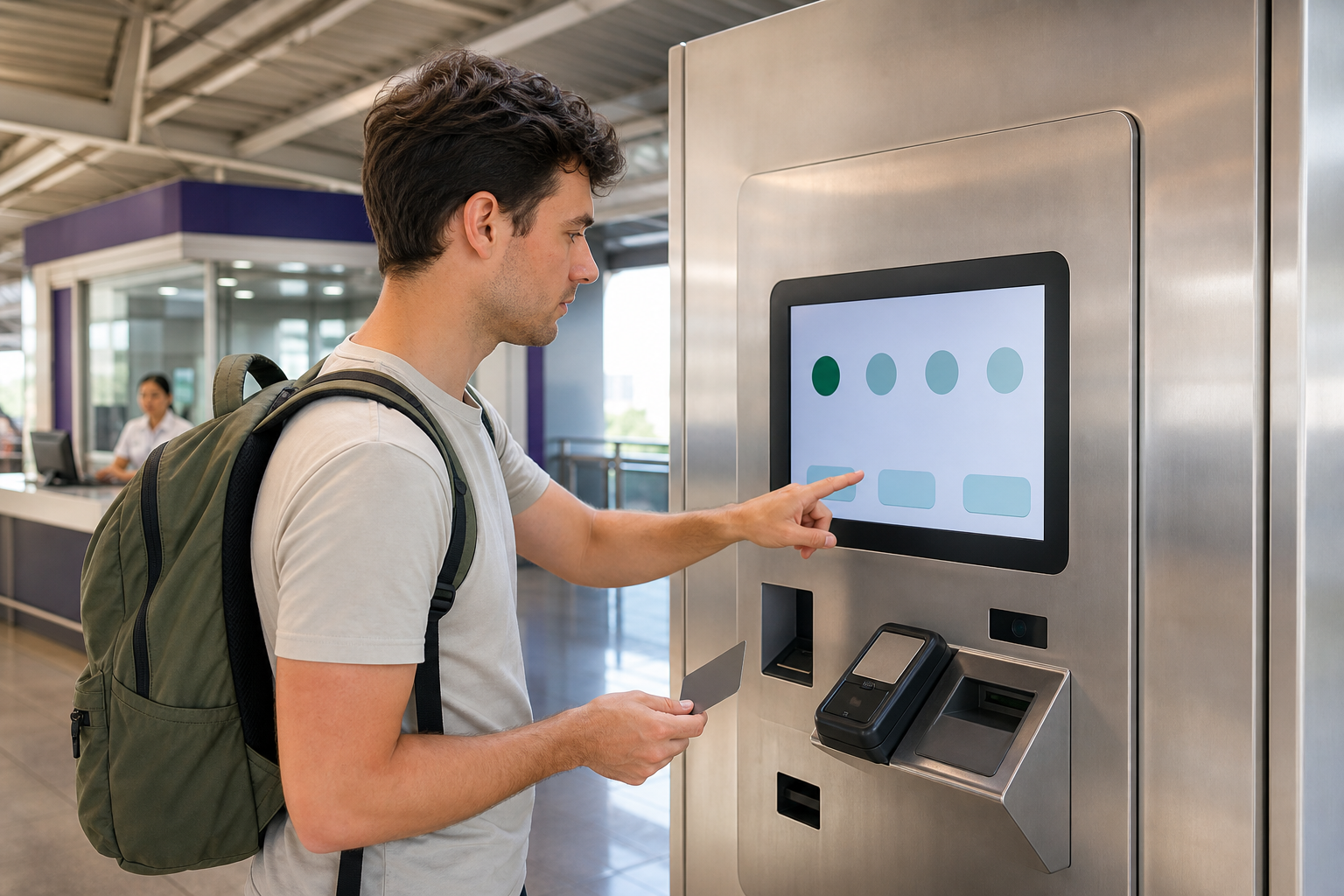
Step 2: Buy the ticket
At a ticket machine, select your destination, confirm the number of tickets, and pay using the methods that the particular machine displays. BTS states that some touch-screen vending machines accept coins, banknotes, and QR payment, while simpler machines may accept coins only. Payment capability can differ by machine, so keep small cash available.
Ticket offices are available at BTS stations. Ask staff if the machine rejects payment, you need a One-Day Pass, or you are unsure which station to select.
Step 3: Enter the paid area
Use one ticket per passenger. Place the card on the reader and wait for the gate to open. Keep the card; you need it to exit. Travelers with a suitcase, stroller, or mobility need should look for the wide gate or ask staff for assistance rather than forcing luggage through a narrow gate.
Step 4: Confirm the platform
After the gate, follow the line and terminal signs. At Siam, check whether you need to change between the Sukhumvit and Silom lines. The interchange is inside the BTS paid area, so you normally do not buy a second BTS ticket simply to change lines on a continuous journey.
Before boarding, confirm:
- Your destination appears on the platform’s station sequence.
- The next station shown is in the correct direction.
- You are not boarding an opposite-direction train across the platform or on another level.
Step 5: Ride and exit
Let passengers leave before boarding. Move away from the doors when space permits, keep bags close, and avoid blocking the doorway for several stops. Announcements and displays identify approaching stations, but keeping your route open on your phone provides a useful backup.
At your destination, follow the exit-number signs before leaving the concourse. Different exits can place you on opposite sides of a wide road. Tap the BTS card at the gate as directed. If it does not work, do not repeatedly push the barrier; use the staffed office.
Bangkok MRT Guide: Tokens and Contactless Cards
Option 1: Single-journey token
For the simplest cash-based MRT journey, select your destination at a machine and buy a token. The token represents one trip at the calculated fare. Tap it on the reader to enter, keep it during the journey, and insert it into the slot at the exit gate.
This is a dependable fallback when a foreign payment card is not accepted. It also avoids confusion over which card was used at entry.
Option 2: Eligible EMV contactless card
BEM allows eligible EMV contactless cards on the MRT Blue and Purple lines. Look for the contactless reader at the gate, remove one card from your wallet, and tap it. At the destination, tap the same physical card to exit.
Follow four rules:
- Use one card for one passenger.
- Do not tap a phone at entry and the underlying physical card at exit; the system may treat them as different credentials.
- Remove the card from a wallet containing other contactless cards to prevent card clash.
- Have a backup payment method. Card network, bank, account, or technical conditions can cause a card to be declined.
BEM’s current conditions say registration is not required just to travel, although registering can help with journey-history and dispute functions. Contactless acceptance rules can change, especially for debit cards issued by particular banks, so confirm the official EMV page if this is your planned payment method.
Entering, riding, and leaving the MRT
After tapping or using a token, follow the Blue or Purple Line signs and check the terminal direction. Some large stations have several levels and long corridors. Allow extra time for the walk, especially when transferring from another system.
Platform screen doors are common at central underground stations. Queue to the side of the doors, allow passengers to leave, then board. Keep the token or contactless card accessible until you have exited. If a gate displays an error, ask staff; using a different card at the exit can create an incomplete journey and a higher charge.
How BTS-MRT Transfers Work
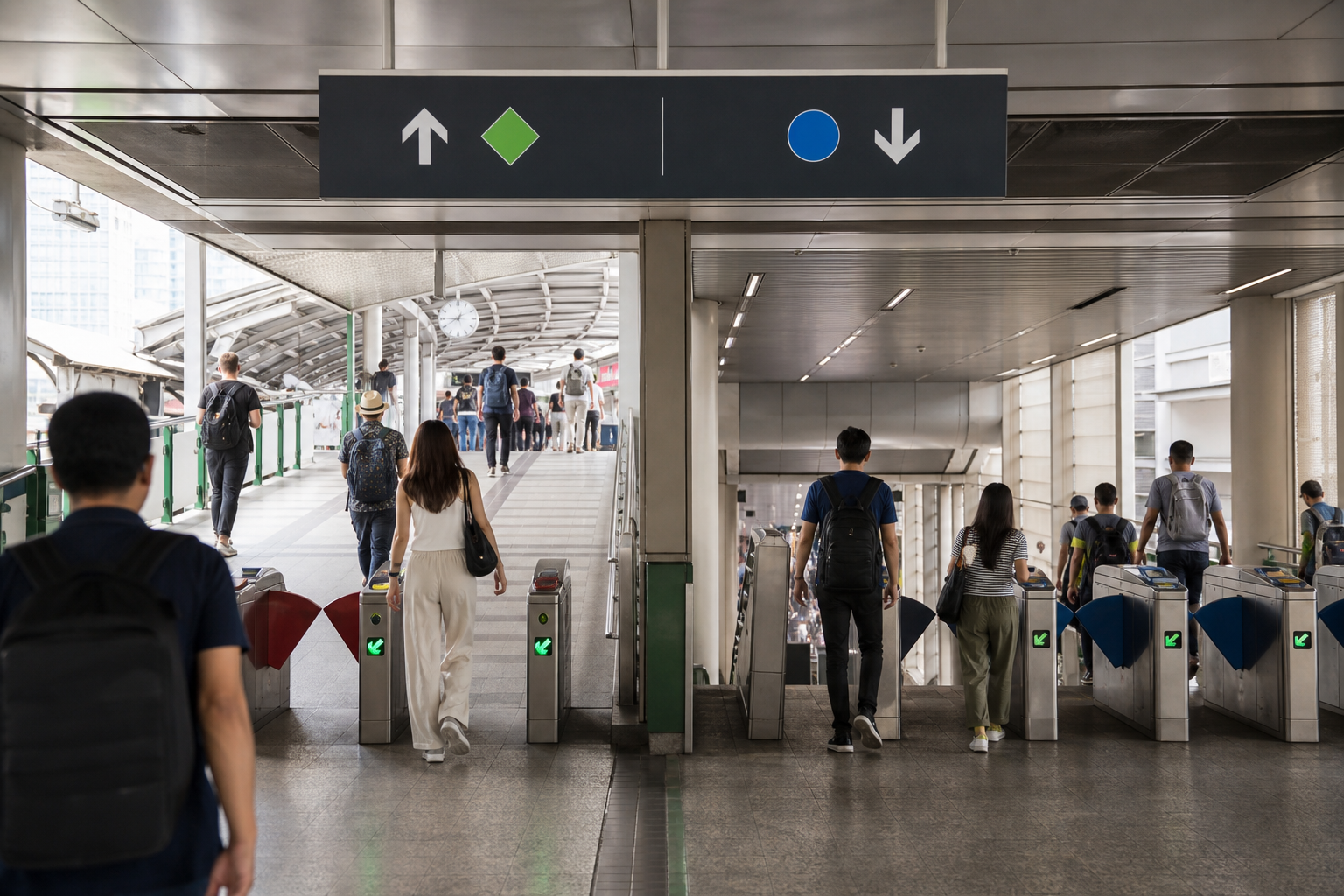
A BTS-MRT “interchange” is usually a walking connection between two separately named stations. It is not one universal paid zone. You leave the first system, follow street or connecting-walkway signs, then enter the second system with a valid ticket or payment method.
Common central transfer pairs include:
| BTS station | MRT station | Useful for |
|---|---|---|
| Asok | Sukhumvit (BL22) | Sukhumvit hotels, offices, and cross-city Blue Line journeys |
| Sala Daeng | Si Lom (BL26) | Silom, Lumphini area, and the BTS Silom Line |
| Mo Chit | Chatuchak Park (BL13) | Chatuchak area and northern BTS-MRT connections |
At Sukhumvit MRT, official station information identifies Exit 3 for Asok BTS. At Chatuchak Park MRT, the official exit information points to Mo Chit BTS. Follow current station signs because construction or temporary access changes can affect the easiest route.
Budget more time than the rail journey planner alone suggests. A transfer includes walking, escalators or lifts, a new fare gate, and possibly a queue for a token. During peak periods, even a physically short connection can feel slow.
Airport Rail Link Connections
Airport Rail Link is separate from BTS and MRT. It is useful between Suvarnabhumi Airport and central Bangkok, but do not expect a BTS or MRT single-journey ticket to cover it.
Two connections are especially relevant:
- Phaya Thai: Airport Rail Link to BTS Sukhumvit Line.
- Makkasan/Phetchaburi: Airport Rail Link to MRT Blue Line via a walking connection.
If you have large luggage, compare the full door-to-door route, not only the train time. Your journey may include airport walking, a transfer corridor, stairs or lifts, and a final walk on uneven pavement. A taxi or pre-arranged transfer may be more comfortable late at night, in heavy rain, or when several people can share the cost.
Traveling With Luggage, Children, or Mobility Needs
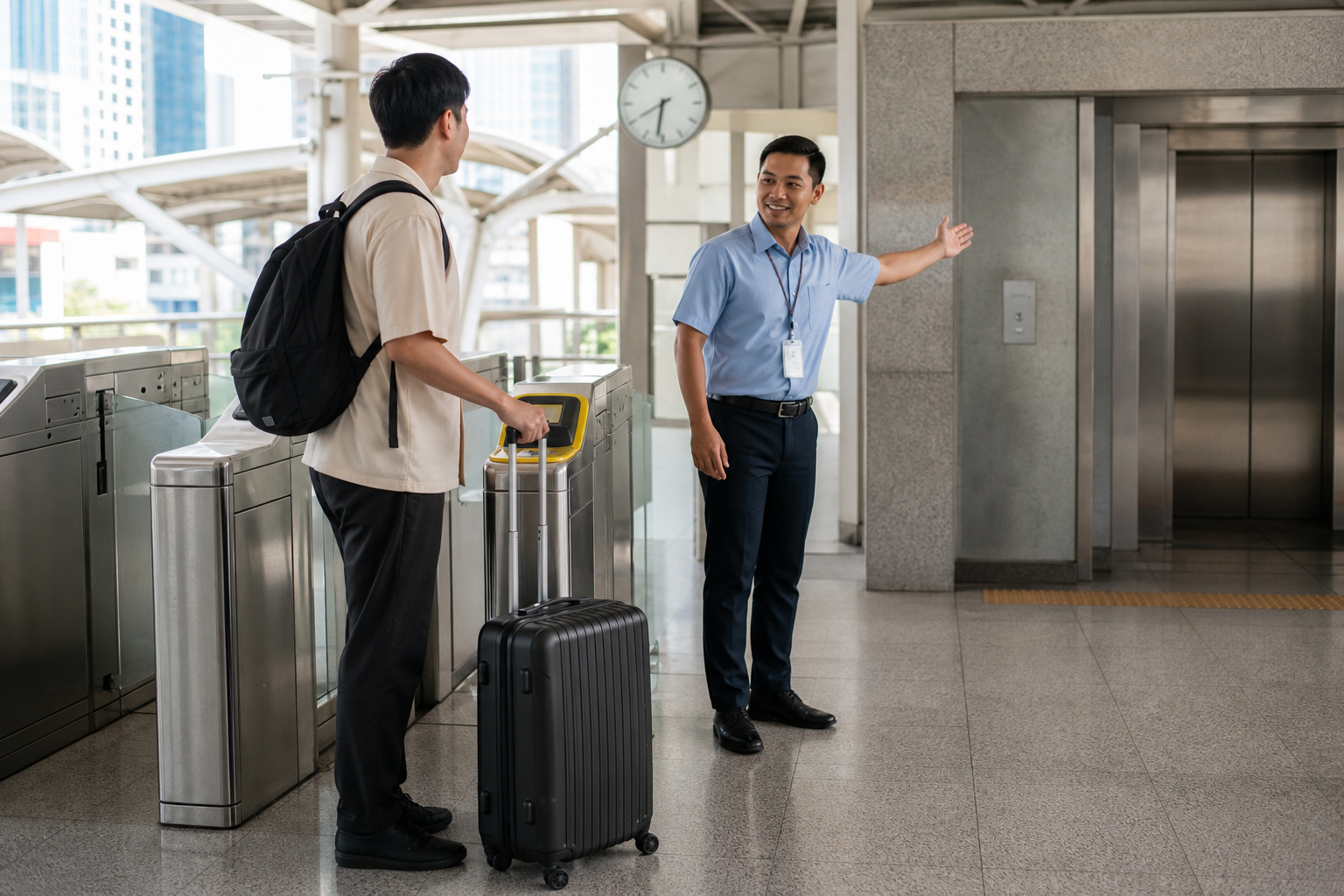
BTS identifies wide gates for passengers with luggage and those needing additional width. BEM station pages list facilities such as lifts, escalators, and ramps by station and exit. However, the most convenient lift may not serve the exit closest to your hotel.
For a smoother journey:
- Check the facility information for both the origin and destination station.
- Use the wide gate and keep wheeled luggage in front of you.
- Avoid weekday commuter peaks when practical.
- Do not place a suitcase on an escalator step if you cannot control it securely; use a lift.
- Keep children close at gates and platform edges.
- Ask staff before entering if a lift is temporarily unavailable or you need step-free routing.
Bangkok pavements can be the hardest part of a rail journey. A hotel “five minutes from BTS” may still involve a busy crossing or an uneven walkway. If convenient train access is a priority, see our guide to the Best Hotels in Sukhumvit for First-Time Bangkok Visitors and verify the walking route from the specific hotel entrance to the station.
Rush Hour and Platform Etiquette
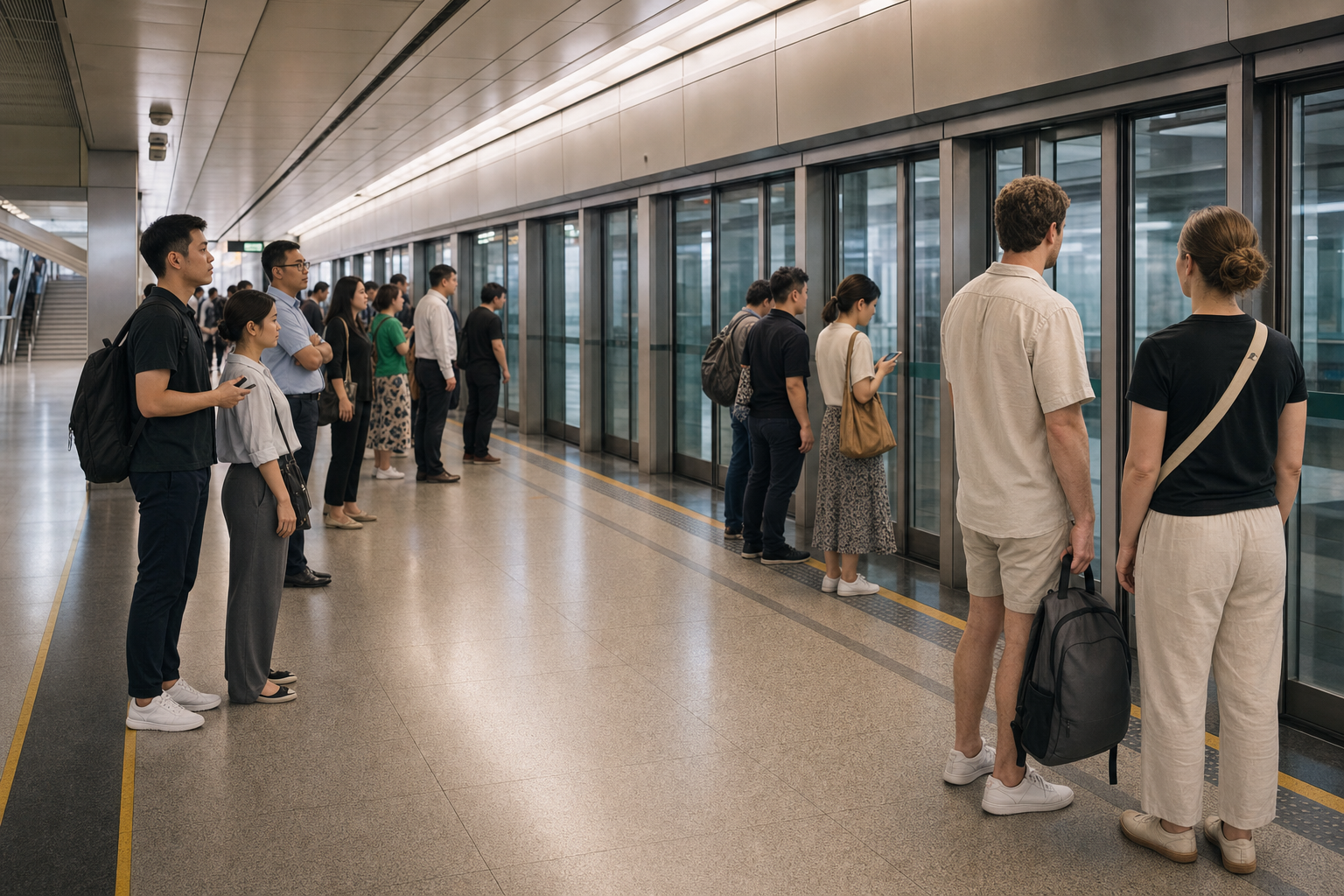
Central trains are busiest around weekday commuting periods. If your schedule is flexible, travel outside the morning and evening peaks, particularly with luggage. When a train is full, waiting for the next one can be easier than squeezing into a doorway.
Stand behind platform safety markings, form an orderly queue, and leave the center in front of the doors clear for exiting passengers. Inside the train, remove a bulky backpack, keep phone audio silent, and offer priority seating to passengers who need it. Food and drink rules are posted at stations; follow local signage.
Eight Mistakes First-Time Visitors Make
1. Searching only for a neighborhood
“Sukhumvit” covers a long corridor. Always confirm the station name, station code, and walking route.
2. Choosing direction by compass
Signs are based on terminal stations and line routing, not simply north or south. Match the destination against the station sequence.
3. Assuming one card covers every system
Rabbit is associated with BTS, while BEM MRT has its own tokens and eligible EMV options. Airport Rail Link is separate again.
4. Tapping different payment devices
On MRT, a physical card and the same card stored in a phone wallet can be recognized as different credentials. Use the same device at entry and exit.
5. Ignoring the exit number
Bangkok roads can be difficult to cross at street level. Choosing the correct exit may save a long detour.
6. Planning around a generic closing time
The final useful train depends on station, direction, and connection. Check the official first-and-last-train tool.
7. Following a crowd without checking
Commuters may be transferring somewhere else. Pause at the sign and verify your own platform.
8. Leaving no time for transfers
Changing BTS to MRT involves leaving one fare system and entering another. Add walking and ticket-queue time.
A Simple Planning Method for Any Journey
Use this repeatable checklist:
- Search your destination and note the closest station and code.
- Check whether that station belongs to BTS, MRT, Airport Rail Link, or another line.
- Use the relevant official planner to confirm the route, current fare, and service information.
- Screenshot the station sequence and the correct destination exit.
- Keep small Thai-baht notes or coins as backup.
- At the station, follow the terminal direction and recheck the next stop.
- Keep your ticket, token, or payment card separate and ready.
- Before leaving, follow the numbered exit closest to your destination.
For Agoda hotel searches, replace this placeholder only after a verified campaign URL is available: [View Hotel Deals]. Choose a property by the exact station and walking route, not only by a broad “near BTS” filter.
Useful Official Tools
Use the BTS route and fare planner for current BTS journeys. For MRT, use the BEM fare and train-time calculator and station pages. These official pages may display protected route graphics; consult them directly rather than copying or redistributing their maps.
A map app remains useful for the first and last walk, but confirm line operations and ticket rules with the operator. Saved screenshots are helpful if mobile data drops underground.
Frequently Asked Questions
Can I use the same ticket on BTS and MRT?
Not as a normal single journey. They are separate fare systems. Exit one system and pay or tap into the other.
Can tourists use a contactless bank card on the MRT?
Eligible EMV contactless cards can be used on the BEM Blue and Purple lines under current operator conditions. Use the same physical card or device at entry and exit, and carry a backup in case your issuer or card is not accepted.
Can I use Rabbit on the MRT?
Do not assume a Rabbit card works at BEM MRT gates. Treat BTS and MRT payment separately unless an operator explicitly announces compatible use for your exact product.
Is a BTS One-Day Pass valid on MRT?
No. It is a BTS product and does not include separate MRT journeys.
Are station signs available in English?
Central rail stations use English names and alphanumeric station codes alongside Thai. Codes are especially useful when station names are similar or spelled differently in apps.
What should I do if I enter in the wrong direction?
Do not cross tracks or use restricted areas. Follow signs to the correct platform if the station layout permits an in-system change; otherwise ask staff before exiting because leaving may affect your fare.
Is BTS or MRT better than a taxi?
Rail is often predictable for journeys along the network, while a taxi can be more practical for places far from a station, heavy luggage, late-night travel, or a small group. Compare the complete door-to-door trip and current conditions.
Final Advice
You do not need to memorize Bangkok’s entire network. Remember the operating system, exact station, station code, terminal direction, and exit number for one journey at a time. Keep a backup payment method, leave extra transfer time, and verify late-night service on the official tools.
Once that routine becomes familiar, BTS and MRT make many first-time itineraries far easier: BTS for major elevated corridors, MRT for a broad cross-city route, and clearly signed walking connections where the systems meet.
Image note: Editorial images in this article were generated with AI. They do not reproduce an official transit map or depict a specific operator’s branded equipment.
Leave a Reply